


news 2011
Life Sciences
Results 201 - 220 of 241.
Life Sciences - Chemistry - 01.03.2011
Solving the riddle of nature’s perfect spring
Scientists have unravelled the shape of the protein that gives human tissues their elastic properties in what could lead to the development of new synthetic elastic polymers. University of Manchester researchers, working with colleagues in Australia and the United States, used state-of-the-art techniques to reveal the structure of tropoelastin, the main component of elastin.
Life Sciences - Health - 28.02.2011
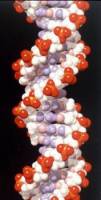
Genetic cause uncovered for extreme form of dwarfism Two Sussex scientists have identified a gene that causes an extreme form of dwarfism, known as primordial dwarfism. The findings, published on Sunday (27 February) , shed light on how human body size is determined, and for the first time make a direct link between the copying of DNA in cells and body growth.
Life Sciences - Environment - 24.02.2011
Can marine life adapt to global change?
A team of researchers from the University of Plymouth, the Marine Biological Association of the UK and the Plymouth Marine Laboratory have conducted an exciting new study looking into the potential effect of climate change on marine life, and how marine animals may be able to adapt to future environmental scenarios.
Health - Life Sciences - 24.02.2011
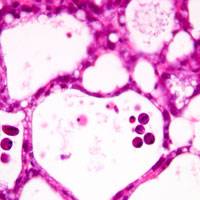
A novel mechanism of cell death that occurs in mammalian organisms has been revealed by researchers at the University of Cambridge. Billions of damaged or superfluous cells die in our bodies every day. It is thought that most cell death occurs by a process called apoptosis, in which biochemical events lead to cell changes and death.
Health - Life Sciences - 23.02.2011

Scientists have identified a diabetes drug which halves the mortality rate of a deadly infectious disease found throughout Southeast Asia and Northern Australia. Melioidosis, caused by a soil dwelling bacterium (Burkholderia pseudomallei) that is present in certain regions of the world, results in severe infections include bloodstream infections and pneumonia.
Health - Life Sciences - 23.02.2011

Research by a Cambridge archaeologist shows that back pain caused untold misery long before we started staring into screens and slumping on sofas. The high incidence of back pain apparent today is often blamed on our lazy lifestyles: we sit at computers, watch television, travel by car and eat too much.
Life Sciences - Health - 17.02.2011
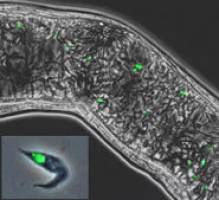
Compelling visual evidence of sexual reproduction in African trypanosomes, single-celled parasites that cause major human and animal diseases, has been found by researchers from the University of Bristol. The research could eventually lead to new approaches for controlling sleeping sickness in humans and wasting diseases in livestock which are caused by trypanosomes carried by the bloodsucking tsetse fly.
Health - Life Sciences - 17.02.2011
The placebo effect: expecting the best, fearing the worst
Health 17 Feb 11 Poor expectations of treatment can override all the effect of a potent pain-relieving drug, a brain imaging study at Oxford University has shown. In contrast, positive expectations of treatment doubled the natural physiological or biochemical effect of the opioid drug among the healthy volunteers in the study.
Life Sciences - 10.02.2011
Language learning influenced by genes
Scientists have made a key genetic discovery that could help explain how people learn language. Researchers at the University of Edinburgh have found a gene - called ROBO1 - linked to the mechanism in the brain that helps infants develop speech. Genetic traits They say identifying the gene could help us explain how some aspects of language learning in infants are influenced by genetic traits rather than educational factors.
Life Sciences - Health - 09.02.2011
Look at your body to reduce pain
Simply looking at your body reduces pain, according to new research by scientists from UCL (University College London) and the University of Milano-Bicocca, Italy. Published in the journal Psychological Science, the research shows that viewing your hand reduces the pain experienced when a hot object touches the skin.
Health - Life Sciences - 09.02.2011

Study suggests why HIV-uninfected babies born to mothers with HIV might be more vulnerable to infections Imperial research published in JAMA finds that babies of mothers with HIV have lower levels of several specific antibodies. Babies whose mothers have HIV, but who are not HIV-infected themselves, are born with lower levels of specific proteins in their blood called antibodies, which fight infection, compared with babies not exposed to HIV, a new study has found.
Health - Life Sciences - 08.02.2011
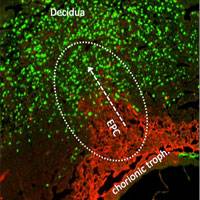
Paternal genes advise maternal immune cells on how to build the best womb for developing foetuses. Researchers at the University of Cambridge and the Babraham Institute have identified a mechanism by which specific combinations of genes can lead to miscarriage and other complications in pregnancies.
Life Sciences - Health - 07.02.2011
Pair of genes makes plant pest double trouble Research at Imperial could help scientists control one of the world's most important crop diseases, Pseudomonas Syringae - News Monday 7 February 2011 Adapted from a news release issued by the Biotechnology and Biological Science Research Council (BBSRC).
Health - Life Sciences - 03.02.2011
Blood-clotting agent can diagnose fatal genetic diseases, finds study
University of Manchester scientists have shown that a protein involved in blood clotting can be used to diagnose and subsequently monitor the treatment of a group of childhood genetic diseases. In the study, published in the Journal of Inherited Metabolic Disease , the researchers were able to show that the clotting agent, heparan cofactor II/Thrombin (HCII/T) complex, could be used as a 'biomarker', or biological tell, in individuals with mucopolysaccharide (MPS) diseases.
Health - Life Sciences - 02.02.2011
Neuroscience research in The Lancet
Links: Parkinson's research paper in The Lancet vCJD research paper in The Lancet UCL Institute of Neurology UCL Neuroscience Two high profile research papers from UCL Institute of Neurology scientists have been published this week. Professor Alan Thompson, Director of the UCL Institute of Neurology and Interim Head of UCL Neuroscience domain, said: "These two important studies, both published in The Lancet this week, are a testament to the breadth and significance of neuroscience research at UCL.
Health - Life Sciences - 02.02.2011
Talking the language of genes
Health Jonathan Wood | 02 Feb 11 The majority of hospital cases of Clostridium difficile at the John Radcliffe Hospital in Oxford are not caused by transmission of the bug within the hospital, so early results of a new project suggest. It was one example used by Professor Peter Donnelly last night, in giving the first Oxford London Lecture at Church House in Westminster, to illustrate how the modern revolution in genetics is already beginning to affect healthcare for us all.
Environment - Life Sciences - 02.02.2011
High arctic avian athlete gives lessons about animal welfare
Researchers report that an arctic relative of the grouse has evolved to cope with its extreme environment by moving efficiently at high speeds or when carrying winter weight. This discovery is of relevance to welfare in the poultry industry where birds are bred to be heavier. Ultimately, better understanding the physiology of a natural animal model of extreme weight gain could one day lead to improving the welfare and meat yield of domesticated breeds and so contribute to preventing a future food security crisis.
Health - Life Sciences - 01.02.2011
Making cells turn cartwheels
Science Jonathan Wood | 01 Feb 11 Centrioles are barrel-shaped connection hubs that, like key Meccano parts, hold together the microtubule connection rods that form the structural framework of the cells in our bodies. As cells grow and divide, they replicate their DNA before splitting into two daughter cells.
Health - Life Sciences - 31.01.2011
Scientists find key protein that suppresses prostate cancer growth in the laboratory
Scientists find key protein that suppresses prostate cancer growth in the laboratory Research on proteins leads towards potential new prostate cancer treatments Cancer researchers have discovered an important protein, produced naturally inside cells, that appears to suppress the growth of prostate cancer cells in the laboratory.
Health - Life Sciences - 29.01.2011
Excessive release of calcium inside cardiac muscle can cause sudden cardiac death in heart failure patients. New research has revealed how this could happen, opening up new possibilities for combating heart disease. Calcium plays a vital role in regulating cardiac muscle contraction. With each heartbeat, calcium is released from intracellular stores known as the sarcoplasmic reticulum (SR), through specialised channels called ryanodine receptors (RyR2).


