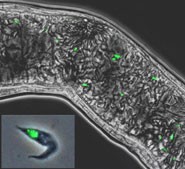
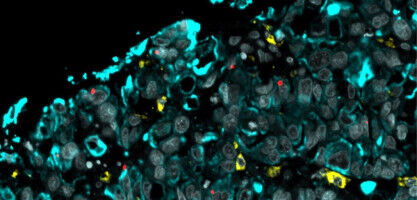
It seems that meiosis in trypanosomes has eluded observers because it occurs hidden inside the insect carrying the parasite ? a difficult and technically challenging system to work with. These new results will further our understanding of events at the very beginning of eukaryote evolution, and of the way that new strains of disease-causing microbes emerge.
Compelling visual evidence of sexual reproduction in African trypanosomes, single-celled parasites that cause major human and animal diseases, has been found by researchers from the University of Bristol. The research could eventually lead to new approaches for controlling sleeping sickness in humans and wasting diseases in livestock which are caused by trypanosomes carried by the bloodsucking tsetse fly. Biologists believe that sexual reproduction evolved very early and is now ubiquitous in organisms with complex cell structure (the eukaryotes, essentially all living organisms except bacteria). However, real evidence is lacking for a large section of the evolutionary tree. Trypanosomes represent an early and very distant branch of the eukaryote tree of life and until now it was unclear whether they do indeed reproduce sexually. Offspring that result from sexual reproduction inherit half their genetic material from each parent. At the core of this process is meiosis, the cellular division that shuffles the parental genes and deals them out in new combinations to the offspring.
TO READ THIS ARTICLE, CREATE YOUR ACCOUNT
And extend your reading, free of charge and with no commitment.