Immune interaction optimises foetal nourishment during pregnancy
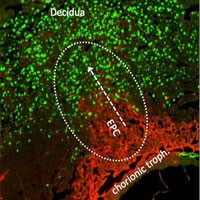
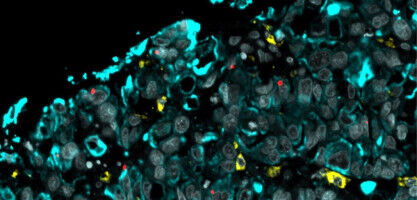
Paternal genes advise maternal immune cells on how to build the best womb for developing foetuses. Researchers at the University of Cambridge and the Babraham Institute have identified a mechanism by which specific combinations of genes can lead to miscarriage and other complications in pregnancies. The research revealed that paternal immune genes (MHC) in the placenta provide information to uterine natural killer (NK) cells to ensure that the foetus receives sufficient blood supply. Unlike their blood counterpart NK cells, which kill infectious and cancerous cells, uterine NK (uNK) cells actually help placental cells adapt the blood vessels in the womb to nourish the foetus. By mating mice whose only genetic difference was in the MHC genes of the mother and father (1% of the genome), the researchers found that uNK cells would sense the difference in highly variable MHC genes. When faced with mismatched MHC genes from the father's immune system, uNKs were presumably not switched off and could focus on optimising the blood flow of the womb. Francesco Colucci of the University of Cambridge Department of Obstetrics and Gynaecology had previously identified the particular genes expressed by mouse uNK cells and Ashley Moffett of the University of Cambridge's Department of Pathology had pioneered the research relevant to human uNK cells and MHC genes.
TO READ THIS ARTICLE, CREATE YOUR ACCOUNT
And extend your reading, free of charge and with no commitment.