


news 2011
Categories
Years
2009 | 2010 | 2011 | 2012 | 2013 | 2014 | 2015 | 2016 | 2017 | 2018 | 2019 | 2020 | 2021 | 2022 | 2023 | 2024 | 2025 | 2026 |
2009 | 2010 | 2011 | 2012 | 2013 | 2014 | 2015 | 2016 | 2017 | 2018 | 2019 | 2020 | 2021 | 2022 | 2023 | 2024 | 2025 | 2026 |
Results 481 - 500 of 597.
Health - Life Sciences - 07.03.2011
Research doubles genetic links to coronary heart disease
Science | Health 07 Mar 11 Two large international studies have discovered 17 new genetic variants linked with increased heart disease risk, more than doubling the known genetic links to coronary heart disease. Some of the genetic variants were associated with biological processes involved in the development of coronary heart disease (CHD).
Psychology - 04.03.2011
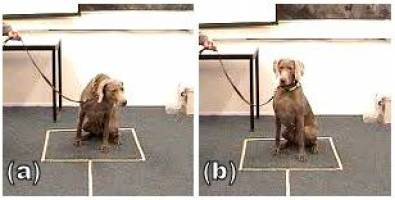
How dogs make sense of size University of Sussex psychologists have demonstrated an ability in domestic dogs to match acoustic and visual cues - a cognitive ability once thought to be found in primates only -when assessing size in other dogs. Researchers Dr Anna Taylor, Dr David Reby and Karen McComb filmed the reactions of 40 different volunteer pet dogs when presented with two other dogs (a stuffed Jack Russell and a stuffed German shepherd dog) of different size and a variety of manipulated growl recordings.
Environment - 03.03.2011

Climate survey: Blow a bubble and spot a contrail Open Air Laboratories launches national Climate Survey in Prince's Gardens - News Thursday 3 March 2011 By Simon Levey and Sarah Baldwin Meteorologists and other scientists are asking everyone in England to take part in a new survey exploring how we influence the climate and how the climate affects us.
- 03.03.2011

Local authorities 'failing to engage' when developing shared space street design, finds study Shared space schemes for integrated street design - where segregation between cars, pedestrians and other road users are reduced or removed - have little benefit for street users, finds research led by Professor Rob Imrie from King's College London.
Social Sciences - 03.03.2011
Comprehensive schools do not reduce social mobility
Policy 03 Mar 11 Children are no worse off in socio-economic terms if they go to a comprehensive rather than to schools in the selective system, according to new research. The study found that when the total cohort of children was taken into account those who went to comprehensive schools were not disadvantaged in terms of social mobility compared the cohort who attended grammar schools and secondary moderns.
Health - Agronomy & Food Science - 03.03.2011

Having diabetes in mid-life may reduce a person's life expectancy by an average of six years, according to a large, multinational study coordinated by the University of Cambridge. Diabetes is already known to approximately double the risk of heart attacks and strokes, but these new findings show that people with type 2 diabetes are also at greater risk of dying from several other diseases, including cancer and infection.
Health - Psychology - 03.03.2011

Women who experience depression and anxiety after a miscarriage can continue to experience these symptoms even if they subsequently go on to have a healthy child. The findings, based on the Children of the 90s study (ALSPAC) at the University of Bristol and published online today [Thursday 3 March] by the British Journal of Psychiatry , show no evidence that mental health problems associated with miscarriage or stillbirth end with the birth of a healthy baby.
Environment - Health - 02.03.2011
Giving children the power to be scientists
PA 70/11 Children who are taught how to think and act like scientists develop a clearer understanding of the subject, a study has shown. The research project led by The University of Nottingham and The Open University has shown that school children who took the lead in investigating science topics of interest to them gained an understanding of good scientific practice.
Health - 02.03.2011
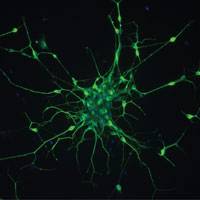
Scientists have discovered a new way to generate human motor nerve cells in a development that will help research into motor neurone disease. A team from the Universities of Cambridge, Edinburgh and Cardiff has created a range of motor neurons - nerves cells that send messages from the brain and spine to other parts of the body - from human embryonic stem cells in the laboratory.
Physics - 02.03.2011
The search for sparticles
Science Pete Wilton | 02 Mar 11 One of the key theories underpinning modern physics is being tested by the latest results from the LHC 's ATLAS experiment. Supersymmetry theory says that every particle must have a Supersymmetric partner particle yet so far ATLAS hasn't found a single one of these 'sparticles'.
Health - Environment - 01.03.2011
Research uncovers new threat from harmful algae
Harmful algae could be producing substances which affect reproduction in organisms with similar genetic characteristics as humans according to groundbreaking new research. A scientist from the University of Plymouth has discovered that algae release substances which interfere with the activity of reproductive hormones in some fish.
Life Sciences - Health - 01.03.2011
Problem proteins in Alzheimer s
Health Jonathan Wood | 01 Mar 11 In Alzheimer's disease , two proteins are known to accumulate and build up in the brain. One protein called amyloid β aggregates into large disruptive 'plaques', while tau protein forms tangled fibres within nerve cells. Research has tended to focus on amyloid β, since small numbers of these proteins bound together are known to be toxic to the neurons in the brain.
Health - 01.03.2011
Scientists reveal new insights into tendon injury
Scientists have discovered how tendons - the fibrous tissue that connects muscle to bone - become damaged through injury or the ageing process in what could lead to new treatments for people with tendon problems. The University of Manchester team, working with colleagues at Glasgow University, have been investigating 'adhesions', which are a build up of unwanted fibrous tissue on internal organs that have been damaged as a result of surgery or injury.
Life Sciences - Chemistry - 01.03.2011
Solving the riddle of nature’s perfect spring
Scientists have unravelled the shape of the protein that gives human tissues their elastic properties in what could lead to the development of new synthetic elastic polymers. University of Manchester researchers, working with colleagues in Australia and the United States, used state-of-the-art techniques to reveal the structure of tropoelastin, the main component of elastin.
Agronomy & Food Science - Health - 01.03.2011

Sugary drinks associated with higher blood pressure Drinking sugar-sweetened beverages is associated with higher blood pressure, according to a study of over 2,500 people reported in the journal Hypertension. Drinking sugar-sweetened beverages is associated with higher blood pressure, according to a study of over 2,500 people reported this week in the journal Hypertension .
Health - 28.02.2011
Study gives insight into motor neurons
Scientists have discovered a new way to generate human motor nerve cells in a development that will help research into motor neurone disease. Researcher have created a range of motor neurons from human embryonic stem cells in the laboratory. Motor neurons are nerve cells that send messages from the brain and spine to other parts of the body.
- 28.02.2011
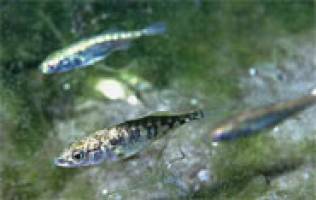
We all struggle to concentrate when there are roadworks taking place outside our window. New research from scientists at the University of Bristol demonstrates that fish suffer the same problem, becoming distracted from normal feeding behaviour when noise is added to their environment.
Health - 28.02.2011

The National Institute for Clinical Excellence issued new guidelines today to tackle alcohol problems, following recommendations from the Guideline Development Group, chaired by Colin Drummond, Professor of Addiction Psychiatry at the Institute of Psychiatry. The guidelines outline how the NHS should diagnose, assess and treat alcohol dependence, calling for screening and better access to alcohol withdrawal services.
Life Sciences - Health - 28.02.2011
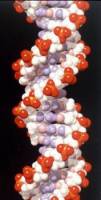
Genetic cause uncovered for extreme form of dwarfism Two Sussex scientists have identified a gene that causes an extreme form of dwarfism, known as primordial dwarfism. The findings, published on Sunday (27 February) , shed light on how human body size is determined, and for the first time make a direct link between the copying of DNA in cells and body growth.
Economics - 28.02.2011

Press release issued 28 February 2011 The growth in the demand of smartphones has highlighted the complexities of wireless communications through problems of reduced sensitivity when the user holds some devices. New research has been investigating this problem, along with developing new solutions to overcome the loss of connectivity.


