Stem cell study could aid motor neurone disease research
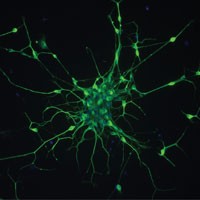
Scientists have discovered a new way to generate human motor nerve cells in a development that will help research into motor neurone disease. A team from the Universities of Cambridge, Edinburgh and Cardiff has created a range of motor neurons - nerves cells that send messages from the brain and spine to other parts of the body - from human embryonic stem cells in the laboratory. It is the first time that researchers have been able to generate a variety of human motor neurons which differ in their make-up and display properties depending on where they are located in the spinal cord. The research, published yesterday, 01 March, could help scientists better understand motor neurone disease. The process will enable scientists to create different types of motor neurons and study why some are more vulnerable to disease than others. Motor neurons control muscle activity such as speaking, walking, swallowing and breathing. However, in motor neurone disease - a progressive and ultimately fatal disorder - these cells break down leading to paralysis, difficulty speaking, breathing and swallowing.
TO READ THIS ARTICLE, CREATE YOUR ACCOUNT
And extend your reading, free of charge and with no commitment.