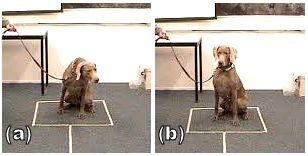
Images show differing reactions of subject dog to stuffed models as growl sounds played back
How dogs make sense of size - University of Sussex psychologists have demonstrated an ability in domestic dogs to match acoustic and visual cues - a cognitive ability once thought to be found in primates only -when assessing size in other dogs. Researchers Dr Anna Taylor, Dr David Reby and Karen McComb filmed the reactions of 40 different volunteer pet dogs when presented with two other dogs (a stuffed Jack Russell and a stuffed German shepherd dog) of different size and a variety of manipulated growl recordings. The playback recordings represented a variety of large and small dogs of different age, breed and sex. Each dog was introduced to the two stuffed models and then heard two "large dog" growls and two "small dog" growls. While each growl was played, the experimenters recorded which stuffed model the dog looked at first, which model the dog looked at longest, and how long the dog looked at each model. It was found that the amount of attention paid to either the small dog or large dog by each subject was significantly greater when the sound played matched correctly with either model (known as "preferential looking"). The findings are now available in a research paper - Cross Modal Perception of body Size in Domestic Dogs (Canis familiaris) - published in the online open access journal Plos One.
TO READ THIS ARTICLE, CREATE YOUR ACCOUNT
And extend your reading, free of charge and with no commitment.