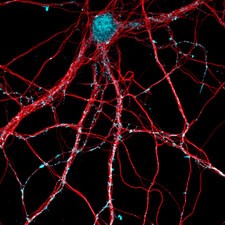
Amyloid beta (cyan blue) binds to nerve
cells of the hippocampus (red) and attacks synapses resulting in the loss of
memories in Alzheimer’s disease. New research has led to important insights into the
mechanisms that induce synapse loss. The discovery brings hope for the
development of new therapies that protect synapses and therefore prevent memory loss in Alzheimer’s disease.
Dementia scientists at UCL are set to gain from a funding boost after Alzheimer's Research UK committed a record amount of money to new research projects. The research charity has pledged a further £5.5m investment in new projects, bringing its current commitment to research to over £20m. The announcement, which coincides with World Alzheimer's Day, includes awards worth £1.5m for UCL researchers. The charity has awarded a total of 52 new grants aimed at understanding the causes of dementia, improving diagnosis, and finding new treatments and preventions. Eight of these grants have been awarded to pioneering researchers at UCL. The commitment will allow scientists at the University to study in detail some of the changes that occur in the brain as Alzheimer's disease develops, in a bid to find ways of stopping these changes. It will also enable researchers to investigate the role of a gene called C9ORF72 - a recently discovered risk gene for frontotemporal dementia - revealing more about the causes of the disease.
TO READ THIS ARTICLE, CREATE YOUR ACCOUNT
And extend your reading, free of charge and with no commitment.