


Environment - Mar 27
The University of Manchester signs Memorandum of Understanding with United Utilities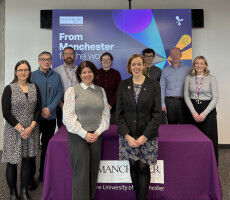
The University of Manchester signs Memorandum of Understanding with United Utilities
Agronomy & Food Science - Mar 27
Gather & Gather unveils fresh new Spring/Summer 2026 menu designed for the warmer seasons
Gather & Gather unveils fresh new Spring/Summer 2026 menu designed for the warmer seasons
Environment - Mar 26
University of Manchester hits major sustainability milestone, with Main Campus becoming 100% 'Zero Landfill'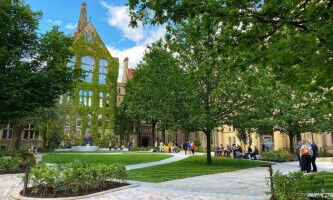
University of Manchester hits major sustainability milestone, with Main Campus becoming 100% 'Zero Landfill'
Campus - MANCHESTER - Mar 26
Manchester students mentor local teenagers to build confidence in applying for university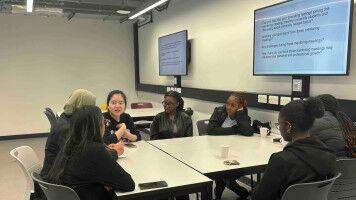
Manchester students mentor local teenagers to build confidence in applying for university
news
University College London
Results 2041 - 2060 of 2154.
Physics - 27.06.2011

Scientists involved in the MINOS experiment, including six members from UCL Physics and Astronmy, have announced the results from a search for a rare phenomenon: the transformation of muon neutrinos into electron neutrinos. The results of these two experiments could have implications for our understanding of the role that neutrinos may have played in the evolution of the universe.
Environment - 21.06.2011
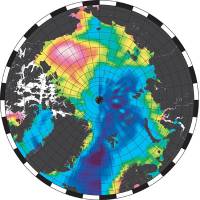
Scientists at UCL have produced the most extensive map of Arctic sea-ice thickness yet using just two months' worth of data from the European Space Agency's ice mission, CryoSat-2. Data from the satellite has also helped them create an updated map of ocean circulation in the Arctic, and a topographical relief map of Antarctica.
Health - Agronomy & Food Science - 09.06.2011
Will rising BMIs reverse heart attack decline?
UCL Epidemiology & Public Health UCL Primary Care & Population Health European Heart Journal Medical Research Council British Heart Foundation Better control of cholesterol levels and blood pressure and a decline in smoking have contributed to a 74% drop in the risk of heart attack among nearly 10,000 civil servants working in London over a 20-year period, according to new research from the UCL-led Whitehall II study.
Life Sciences - Health - 02.06.2011
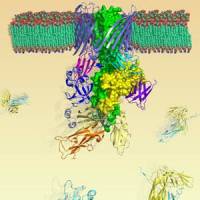
Scientists have uncovered the structure of the protein complex that assembles the tiny hair-like strands that cover the outside of bacteria. Called pili, these 'hairs' allow bacteria to group together and stick to human cells to cause infection - and are therefore a key target for a new generation of antibiotics.
Health - Life Sciences - 26.05.2011
Reindeer use UV light to survive in the wild
Links : Research paper in Journal of Experimental Biology Professor Glen Jeffery UCL Institute of Ophthalmology UCL researchers have discovered that reindeer can not only see ultraviolet (UV) light, but that it is also crucial to their survival in the harsh arctic environment.
Life Sciences - Health - 20.05.2011
Crossing your arms relieves pain
Crossing your arms reduces the intensity of pain you feel when receiving a painful stimulus on the hand, according to research by scientists at UCL. Published in the current issue of the journal PAIN, the research shows that crossing your arms over the midline (an imaginary line running vertically down the centre of the body) confuses the brain and reduces the intensity of the pain sensation.
Psychology - Health - 13.05.2011
’Consciousness connections’ revealed in coma brains
A new test of consciousness which could be helpful in the diagnosis of coma patients has been identified in new research led by scientists from the University of Liège and UCL. Recent studies have shown that patients with severe brain damage who show little outward signs of perception or understanding may have a certain degree of pain experience and awareness.
Physics - Earth Sciences - 20.04.2011
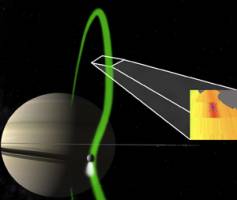
Data from NASA's Cassini spacecraft have revealed that Enceladus, one of Saturn's diminutive moons, is linked to Saturn by powerful electrical currents - beams of electrons that flow back and forth between the planet and moon. The finding is part of a paper published in Nature today. CAPS, one of the instruments on board Cassini which made the electron beam discovery, includes a electron sensor called CAPS-ELS - led by UCL (University College London).
Health - Life Sciences - 08.04.2011
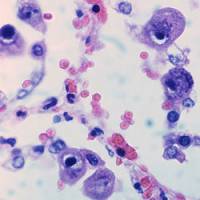
A major infectious problem after organ transplantation, cytomegalovirus (CMV), could potentially be targeted with a vaccine, according to new results from a phase II clinical trial led by scientists from UCL and doctors at the Royal Free Hospital. The results of this Phase II proof-of-concept study, published in The Lancet today, show that a vaccine preparation moderated the severity of CMV infection in patients waiting for kidney and liver transplants and, in some cases, may have interrupted transmission of the virus from donor to recipient.
Chemistry - 02.04.2011
Missing copy of Davy’s first book found at UCL
An extremely rare copy of the very first book written by Humphry Davy, one of the world's greatest scientists, at just 19 years of age, has been discovered in UCL's library collections. Essays on heat, light and the combinations of light was published in 1799, a youthful work that Davy was later in life embarrassed about having written.
Chemistry - 01.04.2011
Missing copy of Davy’s first book found at UCL
An extremely rare copy of the very first book written by Humphry Davy, one of the world's greatest scientists, at just 19 years of age, has been discovered in UCL's library collections. Essays on heat, light and the combinations of light was published in 1799, a youthful work that Davy was later in life embarrassed about having written.
Health - 01.04.2011
New research: transport is major public health challenge
Transport is a public health challenge comparable to sewers in the 19th century and clean air in the 20th century in its difficulty, its financial implications and its consequences, according to research edited by UCL's Dr Jennifer Mindell.
Life Sciences - Electroengineering - 31.03.2011

Links: UCL Ear Institute Research paper in Current Biology The antennal ears of different fruit fly species are actively tuned to high-frequency components of their respective mating songs, according to new research led by UCL scientists. During courtship, male fruit flies serenade females with a 'love song' produced by quiet, close-range wing vibrations.
Life Sciences - Health - 09.02.2011
Look at your body to reduce pain
Simply looking at your body reduces pain, according to new research by scientists from UCL (University College London) and the University of Milano-Bicocca, Italy. Published in the journal Psychological Science, the research shows that viewing your hand reduces the pain experienced when a hot object touches the skin.
Chemistry - 07.02.2011
Gallery: Two charges more chemistry
Dr Stephen Price (UCL Chemistry) is part of a UCL team that has developed a piece of experimental apparatus to study the chemistry of dications: molecules that have two positive charges. Recent studies of the layers at the top of the atmospheres of Earth, Mars, Venus and Titan have proposed that such doubly?charged molecules are present in significant numbers and that the chemistry of these energetic species affects the composition of these atmospheric regions.
Health - Life Sciences - 02.02.2011
Neuroscience research in The Lancet
Links: Parkinson's research paper in The Lancet vCJD research paper in The Lancet UCL Institute of Neurology UCL Neuroscience Two high profile research papers from UCL Institute of Neurology scientists have been published this week. Professor Alan Thompson, Director of the UCL Institute of Neurology and Interim Head of UCL Neuroscience domain, said: "These two important studies, both published in The Lancet this week, are a testament to the breadth and significance of neuroscience research at UCL.
Health - Agronomy & Food Science - 25.01.2011
Rising indoor winter temperatures linked to obesity?
Press release Links: UCL Epidemiology & Public Health UCL Bartlett School of Graduate Studies Increases in winter indoor temperatures in the United Kingdom, United States and other developed countries may be contributing to rises in obesity in those populations, according to UCL research published today.
Life Sciences - 04.01.2011
Love: it’s all the same to the brain
There are no differences between heterosexuals and homosexuals or between women and men in terms of the brain systems regulating romantic love, according to new UCL research published in the latest issue of PLoS One. The study, by Professor Semir Zeki and John Romaya from the Wellcome Laboratory of Neurobiology at UCL, is a continuation of earlier work from the same lab which described brain activity in terms of romantic and maternal love.
Life Sciences - Health - 28.12.2010

If you listen to Radio 4's Today Programme on any given day, you'll inevitably hear a spectrum of politic views from socialist through liberal to conservative. You may find yourself agreeing with the interviewee or irked by their politics depending on your own political persuasion. Liberals and conservatives may find themselves disagreeing on issues as wide-ranging as the future of the NHS, the UK's involvement in Afghanistan and whether students should pay tuition fees at university, but could these differences be a result of different brain structures?
Health - Life Sciences - 22.12.2010

A group of UK primary school children have achieved a world first by having their school science project accepted for publication in an internationally recognised peer-reviewed Royal Society journal. The paper, which reports novel findings in how bumblebees perceive colour, is published in Biology Letters today.


Environment - Mar 27
The University of Manchester signs Memorandum of Understanding with United Utilities
The University of Manchester signs Memorandum of Understanding with United Utilities
Agronomy & Food Science - Mar 27
Gather & Gather unveils fresh new Spring/Summer 2026 menu designed for the warmer seasons
Gather & Gather unveils fresh new Spring/Summer 2026 menu designed for the warmer seasons
Environment - Mar 26
University of Manchester hits major sustainability milestone, with Main Campus becoming 100% 'Zero Landfill'
University of Manchester hits major sustainability milestone, with Main Campus becoming 100% 'Zero Landfill'
Campus - MANCHESTER - Mar 26
Manchester students mentor local teenagers to build confidence in applying for university
Manchester students mentor local teenagers to build confidence in applying for university