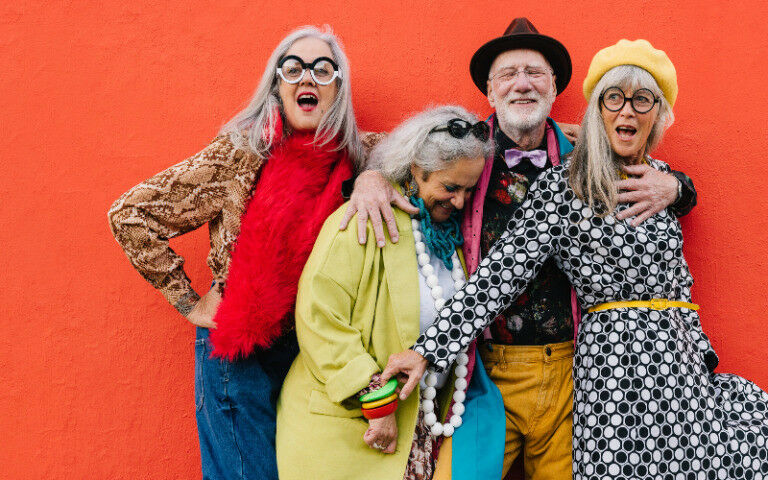
Group of cheerful elderly friends celebrating their retirement in colourful clothing.
Group of cheerful elderly friends celebrating their retirement in colourful clothing. There is a difference between how the brains of healthy older adults perceive colour compared to younger adults, finds a new study led by UCL researchers. The research, published in Scientific Reports , compared how the pupils of younger and older people reacted to different aspects of colour in the environment. The team recruited 17 healthy young adults with an average age of 27.7, and 20 healthy older adults with an average age of 64. Participants were placed in a blackout room and shown 26 different colours for five seconds each, while the researchers measured the diameter of their pupils. Pupils constrict in response to increases in colour lightness and chroma (colourfulness). The colours shown included dark, muted, saturated and light shades of magenta, blue, green, yellow and red, alongside two shades of orange and four greyscale colours.
TO READ THIS ARTICLE, CREATE YOUR ACCOUNT
And extend your reading, free of charge and with no commitment.