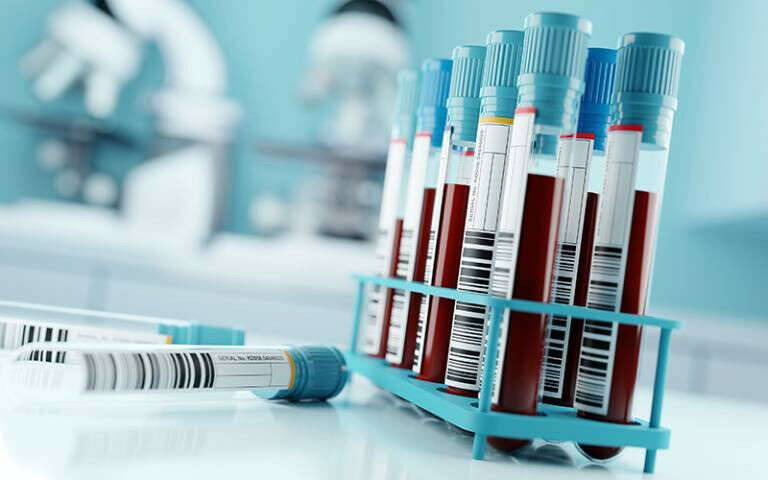
Blood samples - iStock
Blood samples - iStock There is no stable microbial community residing in the bloodstream of healthy humans, according to a new study led by a UCL researcher. The new Nature Microbiology paper makes an important confirmation as blood donations are a crucial part of medical practice. Understanding what types of microbes may be found in blood may allow the development of better microbial tests in blood donations, which would minimise the risk of transfusion-related infections. Lead author, PhD candidate Cedric Tan (UCL Genetics Institute and Francis Crick Institute) said: "Human blood is generally considered sterile. While sometimes microorganisms will enter the bloodstream such as via a wound or after tooth-brushing, mostly this is quickly resolved by the immune system. "But in recent decades this paradigm has been challenged by speculation that the blood could host a community of microbes. Here, we have confirmed this is not the case, as most people's blood does not contain microbes, and the microbial species found in some people's blood varied substantially between individuals." For the study, Cedric worked with a team supervised by Dr Niranjan Nagarajan at A*STAR's Genome Institute of Singapore to analyse the population-scale sequencing data from "SG10K Health", a project of Singapore's National Precision Medicine programme.
TO READ THIS ARTICLE, CREATE YOUR ACCOUNT
And extend your reading, free of charge and with no commitment.