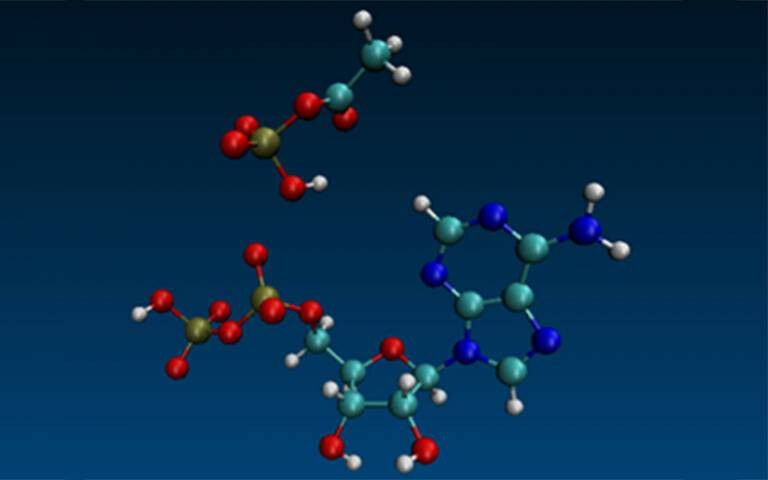
ADP and acetyl phosphate
ADP and acetyl phosphate - An early step in metabolic evolution enabled the emergence of ATP as the universal energy carrier, setting the stage for the origin of life, finds a new study led by UCL researchers. According to the findings published in PLOS Biology , a simple two-carbon compound may have been a crucial player in the evolution of metabolism before the advent of cells. ATP, adenosine triphosphate, is used by all cells as an energy intermediate. During cellular respiration, energy is captured when a phosphate is added to ADP (adenosine diphosphate) to generate ATP; cleavage of that phosphate releases energy to power most types of cellular functions. But building ATP's complex chemical structure from scratch is energy intensive and requires six separate ATP-driven steps. While convincing models do allow for prebiotic formation of the ATP skeleton without energy from already-formed ATP, they also suggest ATP was likely quite scarce on the early Earth, and that some other compound may have played a central role in the conversion of ADP to ATP at this stage of evolution. The most likely candidate identified by the research team was the two-carbon compound acetyl phosphate (AcP), which functions today in both bacteria and archaea as a metabolic intermediate.
TO READ THIS ARTICLE, CREATE YOUR ACCOUNT
And extend your reading, free of charge and with no commitment.