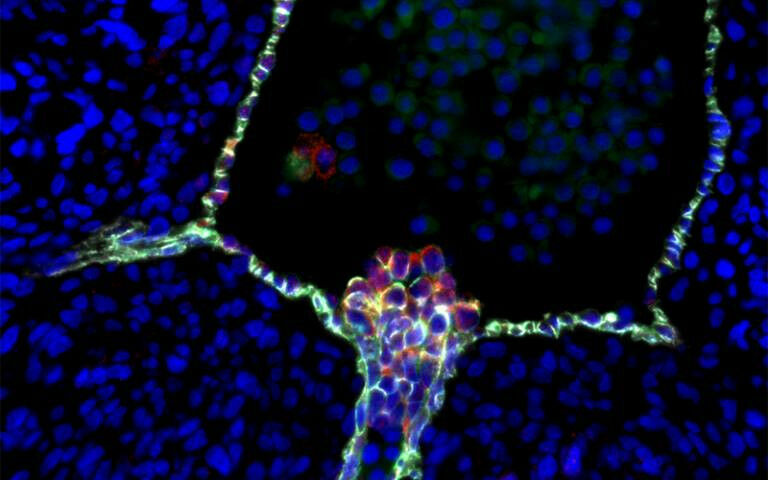
Emerging blood stem cells in aorta - Human blood stem cells emerging from specialised endothelial cells in the wall of an embryonic aorta. UCLA scientists’ confirmation of this process clarifies a longstanding controversy about the stem cells’ cellular origin. Credit: Hanna Mikkola Lab/UCLA, Katja Schenke-Layland Lab/University of Tübingen, Nature
Emerging blood stem cells in aorta - Human blood stem cells emerging from specialised endothelial cells in the wall of an embryonic aorta. UCLA scientists' confirmation of this process clarifies a longstanding controversy about the stem cells' cellular origin. Credit: Hanna Mikkola Lab/UCLA, Katja Schenke-Layland Lab/University of Tübingen, Nature - A first-of-its-kind roadmap traces each step in the development of blood stem cells in the human embryo, providing scientists with a blueprint for producing fully functional blood stem cells in the lab, reports a team led by UCL and UCLA scientists. The research could help expand treatment options for blood cancers like leukaemia and inherited blood disorders such as sickle cell disease. Blood stem cells, also called hematopoietic stem cells, have the ability to make unlimited copies of themselves and to differentiate into every type of blood cell in the human body. For decades, doctors have used blood stem cells from the bone marrow of donors and the umbilical cords of newborns in life-saving transplant treatments for blood and immune diseases. However, these treatments are limited by a shortage of matched donors and hampered by the low number of stem cells in cord blood.
TO READ THIS ARTICLE, CREATE YOUR ACCOUNT
And extend your reading, free of charge and with no commitment.