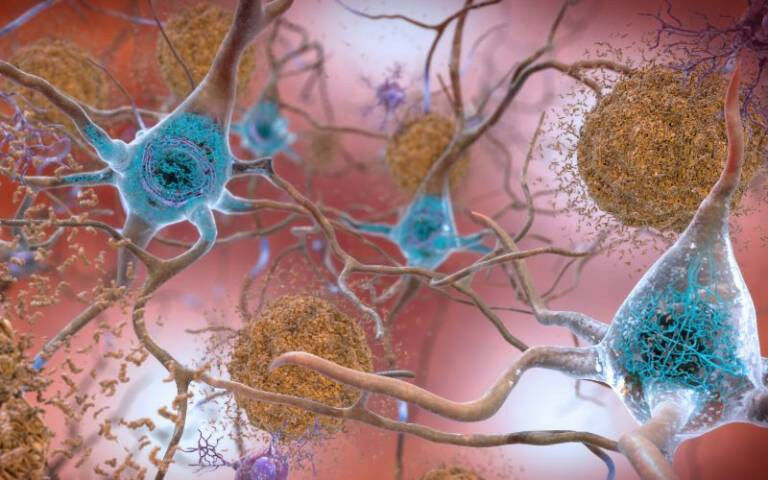
Research published in Nature - The two brain proteins previously known to play major roles in dementia diseases: beta-amyloid plaques (seen in brown) and tau (seen in blue) in the brain. Credit: National Institute on Aging, NIH, on Flickr
Research published in Nature - The two brain proteins previously known to play major roles in dementia diseases: beta-amyloid plaques (seen in brown) and tau (seen in blue) in the brain. Credit: National Institute on Aging, NIH, on Flickr - A study by an international research group co-led by UCL researchers has identified 15 novel biomarkers that are linked to late-onset dementias. These biomarkers are proteins, which predict cognitive decline and subsequent increased risk of dementia already 20 years before the disease onset. The proteins are related to immune system dysfunction, blood-brain-barrier dysfunction, vascular (blood vessel) pathologies, and central insulin resistance. Six of these proteins can be modified with currently available medications prescribed for conditions other than dementia. Lead author Dr Joni Lindbohm (UCL Epidemiology & Public Health and University of Helsinki) said: "These findings provide novel avenues for further studies to examine whether drugs targeting these proteins could prevent or delay the development of dementia." The results of the study have been published in the Alzheimer's & Dementia: The Journal of the Alzheimer's Association . Amyloid beta and tau proteins have dominated pathophysiological research on what causes dementia, but to date prevention and treatment trials targeting these biomarkers have been unsuccessful.
TO READ THIS ARTICLE, CREATE YOUR ACCOUNT
And extend your reading, free of charge and with no commitment.