


news 2011
Categories
Years
2009 | 2010 | 2011 | 2012 | 2013 | 2014 | 2015 | 2016 | 2017 | 2018 | 2019 | 2020 | 2021 | 2022 | 2023 | 2024 | 2025 | 2026 |
2009 | 2010 | 2011 | 2012 | 2013 | 2014 | 2015 | 2016 | 2017 | 2018 | 2019 | 2020 | 2021 | 2022 | 2023 | 2024 | 2025 | 2026 |
Results 241 - 260 of 597.
Health - 13.07.2011

Localised badger culling in response to bovine tuberculosis (TB) outbreaks increases the risk of infection in nearby herds, according to a new analysis. The study, by researchers at the Medial Research Council (MRC) Centre for Outbreak Analysis and Modelling at Imperial College London, is published today in the Royal Society journal Biology Letters .
Health - Psychology - 13.07.2011

Training teenagers to look at social situations positively could help those with anxiety and may help prevent problems persisting into adult life, new research from Oxford University is beginning to suggest. The researchers found that tasks designed to prompt either positive or negative interpretations of unclear situations can shift how healthy teenagers think about such events.
Life Sciences - Health - 12.07.2011
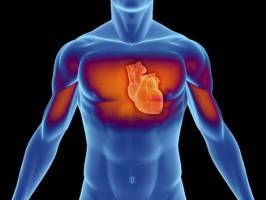
Oxford University researchers have identified a protein that can direct stem cells to become either new heart muscle or blood vessels. The research, which was carried out in zebrafish, offers insight into how it might be possible one day to generate tissues to repair the human heart after damage inflicted by a heart attack.
Life Sciences - Health - 11.07.2011

Adapted from a news release issued by BBSRC 11 July 2011 The genome of the potato has been sequenced in a collaborative international research study involving scientists from Imperial College London, published today in the journal Nature . The potato is the first major UK crop plant to be fully sequenced.
Health - Life Sciences - 11.07.2011
A series of genetic variants associated with the joint disorder ankylosing spondylitis has been identified in a study involving Oxford University researchers. The findings provide new clues as to how the condition may be treated in the future. The study, a collaboration between the Australo-Anglo-American Spondyloarthritis Consortium and the Wellcome Trust Case Control Consortium, also provides one of the first confirmed examples of gene-gene interaction seen in humans.
Health - Life Sciences - 10.07.2011
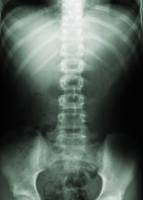
Researchers are one step closer to understanding how an individual's genetic make-up predisposes them to Ankylosing Spondylitis (AS), a common auto-immune arthritis which causes pain and stiffness of the spine, and in serious cases, progressive fusion of the vertebrae and other affected joints. The study is published today.
Physics - 08.07.2011

ESA's Herschel Space Observatory is helping unravel the mystery of the origin of cosmic dust. Thanks to the resolution and sensitivity of Herschel, astronomers have been able to detect cosmic dust from a supernova, adding weight to the theory that these cosmic fireworks are responsible for its creation.
Life Sciences - Environment - 07.07.2011
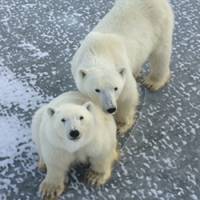
An international team of scientists has discovered that the female ancestor of all living polar bears was a brown bear that lived in present-day Britain and Ireland during the last ice age - 20,000 to 50,000 years ago. Changes in climate affecting the North Atlantic ice sheet probably gave rise to periodic overlaps in bear habitats.
Environment - History & Archeology - 07.07.2011

Scientists have discovered that modern polar bears are descended from now extinct brown bears that roamed the region we know today as Britain and Ireland. It is thought that polar bears moved into this area just before, or during the last Ice Age, where they mated with female brown bears. The maternal lineage of the extinct Irish brown bear can still be traced to all modern polar bears today, according to the research published in the latest issue of the journal Current Biology .
Health - Computer Science - 07.07.2011

University of Manchester scientists have taken a key step towards producing a high-performance computer which aims to create working models of human brain functions. Chips based on ARM processor technology will be linked together to simulate the highly-complex workings of the brain, whose functionality derives from networks of billions of interacting, highly-connected neurons.
Health - Life Sciences - 07.07.2011
Sunburn study could lead to new pain relief
Researchers at King's College London have found a molecule in the body which controls sensitivity to pain from UVB irradiation, identifying it as a new target for medicines to treat pain caused by other common inflammatory conditions such as arthritis. The molecule, called CXCL5, is part of a family of proteins called chemokines, which recruit inflammatory immune cells to the injured tissue, triggering pain and tenderness.
Environment - 06.07.2011
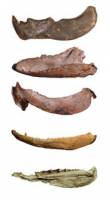
With the evolution of jaws some 420 million years ago, jawed animals diversified rapidly into a range of niches that remained stable for the following 80 million years, despite extinctions, habitat loss and competition, say researchers from the Universities of Bristol, Oxford and Leiden in the leading scientific journal Nature.
Life Sciences - Health - 06.07.2011

Scientists at the University of Bristol's Musculoskeletal Research Unit are investigating why people with very dense bones are more likely to develop the painful condition of osteoarthritis. Sarah Baker, specialist registrar at Southmead Hospital has been awarded a clinical PhD studentship of £164,000 over three years from Arthritis Research UK.
Life Sciences - Earth Sciences - 06.07.2011

Pterosaurs, flying reptiles from the time of the dinosaurs, were not driven to extinction by the birds, but in fact they continued to diversify and innovate for millions of years afterwards. A new study by Katy Prentice, done as part of her undergraduate degree (MSci in Palaeontology and Evolution) at the University of Bristol, shows that the pterosaurs evolved in a most unusual way, becoming more and more specialised through their 160 million years on Earth.
Environment - Physics - 05.07.2011
World War Two Bombing Raids Offer New Insight into the Effects of Aviation on Climate
Climate researchers have turned to the Allied bombing raids of the Second World War for a unique opportunity to study the effect thousands of aircraft had on the English climate at a time when civilian aviation remained rare. The study, published in the International Journal of Climatology, reveals how civilian and military records can help assess the impact of modern aviation on the climate today.
Environment - Physics - 04.07.2011
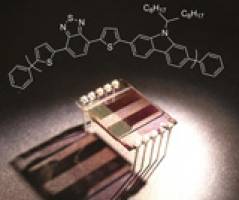
'Cling-film' solar cells could lead to advance in renewable energy A scientific advance in renewable energy which promises a revolution in the ease and cost of using solar cells, has been announced today (Monday 4 July 2011) following work by scientists from the Universities of Sheffield and Cambridge.
Chemistry - Physics - 01.07.2011

Scientists at Oxford University have shown for the first time that molecular cages made from DNA can enter and survive inside living cells. The work, a collaboration between physicists and molecular neuroscientists at Oxford, shows that artificial DNA cages that could be used to carry cargoes of drugs can enter living cells, potentially leading to new methods of drug delivery.
Psychology - 01.07.2011
Chinese-English bilinguals are ’automatic’ translators
PA207/11 New research into how the bilingual brain processes two very different languages has revealed that bilinguals' native language directly influences their comprehension of their second language. The innovative study by researchers in The University of Nottingham's School of Psychology set out to explore whether Chinese-English bilinguals translate English words automatically into Chinese without being aware of this process.
Administration - 01.07.2011
Major palliative care funding review published
A team from the Cicely Saunders Institute at King's College London, partnered with South West Public Health Observatory and Whole Systems Partnership, has made a major contribution to the Palliative Care Funding Review for England, published today (1 July). The review has recommended to Government the introduction of the first ever per-patient funding structure for palliative care in England which could save the NHS up to £180 million a year.
Chemistry - Life Sciences - 01.07.2011

An international collaboration led by researchers at The University of Manchester has for the first time revealed chemical traces of pigments in bird, fish and squid fossils, some over 100 million years old. Publishing their findings in Science , the researchers have been able to show a remarkable relationship between copper and pigment within exceptionally preserved feathers and other soft tissues.


