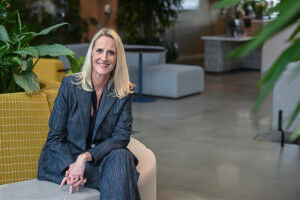
Eight early career researchers from across UCL have received fellowships from the Royal Society to support their research on subjects ranging from neurology to astrophysics.
The various fellowships are aimed at tackling major scientific questions, attracting talent and establishing the next generation of leading researchers in the UK and Ireland. Each of the schemes will provide the freedom and flexibility to pursue curiosity-driven research, form international collaborations and establish new research groups.
Dr Rory Gibb (UCL Biosciences) has been awarded a University Research Fellowship for his research on climate change and the eco-epidemiology of emerging viruses, an interdisciplinary project that will help to understand the environmental factors contributing to the spread of human diseases that originate in animals or microorganisms, in order to inform public health responses. The fellowship awards up to £1.87 million and runs for eight years. It is awarded to early career scientists who have the potential to become leaders in their field. Dr Gibb is one of 39 recipients of the University Research Fellowship this year.
In addition, seven UCL researchers have been awarded a Newton International Fellowship, which supports non-UK researchers in the early stages of their career who wish to conduct research in the UK. Researchers are awarded a maximum of £280,000 over two years. This year, 35 awards have been made. UCL recipients of the Newton International Fellowship are:
- Dr Jacob Bakermans (Sainsbury Wellcome Centre at UCL) to investigate neural models of compositional reasoning and representation in naturalistic behaviour.
- Dr Huw Jarvis (UCL Institute of Cognitive Neuroscience) to develop a gold standard measure of excitation/inhibition balance in the human brain for clinical translation.
- Dr Rahul Kumar (UCL Physics & Astronomy) for research into supermassive black holes that advance astrophysics and probe strong-field general relativity.
- Dr Liang-Yin Lu (UCL Wolfson Institute for Biomedical Research) who is deciphering neural codes in cortex-cerebellum-VTA circuits using high-throughput, multi-colour deep tissue imaging.
- Dr Mayank Singh (UCL Institute of Materials Discovery) developing all-printed microelectrodes and tandem catalyst engineering for high-performance flexible on-chip Zn-S microbatteries.
- Dr Ilia Sokolovskii (UCL Space & Climate Physics) to investigate charge transport in organic semiconductors under strong light-matter coupling through multiscale simulation.
- Dr Brennan Terhune-Cotter (UCL Institute of Cognitive Neuroscience) working to determine the neural mechanisms supporting reading in deaf adults and the role of fingerspelling.
Professor Geraint Rees, UCL Vice-Provost (Research, Innovation & Global Engagement), said: "I am delighted to congratulate the researchers who have been selected for these distinguished fellowships. It highlights the import contributions that early career researchers can make across all fields of science. I’m excited to see where their careers will take them, and how this support can help them advance their work."
The Royal Society is the oldest scientific society in continuous existence in the world. Its mission is to recognise, promote and support excellence in science and to encourage the development and use of science for the benefit of humanity.
Sir Adrian Smith, President of the Royal Society, said: "Early career researchers are the future of science. With the right support they can push the current boundaries of our understanding of the world. That’s why these schemes, which provide long-term funding, or attract talent from overseas, help ensure the UK is developing the next generation of word-leading scientists. It is delightful to see another cohort of outstanding researchers take on their fellowships."
In total, the Royal Society is awarding £83 million to 79 researchers across the UK, and €5 million to researchers in the Republic of Ireland in partnership through Taighde Éireann - Research Ireland.
Funding for the fellowships comes from the Department for Science, Innovation and Technology and the K.C. Wong Education Foundation.
- University College London, Gower Street, London, WC1E 6BT (0) 20 7679 2000