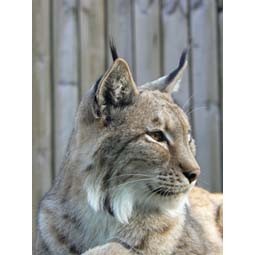
’Iberian Lynx’ by Nutxlago on Flickr . Some rights reserved .
The low genetic diversity of the Iberian lynx ' the most endangered carnivore in Europe - may not decrease the species' chance of survival, according to new research by geneticists. Research looking at DNA from Iberian lynx fossils shows that they have had very little genetic variation over the last 50,000 years, suggesting that a small long-term population size is the 'norm' in the species and has not hampered their survival. The new study is published in the journal Molecular Ecology. Conservationists previously thought that having low genetic diversity would doom a species to extinction, through inbreeding and reduced ability to adapt to changing environments. Such a lack of genetic diversity, also seen in other cat species such as African cheetahs, lions of the Ngorongoro crater and the Florida panther, is usually thought to be the result of population bottlenecks. The effect of human activity or the dramatic ecosystem changes at the end of the last ice age caused by the Holocene warming around 10,000 years ago are common explanations for the phenomenon. However, when researchers in Spain, Denmark and Sweden extracted DNA from the fossil bones and teeth of Iberian lynx, covering a period of at least the last 50,000 years, they found no genetic variation over that period.
TO READ THIS ARTICLE, CREATE YOUR ACCOUNT
And extend your reading, free of charge and with no commitment.