


news
CAMBRIDGE
Results 1621 - 1640 of 1682.
Health - Life Sciences - 26.01.2011
The mechanism that controls the internal 24-hour clock of all forms of life from human cells to algae has been identified by scientists. Not only does the research provide important insight into health-related problems linked to individuals with disrupted clocks - such as pilots and shift workers - it also indicates that the 24-hour circadian clock found in human cells is the same as that found in algae and dates back millions of years to early life on Earth.
Health - 13.01.2011

New British-led research shows that starting treatment of blood pressure with two medicines rather than the one produces better and faster results and fewer side effects - findings that could change clinical practice world-wide. The study, published in the Lancet, challenges popular medical practice for the treatment of high blood pressure.
Life Sciences - Health - 10.01.2011
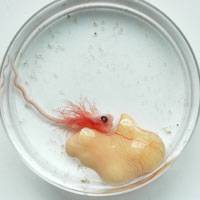
A SCUBA expedition in Australia and New Zealand to find the rare embryos of an unusual shark cousin enabled American and British researchers to confirm new developmental similarities between fish and mammals. Elephant fish, a relative of sharks, utilize the same genetic process for forming skeletal gill covers that lizards and mammals use to form fingers and toes, researchers at the Universities of Cambridge and Chicago found.
Physics - Chemistry - 05.01.2011
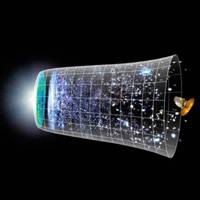
Remnants of the first stars have helped astronomers get closer to unlocking the "dark ages" of the cosmos. A team of researchers from the University of Cambridge and California Institute of Technology are using light emitted from massive black holes called quasars to "light up" gases released by the early stars, which exploded billions of years ago.
History & Archeology - Linguistics & Literature - 28.12.2010

New research has uncovered a forgotten chapter in the history of the Bible, offering a rare glimpse of Byzantine Jewish life and culture. The study by Cambridge University researchers suggests that, contrary to long-accepted views, Jews continued to use a Greek version of the Bible in synagogues for centuries longer than previously thought.
Physics - 17.12.2010

An international team of astronomers have presented the first conclusive evidence for a dramatic surge in star birth in a recently discovered population of massive galaxies in the early Universe. The scientists used the European Space Agency's Herschel Space Observatory, an infrared telescope with a mirror 3.5 m in diameter, launched in 2009.
Health - 14.12.2010

Forget your preconceptions about the civilised, sparkling, white cityscapes of the ancient world: Real-life Pompeii was an altogether more sordid proposition, as Cambridge classicist Mary Beard is set to explain. In an hour-long documentary on BBC Two tonight, Professor Beard will draw on some of the latest finds, as well as her own experience researching Pompeii and Ancient Rome, to uncover little-known facts and bust some long-standing myths about the most famous excavation site in the western world.
Health - Life Sciences - 07.12.2010

Research may shed light on why dementia sufferers have memory difficulties. Memory difficulties such as those seen in dementia may arise because the brain forms incomplete memories that are more easily confused, new research from the University of Cambridge has found. The findings are published today .
Health - 06.12.2010

Damage caused by multiple sclerosis could be reversed by activating stem cells that can repair injury in the central nervous system, a study has shown. Researchers from the Universities of Cambridge and Edinburgh have identified a mechanism essential for regenerating insulating layers - known as myelin sheaths - that protect nerve fibres in the brain.
Psychology - History & Archeology - 01.12.2010

Plants don't think - but animals do. The difference between the thoughts of humans and the thoughts of other animals - and whether we will ever be able to find out exactly what they are - will be the topic of a public lecture given this evening by a Cambridge philosopher. While scientists spend their time in laboratories, philosophers spend their time thinking.
Economics - 22.11.2010

Look beyond simply the famed oracular priestess breathing in hallucinogenic gases and you find a place whose past speaks directly to the 21st century. That is the argument of Cambridge University's Dr Michael Scott who is researching how and why Delphi, a small Greek town and religious sanctuary perched on a difficult to reach mountainside, was for 1,000 years the proclaimed 'omphalos', the 'bellybutton', the very centre of the ancient world.
Physics - Mechanical Engineering - 19.11.2010

Heisenberg Uncertainty Principle sets limits on Einstein's "spooky action at a distance", new research finds. Researchers have uncovered a fundamental link between the two defining properties of quantum physics. Jonathan Oppenheim, a physicist at the Department of Applied Mathematics & Theoretical Physics and a Fellow of Wolfson, and Stephanie Wehner of Singapore's Centre for Quantum Technologies and the National University of Singapore published their work today in the latest edition of the journal Science.
Health - 16.11.2010

The diet and health of the poorest people in developing countries could benefit from cash-for-work schemes, Cambridge University research has shown for the first time. Despite previous concerns that the physical labour and long hours involved in humanitarian cash-for-work schemes could be detrimental to the health of the extreme poor, the study has provided the first clear evidence of a positive impact on enrolled households.
Life Sciences - Health - 16.11.2010

Scientists have discovered the origin of a unique type of cell known for its ability to support regeneration in the central nervous system. Their findings raise the possibility of obtaining a more reliable source of these cells for use in cell transplantation therapy for spinal cord injuries. Olfactory ensheathing cells (OECs), as the name suggests, ensheath and protect the nerve fibres in the olfactory nerve, which transmit olfactory (smell) information to the brain from receptor cells sitting in the lining of the nose.
Health - Life Sciences - 08.11.2010

Scientists have found that the fat cells and tissues of morbidly obese people and animals can reach a limit in their ability to store fat appropriately. Beyond this limit several biological processes conspire to prevent further expansion of fat tissue and in the process may trigger other health problems.
Health - Life Sciences - 05.11.2010
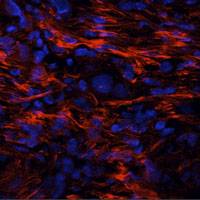
Researchers at the University of Cambridge hope to revolutionise cancer therapy after discovering one of the reasons why many previous attempts to harness the immune system to treat cancerous tumours have failed. New research, published today , reveals that a type of stromal cell found in many cancers which expresses fibroblast activation protein alpha (FAP), plays a major role in suppressing the immune response in cancerous tumours - thereby restricting the use of vaccines and other therapies which rely on the body's immune system to work.
Psychology - History & Archeology - 04.11.2010

Extremism is an aspect of humanity common to all of us, and is not necessarily a negative trait, a University of Cambridge researcher will argue at a presentation of his work tomorrow. Shahzad Shafqat (pictured) worked as a psychologist in his native Pakistan and spent five years with the Pakistan Air Force, before coming to Cambridge to study for an MPhil and PhD on the Psychology of Extremism at the Department of Social and Developmental Psychology.
Life Sciences - 03.11.2010
Identity of Pompeii’s mystery horse revealed
The identity of a mysterious breed of "horse" which has baffled experts since its remains were uncovered at Pompeii has been resolved by a Cambridge University researcher - who realised it was a donkey. Academics initially believed that they had unearthed a new, now-extinct, breed of horse when they analysed DNA sequences from skeletons found at a house in the ancient Roman town in 2004.
Physics - Environment - 02.11.2010

Evidence of an intense warming period in the Universe's early history, described as a form of "cosmic climate change", has been found by an international team of astronomers. The findings, shortly to be published in the Monthly Notices of the Royal Astronomical Society, were made by researchers measuring the temperature of gas that lies in between galaxies.
Agronomy & Food Science - Health - 27.10.2010

Study on effects of anti-obesity drug on the brain paves way for more effective treatments. Scientists have revealed that an anti-obesity drug changes the way the brain responds to appetising, high-calorie foods in obese individuals. This insight may aid the development of new anti-obesity drugs which reduce the activity in the regions of the brain stimulated by the sight of tasty foods.


