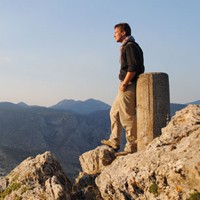
Delphi: The bellybutton of the ancient world
Look beyond simply the famed oracular priestess breathing in hallucinogenic gases and you find a place whose past speaks directly to the 21st century. That is the argument of Cambridge University's Dr Michael Scott who is researching how and why Delphi, a small Greek town and religious sanctuary perched on a difficult to reach mountainside, was for 1,000 years the proclaimed 'omphalos', the 'bellybutton', the very centre of the ancient world. Famed for its oracle at the Temple of Apollo, he is also examining the evidence of Delphi's many other gods, athletic and musical games and the monuments to unity - as well as civil war - that crowded its religious sanctuaries. Dr Scott, who tonight presents the BBC 4 documentary - Delphi: Bellybutton of the Ancient World (9pm), uses the latest architectural plans of the temple of Apollo (published July 2010), which reveal for the first time archaeological traces of what may have been the oracular priestess's consultation room inside the temple. He also argues that the town, which drew kings and emperors as well as cities and commoners from all corners of the Mediterranean world and beyond, still speaks as powerfully to us today as it did in the past. He said: "Imagine a place with the wealth of the Swiss banks, the religious power of the Vatican, the advertising potential of the World Cup and the historical importance of all the world's museums combined; that was Delphi. "And its two great maxims: 'Know Thyself' and 'Nothing in Excess', can be applied to modern life as easily as they could to the ancient Greeks.
TO READ THIS ARTICLE, CREATE YOUR ACCOUNT
And extend your reading, free of charge and with no commitment.