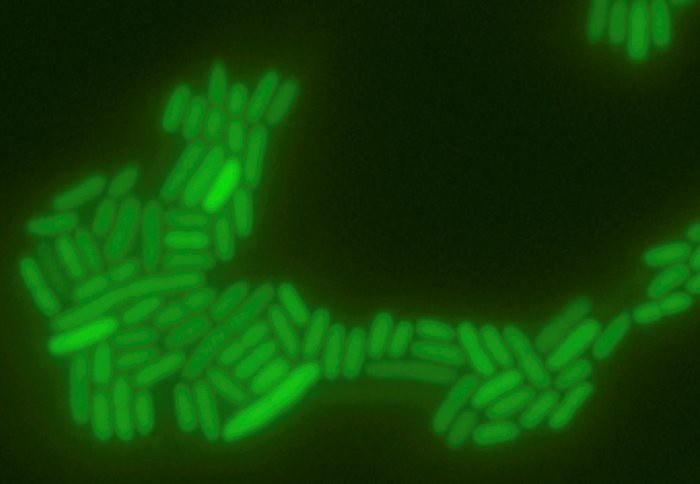
Light bulb in a cell
Scientists have developed a tiny fluorescing light bulb for detecting potential problems in biological devices. Over the last 15 years, researchers have begun to design and develop devices made from harmless host cells such as bacteria, combined with parts such as DNA, RNA, and proteins that can carry out different functions. This work, known as synthetic biology, has the potential to produce a range of new products such as clean biofuels, better pharmaceuticals and improved medical devices. We think our method will ultimately improve scientists' ability to test the biological devices that they are developing, making the devices more robust and responsive. For synthetic biology to be successful, the various parts need to act predictably so that they can perform their assigned tasks. However, adding different components to a host cell can sap its resources, causing it to grow more slowly and changing its behaviour. To address this problem, a team from Imperial College London have developed a nanoscopic light-bulb, called a fluorescent capacity monitor, which dims when it detects a drain on the resources needed to power the parts of a biological device.
TO READ THIS ARTICLE, CREATE YOUR ACCOUNT
And extend your reading, free of charge and with no commitment.