This discovery can help pharmaceutical chemists design new drug molecules with a better understanding of how they will be broken down in the body.
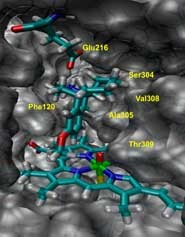
A new discovery about how molecules are broken down by the body, which will help pharmaceutical chemists design better drugs, has been made by researchers at the University of Bristol. Working with Professor Jeremy Harvey and Professor Adrian Mulholland of Bristol's School of Chemistry , Dr Julianna Olah, an EU Marie Curie Fellow in Bristol at the time, studied a class of enzymes ' cytochromes P450 - which play an important role in removing drug molecules from the body. When a tablet of medicine is taken, the active molecules get absorbed into the bloodstream through the gut and make their way around the body, including to the cells in which they are intended to act; however, it's important they don't stay in the body forever. Enzymes (biological catalysts) help break them down to facilitate excretion. The cytochromes P450 are a very important class of these 'tidying up' enzymes which have evolved to deal with all 'foreign' compounds that do not get broken down as part of normal metabolism (that is, any compounds which are not proteins, carbohydrates or lipids). Mainly situated in the liver, the P450 enzymes help remove drug molecules by adding oxygen to them. This process usually works smoothly, but for some molecules, it can lead to oxygenated variants that are toxic.
TO READ THIS ARTICLE, CREATE YOUR ACCOUNT
And extend your reading, free of charge and with no commitment.