


news 2011
Environment
Results 21 - 40 of 63.
Chemistry - Environment - 18.07.2011

The solitary and mysterious lives of British otters are being uncovered by Cardiff scientists - thanks to help from the public. Otters were already understood to use scent as their main means of communication. However, little was known about what information was communicated or the social functions of the scent.
Environment - 15.07.2011

The genome of a dry rot fungus has revealed how it can cause severe damage to buildings. The findings could help in the development of biofuels and may explain how conifer forests evolved. In 2007 the US Department of Energy's Joint Genome Institute sequenced Serpula lacrymans in order to see if the way it breaks down cellulose in wood could be harnessed for biofuel production.
Environment - Earth Sciences - 13.07.2011
Sub-glacier terrain affects sea levels
Fresh research into glaciers could help scientists better predict the impact of changing climates on global sea levels. Scientists have shown for the first time that the terrain beneath glaciers influences how much glacier melt contributes to fluctuations in sea levels. Researchers say the study will improve their understanding of how ice sheet movements have affected sea levels in the past.
Life Sciences - Environment - 07.07.2011
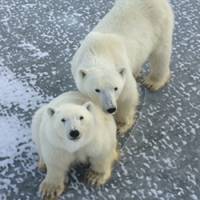
An international team of scientists has discovered that the female ancestor of all living polar bears was a brown bear that lived in present-day Britain and Ireland during the last ice age - 20,000 to 50,000 years ago. Changes in climate affecting the North Atlantic ice sheet probably gave rise to periodic overlaps in bear habitats.
Environment - History & Archeology - 07.07.2011

Scientists have discovered that modern polar bears are descended from now extinct brown bears that roamed the region we know today as Britain and Ireland. It is thought that polar bears moved into this area just before, or during the last Ice Age, where they mated with female brown bears. The maternal lineage of the extinct Irish brown bear can still be traced to all modern polar bears today, according to the research published in the latest issue of the journal Current Biology .
Environment - 06.07.2011
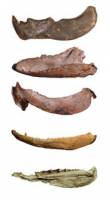
With the evolution of jaws some 420 million years ago, jawed animals diversified rapidly into a range of niches that remained stable for the following 80 million years, despite extinctions, habitat loss and competition, say researchers from the Universities of Bristol, Oxford and Leiden in the leading scientific journal Nature.
Environment - Physics - 05.07.2011
World War Two Bombing Raids Offer New Insight into the Effects of Aviation on Climate
Climate researchers have turned to the Allied bombing raids of the Second World War for a unique opportunity to study the effect thousands of aircraft had on the English climate at a time when civilian aviation remained rare. The study, published in the International Journal of Climatology, reveals how civilian and military records can help assess the impact of modern aviation on the climate today.
Environment - Physics - 04.07.2011
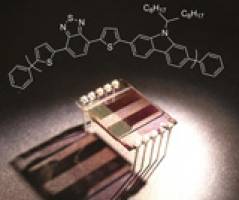
'Cling-film' solar cells could lead to advance in renewable energy A scientific advance in renewable energy which promises a revolution in the ease and cost of using solar cells, has been announced today (Monday 4 July 2011) following work by scientists from the Universities of Sheffield and Cambridge.
Health - Environment - 30.06.2011
Farm animal disease to increase with climate change
Scientists at the University of Liverpool have shown that recent climate change could have caused a serious infectious disease in farm animals to spread through Europe. Researchers looked at changes in the behaviour of bluetongue - a viral disease of cattle and sheep - from the 1960s to the present day, as well as what could happen to the transmission of the virus 40 years into the future.
Environment - 22.06.2011
Gyrfalcons make icebergs home
Science Pete Wilton | 22 Jun 11 Back in World War II there was a clever idea to use icebergs as floating aircraft carriers, but now we know birds of prey got their first. A recent study that tracked the seasonal movements of 48 gyrfalcons with radio transmitters showed that some birds spent most of the winter over the ocean, probably using sea ice and icebergs as floating bases to hunt from.
Environment - 21.06.2011
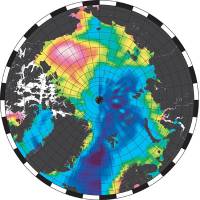
Scientists at UCL have produced the most extensive map of Arctic sea-ice thickness yet using just two months' worth of data from the European Space Agency's ice mission, CryoSat-2. Data from the satellite has also helped them create an updated map of ocean circulation in the Arctic, and a topographical relief map of Antarctica.
Environment - 21.06.2011
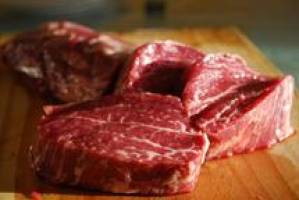
Meat grown using tissue engineering techniques, so-called 'cultured meat', would generate up to 96% lower greenhouse gas emissions than conventionally produced meat, according to a new study. The analysis, carried out by scientists from Oxford University and the University of Amsterdam, also estimates that cultured meat would require 7-45% less energy to produce than the same volume of pork, sheep or beef.
Life Sciences - Environment - 09.06.2011
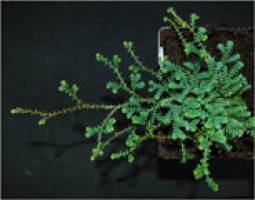
Controlling water loss is an important ability for modern land plants as it helps them thrive in changing environments. New research from the University of Bristol, published today in the journal Current Biology, shows that water conserving innovations occurred very early in plants? evolutionary history.
Life Sciences - Environment - 09.06.2011
Parrots and crows show their inventive side
A team of researchers from the Universities of Oxford and Vienna have tested the technical skills and innovation abilities of two of the most intelligent birds known, kea parrots and New Caledonian crows. New Caledonian crows regularly use and manufacture complex tools in the wild to extract food, feats that they repeat in the laboratory.
Environment - 08.06.2011
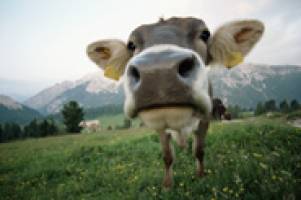
Scientists could have a revolutionary new way of measuring how much of the potent greenhouse gas methane is produced by cows and other ruminants, thanks to a surprising discovery in their excrement. Researchers from the University of Bristol and the Teagasc Animal and Grassland Research Centre in Ireland, have found a link between methane production and levels of a compound called archaeol in the faeces of several fore-gut fermenting animals including cows, sheep and deer.
Environment - Earth Sciences - 03.06.2011
Frozen fjords found under Antarctic ice
Scientists have uncovered a landscape of deep fjords in Antarctica, carved by millions of years of ice movement. University researchers say the discovery, in a part of East Antarctica roughly the size of France, gives valuable insight into how the ice sheet formed. The global team of researchers say the find will also improve their understanding of how ice in the region might melt if ocean temperatures rise.
Earth Sciences - Environment - 02.06.2011

Scientists have unlocked more secrets about our evolutionary past by using new techniques to extract information from the fossilised teeth of our ancient human ancestors. By testing the tooth enamel of 19 hominids found in cave sites in South Africa, a new study involving researchers at the University of Oxford provides surprising evidence of how individuals dating back more than 2 million years once lived.
Health - Environment - 01.06.2011
Scientists make breakthrough in study of Autoimmune Disease
Diseases of the immune system such as multiple sclerosis, rheumatoid arthritis and psoriasis could be treated by a gas produced naturally by the body, scientists at the University have found. Autoimmune disease occurs when a person's immune system attacks his own body. It is a major global health problem and it is vital that better treatment is found.
Environment - Life Sciences - 31.05.2011
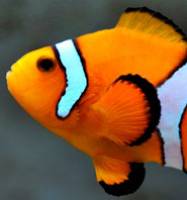
Baby clownfish use hearing to detect and avoid predator-rich coral reefs during the daytime, but new research from the University of Bristol demonstrates that ocean acidification could threaten this crucial behaviour within the next few decades. Since the Industrial Revolution, over half of all the CO2 produced by burning fossil fuels has been absorbed by the ocean, making pH drop faster than any time in the last 650,000 years and resulting in ocean acidification.
Environment - 26.05.2011
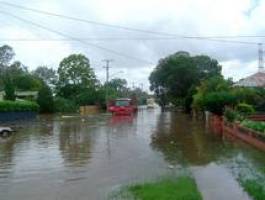
Dramatic climate swings behind both last year's Pakistan flooding and this year's Queensland floods in Australia are likely to continue as the world gets warmer, scientists predict. Researchers at the Universities of Oxford and Leeds have discovered that the El Niño Southern Oscillation (ENSO), the sloshing of the warmest waters on the planet from the West Pacific towards the East Pacific every 2-7 years, continued during the Earth's last great warm period, the Pliocene.


