


news 2011
Categories
Years
2009 | 2010 | 2011 | 2012 | 2013 | 2014 | 2015 | 2016 | 2017 | 2018 | 2019 | 2020 | 2021 | 2022 | 2023 | 2024 | 2025 | 2026 |
2009 | 2010 | 2011 | 2012 | 2013 | 2014 | 2015 | 2016 | 2017 | 2018 | 2019 | 2020 | 2021 | 2022 | 2023 | 2024 | 2025 | 2026 |
Results 501 - 520 of 597.
Health - 25.02.2011

The quality of stroke care in the UK is improving, but significant inequalities still exist, according to a study by a team of researchers and clinicians at King's College London and Guy's and St Thomas' NHS Foundation Trust, as part of King's Health Partners. The study was published in the British Medical Journal this week.
Health - 25.02.2011
Birmingham pushes ahead on global scourge of TB
Scientists at the University of Birmingham have taken a crucial first step towards deciphering the atomic make-up of a key drug target in tuberculosis (TB). They hope the breakthrough will be instrumental in helping to lead to the development of new therapies to tackle this ancient disease. In the online journal PLoS Pathogens, microbiologists Professor Gurdyal (Del) Besra, Dr Klaus Fütterer and Dr Luke Alderwick, from the School of Biosciences, report the structure of the enzyme EmbC, that plays a vital role in assembling the cell envelope of the tubercle bacillus Mycobacterium tuberculosis.
Life Sciences - Environment - 24.02.2011
Can marine life adapt to global change?
A team of researchers from the University of Plymouth, the Marine Biological Association of the UK and the Plymouth Marine Laboratory have conducted an exciting new study looking into the potential effect of climate change on marine life, and how marine animals may be able to adapt to future environmental scenarios.
Health - Life Sciences - 24.02.2011
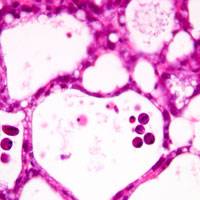
A novel mechanism of cell death that occurs in mammalian organisms has been revealed by researchers at the University of Cambridge. Billions of damaged or superfluous cells die in our bodies every day. It is thought that most cell death occurs by a process called apoptosis, in which biochemical events lead to cell changes and death.
Psychology - 24.02.2011
Children learning to count at earlier age
Children learning to count at earlier age Researchers at the University of Sheffield have shown that children begin to learn to count at an earlier age than previously thought. Professor Michael Siegal, from the University´s Department of Psychology, worked with colleagues at the University of Queensland and Kyoto University to study how young children responded to videos of counting.
Physics - 24.02.2011

Solar experts detect waves in giant magnetic holes the size of the UK Massive waves in giant magnetic holes on the surface of the Sun have been discovered for the first time by solar scientists from the University of Sheffield and Queen´s University Belfast, something that will bring experts a step closer to unlocking the secrets of the Sun.
Health - History & Archeology - 24.02.2011
Family history to tackle dementia
Health Cath Harris | 24 Feb 11 A novel way of finding people to take part in a new study of dementia is being employed by researchers from the universities of Oxford and London. The Oxford Project to Investigate Memory and Aging ( OPTIMA) and the Centre for Stroke and Dementia Research at St Georges , University of London, will host stands at the Who Do You Think You Are?
Health - Life Sciences - 23.02.2011

Scientists have identified a diabetes drug which halves the mortality rate of a deadly infectious disease found throughout Southeast Asia and Northern Australia. Melioidosis, caused by a soil dwelling bacterium (Burkholderia pseudomallei) that is present in certain regions of the world, results in severe infections include bloodstream infections and pneumonia.
Health - Life Sciences - 23.02.2011
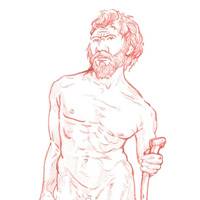
Research by a Cambridge archaeologist shows that back pain caused untold misery long before we started staring into screens and slumping on sofas. The high incidence of back pain apparent today is often blamed on our lazy lifestyles: we sit at computers, watch television, travel by car and eat too much.
Health - 21.02.2011

Scientists at the University of Cambridge have discovered that sheep are more intelligent than previously believed. Despite having a comparable brain size to other highly evolved animals, sheep have been historically perceived as unintelligent and were therefore not considered to be good animal models for studying diseases that affect learning and memory.
Physics - 18.02.2011
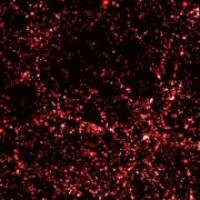
Scientists weigh out ingredients for the perfect galaxy Herschel space telescope finds out how much dark matter it takes to make a galaxy - News Friday 18 February 2011 Adapted from a news release issued by the UK Space agency and NASA Astronomers working with Europe 's Herschel Space Observatory have found out just how much dark matter it takes to make a new galaxy bursting with stars.
Health - 18.02.2011
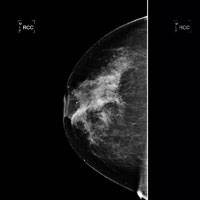
Scientists have pinpointed a key cancer-causing gene that, when overactive, triggers a particularly aggressive type of breast cancer to develop. This is the first time in over five years that scientists have discovered a new breast cancer 'oncogene' - cancer-causing genes that when overactive upset the normal checks and balances that control when and how often a cell divides.
Life Sciences - Health - 17.02.2011
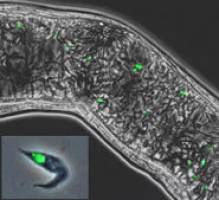
Compelling visual evidence of sexual reproduction in African trypanosomes, single-celled parasites that cause major human and animal diseases, has been found by researchers from the University of Bristol. The research could eventually lead to new approaches for controlling sleeping sickness in humans and wasting diseases in livestock which are caused by trypanosomes carried by the bloodsucking tsetse fly.
Linguistics & Literature - History & Archeology - 17.02.2011

Launched as a reaction to the lack of outlets for challenging contemporary writing, a Cambridge-based journal is finding favour in the very places it aims to be the antidote for. One year on from its birth and with the fifth issue soon to be released, the Cambridge Literary Review continues to gain prominence, with a strong write up in the Times Literary Supplement and copies on sale in the Tate Modern bookshop amongst others.
Health - Life Sciences - 17.02.2011
The placebo effect: expecting the best, fearing the worst
Health 17 Feb 11 Poor expectations of treatment can override all the effect of a potent pain-relieving drug, a brain imaging study at Oxford University has shown. In contrast, positive expectations of treatment doubled the natural physiological or biochemical effect of the opioid drug among the healthy volunteers in the study.
Physics - 16.02.2011

Dark matter key ingredient for making galaxies A team of scientists led by a Sussex astronomer has discovered the perfect recipe for galaxy formation, a forthcoming journal paper reveals. Using the European Space Agency's Herschel Space Observatory to study distant objects with the Spectral and Photometric Imaging Receiver (SPIRE) camera, researchers have found that it takes dark matter equivalent to 300 billion Suns to give rise to a galaxy bursting with stars.
Environment - Earth Sciences - 16.02.2011
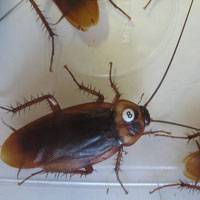
Researchers discover an 'atmospheric imprint' in insects, revealing where they are most likely to survive should climate change alter their ecosystem. Scientists have discovered that insects contain atomic clues as to the habitats in which they are most able to survive. The research has important implications for predicting the effects of climate change on the insects, which make up three-quarters of the animal kingdom.
Health - 16.02.2011
Cancer's unusual suspects
Science | Health Jonathan Wood | 16 Feb 11 The standard treatment for acute myeloid leukaemia , the most common type of leukaemia in adults, is chemotherapy. But in some people the cancer of the white blood cells can come back after initially successful treatment. This is thought to be because some cancer stem cells - key cells able to drive the growth of cancers - have remained even after the chemotherapy.
Health - Economics - 16.02.2011
Water softeners not found to improve childhood eczema
PA 46/11 The first study of its kind in the world — involving 336 children aged between six months and 16 years old — has shown that installing a water softener for three months brings no additional relief for eczema sufferers. Up to one fifth of all children of school age have eczema, along with about one in 12 of the adult population.
Physics - Chemistry - 16.02.2011

An international team of astronomers have identified a thick stellar disc in the Andromeda galaxy, which will help them to understand more about how our own Milky Way and other galaxies evolved. The University of Cambridge-led study involved researchers from the UK, US and Europe, and marks the first time that the "thick disc" in Andromeda, which contains old stars, has been identified.


