


news 2011
Categories
Years
2009 | 2010 | 2011 | 2012 | 2013 | 2014 | 2015 | 2016 | 2017 | 2018 | 2019 | 2020 | 2021 | 2022 | 2023 | 2024 | 2025 | 2026 |
2009 | 2010 | 2011 | 2012 | 2013 | 2014 | 2015 | 2016 | 2017 | 2018 | 2019 | 2020 | 2021 | 2022 | 2023 | 2024 | 2025 | 2026 |
Results 401 - 420 of 597.
Life Sciences - Health - 15.04.2011
Genes that control ’ageing’ steroid identified
Eight genes which control levels of the main steroid produced by the adrenal gland, believed to play a role in ageing and longevity, have been uncovered by an international consortium of scientists, co-led by King's College London. Crucially, some of these eight genetic regions are also associated with other important diseases of ageing, including type 2 diabetes and lymphoma.
Life Sciences - Pedagogy - 14.04.2011
Geneticist solves airport baby riddle
A University researcher has helped a man abandoned at birth in Gatwick airport to trace his genetic roots. Dr Jim Wilson, of the Centre for Population Health Sciences, analysed the man's to identify where his parents may have come from. Steve Hydes, now 25, was found as a ten day old baby on the floor of a ladies toilet in Gatwick airport.
Health - Life Sciences - 14.04.2011
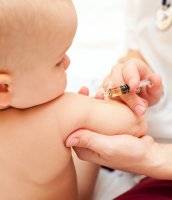
Adapted from a news release issued by the Medical Research Council. Wednesday 13 April 2011 Scientists have found a new group of proteins that could boost the effectiveness of vaccinations, making it much easier to immmunise newborn African children.
Health - 14.04.2011
Illusion can halve the pain of osteoarthritis, scientists say
A serendipitous discovery by academics at The University of Nottingham has shown that a simple illusion can significantly reduce — and in some cases even temporarily eradicate — arthritic pain in the hand. By tricking the brain into believing that the painful part of the hand is being stretched or shrunk, the researchers were able to halve the pain felt by 85 per cent of sufferers they tested.
Life Sciences - Health - 14.04.2011
Loch fossils show life harnessed sun and sex early on
Remote lochs along the west coast of Scotland are turning up new evidence about the origins of life on land. A team of scientists exploring rocks around Loch Torridon have discovered the remarkably preserved remains of organisms that once lived on the bottom of ancient lake beds as long as a billion (1000 million) years ago.
Physics - Computer Science - 14.04.2011

A powerful new telescope is allowing an international team led by University of Manchester scientists to have their "best-ever look” at pulsars - rapidly rotating neutron stars created when massive stars die. In the first scientific results from the new European telescope LOFAR (Low Frequency Array) to appear in a journal - Astronomy & Astrophysics - the scientists present the most sensitive, low-frequency observations of pulsars ever made.
Life Sciences - Health - 13.04.2011
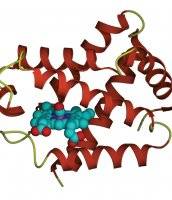
By Colin Smith Scientists have developed a way of studying cells by comparing how proteins inside them bind with one another. The team, from Imperial College London, have developed an algorithm called MI-GRAAL that enables them to study protein-protein interaction (PPI) networks, where a cell's proteins bind together in complex networks so that they can carry out their functions.
Health - 12.04.2011
Filtering fumes could reduce heart attacks
A simple diesel exhaust trap could reduce the risk of heart attacks in traffic-heavy areas. University scientists have shown that 'particle traps' dramatically reduce the negative effects of diesel fumes on the heart and circulation and might reduce heart attack risk. Study The researchers, funded by the British Heart Foundation, examined the effects of diesel fumes at levels common in heavy traffic on the roads of the UK's largest cities.
Chemistry - Life Sciences - 12.04.2011

An international group of scientists has used a powerful new X-ray technique to observe for the first time at the molecular scale how muscle proteins change form and structure inside a contracting muscle cell. The study, led by scientists from King's College London, Università di Firenze (Italy), and the European Synchrotron Radiation Facility (ESRF) in Grenoble (France), is published in the latest issue of the Proceedings of the National Academy of Sciences (PNAS).
Life Sciences - Health - 11.04.2011
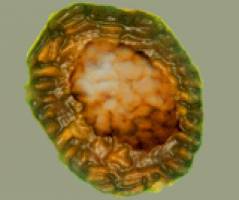
Loch fossils show life harnessed sun and sex early on Remote lochs along the west coast of Scotland are turning up new evidence about the origins of life on land. A team of scientists from the University of Sheffield, the University of Oxford and Boston College, who are exploring rocks around Loch Torridon, have discovered the remarkably preserved remains of organisms that once lived on the bottom of ancient lake beds as long as a billion (1,000 million) years ago.
Health - Life Sciences - 11.04.2011
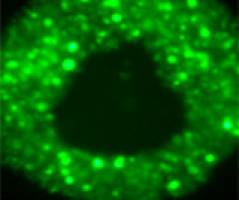
New treatment can destroy prostate cancer from within A `Trojan´ system developed by researchers at the Universities of Sheffield and York attacks cancerous cells from within and potentially offers a safer treatment for prostate tumours. The technique involves the use of a patient´s own white blood cells called macrophages to deliver an oncolytic viruses to tumours that is tailored specifically to grow in and destroy the cancer cells.
Health - Life Sciences - 08.04.2011
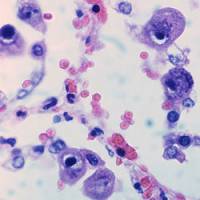
A major infectious problem after organ transplantation, cytomegalovirus (CMV), could potentially be targeted with a vaccine, according to new results from a phase II clinical trial led by scientists from UCL and doctors at the Royal Free Hospital. The results of this Phase II proof-of-concept study, published in The Lancet today, show that a vaccine preparation moderated the severity of CMV infection in patients waiting for kidney and liver transplants and, in some cases, may have interrupted transmission of the virus from donor to recipient.
Psychology - Health - 08.04.2011
How images of wealth and success can negatively shape body image
How images of wealth and success can negatively shape body image The advert for a facial cream shows a slender woman with perfect skin in an exotic holiday location. How does it make you feel? Research has already shown that exposure to images of ultra thin models has a negative impact on women's perception of their own bodies.
Environment - Life Sciences - 07.04.2011
Climate change is making our environment ’bluer’
A study of the 'spectral colour' of animal populations and their habitats shows they are linked, and that both are becoming more blue. Scientists say this has an effect on extinction rates - news Thursday 7 April 2011 Adapted from a news release by British Ecological Society The 'colour' of our environment is becoming 'bluer', a change that could have important implications for animals' risk of becoming extinct, say ecologists from Imperial College London this week.
Life Sciences - Environment - 07.04.2011
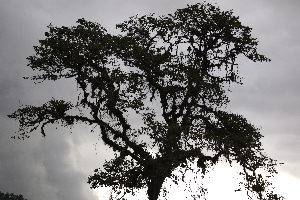
Scientists from the University of Manchester are among a group of researchers investigating how genetic differences among individuals contribute to the way ecological communities form, interact and change over time. They say that understanding how individuals interact and form sustainable communities can help society to address issues including food security, prevention of disease and the coexistence between humans and nature in a crowded world.
Life Sciences - Chemistry - 07.04.2011
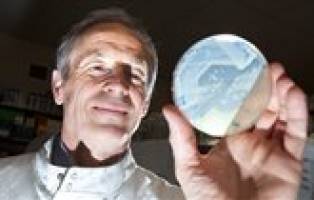
Scientists from the Universities of Birmingham and Bristol have discovered how marine bacteria join together two antibiotics they make independently to produce a potent chemical that can kill drug-resistant strains of the MRSA superbug. Working with Japanese pharmaceutical company Daiichi-Sankyo, and funded by the UK Biotechnology and Biological Sciences Research Council (BBSRC), the researchers' work paves the way for the creation of new hybrid antibiotics that may help to solve the growing problem of bacterial infections that are resistant to essentially all antibiotics.
Environment - Life Sciences - 06.04.2011
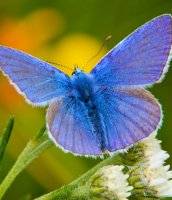
Adapted from a news release by British Ecological Society The 'colour' of our environment is becoming 'bluer', a change that could have important implications for animals' risk of becoming extinct, say ecologists from Imperial College London this week. In a major study published this week in the British Ecological Society's Journal of Animal Ecology , researchers examined how quickly or slowly animal populations and their environment fluctuate over time, something ecologists describe using 'spectral colour'.
Health - Economics - 06.04.2011

Plain cigarette packaging could help prevent people taking up the habit but would have little effect on those who already smoke on a daily basis, according to new research from the UK Centre for Tobacco Studies (UKCTCS), which has bases at the Universities of Bristol and Bath. The researchers monitored the eye movements of non-smokers, light smokers and daily smokers who were asked to look at non-branded cigarette packets that showed only the health warning as compared to branded packets with identical health warnings.
Health - 06.04.2011
General Medical Council (GMC) decisions about doctors who qualify outside the UK are more likely to have far reaching consequences (high impact decisions), finds research led by King's College London, published in the British Medical Journal today.
Life Sciences - 06.04.2011
Scientists at King's College London have discovered specific cells responsible for ensuring that different parts of the eye come together during development, according to a paper published . These findings significantly enhance understanding of how the different components of the eye are organised into a functional organ, and therefore reveal clues as to the possible causes of congenital malformations that lead to life-long visual impairment.


