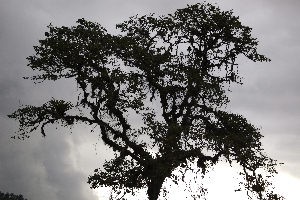
A tropical tree covered with epiphyte plants
Scientists from the University of Manchester are among a group of researchers investigating how genetic differences among individuals contribute to the way ecological communities form, interact and change over time. They say that understanding how individuals interact and form sustainable communities can help society to address issues including food security, prevention of disease and the coexistence between humans and nature in a crowded world. Biologists from the Universities of Manchester, York, and St Andrews have edited a special issue of Philosophical Transactions of the Royal Society-B published on 28 March 2011 which focuses on how genetic interactions between individuals shape communities of plants and animals. 'Community Genetics: at the cross-roads of ecology and evolutionary genetics' contains 13 research articles and commentaries by researchers, from the UK, the USA and Spain, examining how variation within species changes interactions among species. The issue's co-editor, Dr Richard Preziosi, of the Faculty of Life Sciences in Manchester, said: "This research featured in this special issue of the journal reveals how genetic differences within species affect the wildlife communities of the whole local ecosystem. Dr Preziosi's own research, which features in the special-issue journal, examined how the underlying genetic make-up of an individual tree can affect the community of associated species in a diverse and complex tropical rainforest ecosystem. The Manchester team studied the plant and invertebrate communities that live on the Breadnut trees of the tropical forests of Belize in Central America to discover the extent to which an individual tree determines what species live on and around it.
TO READ THIS ARTICLE, CREATE YOUR ACCOUNT
And extend your reading, free of charge and with no commitment.