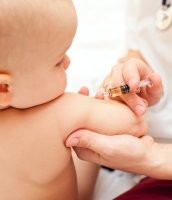
Scientists have found a new group of proteins that could boost the effectiveness of vaccinations, making it much easier to immmunise newborn children.
Adapted from a news release issued by the Medical Research Council. Wednesday 13 April 2011 Scientists have found a new group of proteins that could boost the effectiveness of vaccinations, making it much easier to immmunise newborn African children. This discovery, carried out by a multinational team including researchers at Medical Research Council (MRC) The Gambia and Imperial College London, could help refine vaccines so that they are specifically designed to work with a newborn's immune system and go some way to helping the millions of children under five who die each year from infections such as pneumonia and diarrhoea. Infectious diseases are a huge cause of infant mortality globally, in part because newborns do not yet have a sophisticated enough immune system to respond to most vaccines. The study showed in the laboratory that a group of proteins called "toll-like receptors" (TLRs) could be added to existing vaccines to help stimulate aspects of newborns' immune systems so that the vaccines would offer better protection against infection. The ability to immunise newborns would not only close a baby's window of vulnerability to serious infections during the first months of life, such as pneumococcus, which causes pneumonia, and rotaviruses, which cause severe diarrhoea, but it would also allow for vaccinations to be offered at birth rather than waiting until infants are a few months old. This could offer a huge benefit to parents of young children, particularly in developing countries with fewer resources, where it is harder to track how many children have been vaccinated and at what age.
TO READ THIS ARTICLE, CREATE YOUR ACCOUNT
And extend your reading, free of charge and with no commitment.