


news 2011
Categories
Years
2009 | 2010 | 2011 | 2012 | 2013 | 2014 | 2015 | 2016 | 2017 | 2018 | 2019 | 2020 | 2021 | 2022 | 2023 | 2024 | 2025 | 2026 |
2009 | 2010 | 2011 | 2012 | 2013 | 2014 | 2015 | 2016 | 2017 | 2018 | 2019 | 2020 | 2021 | 2022 | 2023 | 2024 | 2025 | 2026 |
Results 341 - 360 of 597.
Health - 23.05.2011
Paper produced to help travellers identify ticks
(a) Ambyomma hebreaum, the Bont tick (b) A. maculatum, the Gulf coast tick (c) A. americanum, the Lone star tick. (d) A. cajenennse (e) mouthparts and (f) position of anal groove. The first study recording all varieties of ticks found on travellers has been published. Travel and Disease Vector Ticks by Dr John McGarry from the School of Veterinary Science has been published in Travel Medicine and Infectious Disease.
Health - Life Sciences - 23.05.2011
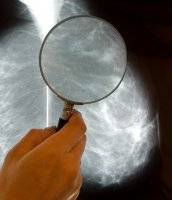
Researchers have identified a new protein involved in the development of drug resistance in breast cancer which could be a target for new treatments, they report today Medicine. In a mouse model of breast cancer, blocking production of the protein using genetic techniques caused tumours to shrink. The scientists are now looking for new drugs which could achieve a similar effect.
Economics - Earth Sciences - 23.05.2011

New atlas shows austerity hitting the poor rather than the rich Researchers at the University of Sheffield have created a unique atlas which is an authoritative record of the changing social geography of Britain. Bankrupt Britain: an atlas of social change , published by The Policy Press, shows, for the first time, how economic and social fortunes have been affected in different areas in the wake of the 2007 banking crisis, 2008 economic crash, 2009 credit crunch and 2010 cuts.
Life Sciences - Health - 20.05.2011
Oxford academics recognised by Royal Society
The Royal Society has elected eight Oxford University academics as new Fellows. They are Professor Hagan Bayley, Professor Alan Grafen, Professor Ian Horrocks, Professor Alex Kacelnik, Professor Steffen Lauritzen, Professor David Manolopoulos, Professor Fiona Powrie and Professor Angela Vincent. Professor Hagan Bayley is Professor of Chemical Biology at the Department of Chemistry and a Fellow of Hertford College.
Life Sciences - Health - 20.05.2011
Crossing your arms relieves pain
Crossing your arms reduces the intensity of pain you feel when receiving a painful stimulus on the hand, according to research by scientists at UCL. Published in the current issue of the journal PAIN, the research shows that crossing your arms over the midline (an imaginary line running vertically down the centre of the body) confuses the brain and reduces the intensity of the pain sensation.
Life Sciences - Chemistry - 20.05.2011
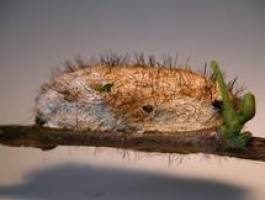
A new way of treating wild silkmoth cocoons could see new silk industries springing up wherever wild silk is found in Africa and South America, as well as silk's Asian heartland. A team led by Oxford University scientists found that the surfaces of wild cocoons are coated with a layer of the mineral calcium oxalate, which makes them difficult to unravel.When the researchers removed this layer using an acidic solution they discovered that it was possible to reel cocoons into long strands of silk comparable to those derived from the domesticated Mulberry silk moth ( Bombyx mori ).
Health - 20.05.2011
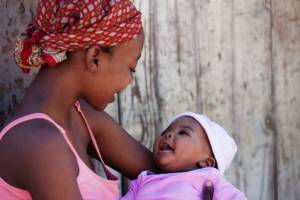
Mothers in developing countries who give birth by caesarean section are at no significant extra risk from having the procedure carried out by non-physician clinicians, or 'clinical officers', according to major new research from the University of Birmingham published in the British Medical Journal (Friday May 20).
Health - 19.05.2011
Podcast for International Clinical Trials Day
A Research Associate in the Department of Biostatistics has produced a podcast for the International Clinical Trials Day on behalf of the Cochrane Collaboration. Produced by Dr Kerry Dwan of the MRC North West Hub for Trials Methodology Research, which is based in the Department, the podcast is based on the Cochrane Methodology Review Comparison of protocols and registry entries to published reports for randomised controlled trials.
Health - Life Sciences - 19.05.2011
Computer game helps eye specialists treat disease in children
An eye consultant has drawn on his teenage passion for computer programming to create a special test to check the vision of children as young as four, in a way that can flag up problems caused by glaucoma, drug side-effects, brain tumours and other conditions. Mr Tariq Aslam, a consultant at Manchester Royal Eye Hospital and senior lecturer at The University of Manchester, found that it was very difficult getting children to sit still and concentrate while machines designed for adults measured what they could see at the edge of their vision.
Law - Chemistry - 19.05.2011
How sensors can detect the crime-solving clues at our fingertips
A new approach to fingerprinting using sensor technology developed at the University of Sussex could soon be helping forensics teams date and identify prints left at a crime scene - by capturing their electrical imprint. Currently, traditional methods of fingerprinting don't allow forensics experts to differentiate between prints at a crime scene left before and after the crime has been committed, or to differentiate important or interesting prints from background "clutter" (ie very old fingerprints).
- 19.05.2011
Gorillas right-handedness gives new clues to human language development
A new study that has identified a right-handed dominance in gorillas may also reveal how tool use led to language development in humans. Psychologist Dr Gillian Forrester, a visiting fellow at the University of Sussex, has been studying a family of gorillas at Port Lympne Wild Animal Park in Kent.
Health - Administration - 19.05.2011

A cell therapy that could prevent transplanted organs being rejected, and remove the need for prolonged use of immunosuppressant drugs, has shown promise in early-stage studies in mice. The approach would involve transplant patients being re-injected with their own immune cells after the cells have been isolated from a blood sample.
Health - 19.05.2011
Cell therapy to prevent organ rejection
Researchers at King's College London have used cells found naturally in the body, to re-educate the immune system to prevent rejection of an organ transplant while remaining capable of fighting infections and cancer. Currently, patients must take immunosuppressant drugs to prevent a new organ from being rejected after transplantation.
Life Sciences - Environment - 18.05.2011
Scientists reveal genetic ’wiring’ of seeds
PA 162/11 The genetic 'wiring' that helps a seed to decide on the perfect time to germinate has been revealed by scientists for the first time. Plant biologists at The University of Nottingham have also discovered that the same mechanism that controls germination is responsible for another important decision in the life cycle of plants — when to start flowering.
Health - Economics - 18.05.2011
The HERO Review by the Centre for Defence Studies, King's College London, for Morgan Sindall Group plc proposes more effective MoD partnering with local authorities and the private sector, new approaches to home ownership and separation of MOD operational and support responsibilities. The Centre for Defence Studies, King's College London today published an independent report into the operation and management of the UK's Defence Estate.
Health - 18.05.2011
Patients help highlight ’serious’ side effects of drugs
PA 160/10 New research has shown that patient reporting of suspected adverse drug reactions (ADRs) is richer in detail and better at describing the impact on their daily lives than information provided by health care professionals.
History & Archeology - 18.05.2011

Scientists have used the latest computer-imaging technology to produce stunning three-dimensional pictures of a 49 million-year-old spider trapped inside an opaque piece of fossilized amber resin. University of Manchester researchers, working with colleagues in Germany, created the intricate images using X-ray computed tomography to study the remarkable spider, which can barely be seen under the microscope in the old and darkened amber.
Psychology - 17.05.2011
Early diversity crucial for social cohesion, claims new research
Early diversity crucial for social cohesion, claims new research Research from the University of Sheffield's Department of Psychology has revealed that exposing infants to faces from racial groups other than their own improves their ability to recognise and identify individuals from different racial groups.
Health - 17.05.2011
Medical devices under scrutiny
Health Jonathan Wood | 17 May 11 'When Suzanne Ludgate of the Medicines and Healthcare products Regulatory Agency (MHRA), the government regulator of medical devices in the UK, says she was "appalled at how many devices are brought to market with a lack of appropriate clinical data," you know there must be a problem.
Health - Life Sciences - 17.05.2011
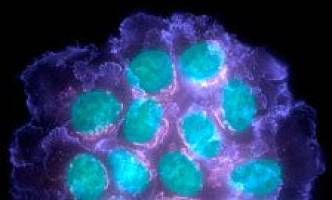
Researchers at King's have achieved a breakthrough in understanding a biological process which causes many common cancers, including lung and breast cancer. The achievement opens up new possibilities for the development of improved cancer drugs. The findings are published in the journal Molecular and Cellular Biology.


