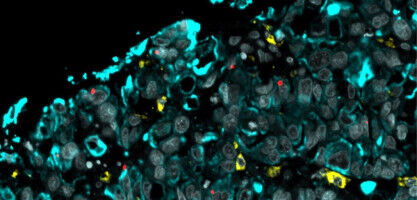
Scientists from the University of Leeds have discovered the mechanisms of a protein known to play an active part in the inherited kidney disorder, Dent’s disease.
Scientists from the University of Leeds have discovered the mechanisms of a protein known to play an active part in the inherited kidney disorder, Dent’s disease. Dent's disease is an extremely rare illness caused by a genetic mutation on the X chromosome. Affecting mostly men, its main symptom is kidney stones often followed by a deterioration of kidney function and in many cases chronic kidney failure. Treatment for the disease is focused on alleviating symptoms and can involve kidney transplant. Scientists from the University's Faculty of Biological Sciences have uncovered the role of a transporter protein, called CLC-5, which is known to be faulty in many sufferers of Dent's disease. Lead researcher Dr Jonathan Lippiat says, "This is a rare genetic disease so it's impossible to know the exact number of sufferers worldwide. Dent's disease could be the underlying cause of kidney stones or kidney failure for a larger number of people and it could be that a number of Dent's sufferers go undiagnosed.
TO READ THIS ARTICLE, CREATE YOUR ACCOUNT
And extend your reading, free of charge and with no commitment.