


Environment - Mar 27
The University of Manchester signs Memorandum of Understanding with United Utilities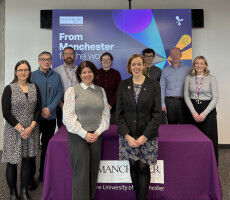
The University of Manchester signs Memorandum of Understanding with United Utilities
Agronomy & Food Science - Mar 27
Gather & Gather unveils fresh new Spring/Summer 2026 menu designed for the warmer seasons
Gather & Gather unveils fresh new Spring/Summer 2026 menu designed for the warmer seasons
Environment - Mar 26
University of Manchester hits major sustainability milestone, with Main Campus becoming 100% 'Zero Landfill'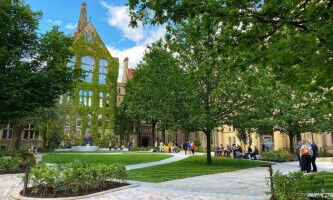
University of Manchester hits major sustainability milestone, with Main Campus becoming 100% 'Zero Landfill'
Campus - MANCHESTER - Mar 26
Manchester students mentor local teenagers to build confidence in applying for university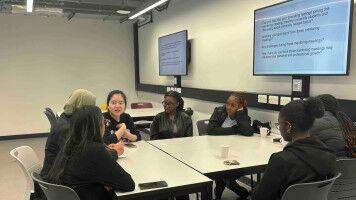
Manchester students mentor local teenagers to build confidence in applying for university
wire
University College London
Results 4801 - 4850 of 6397.
Physics - Health - 07.02.2017
Immune system defence force captured in action
How the natural defence force within our immune system attacks and destroys harmful invaders such as virus-infected and cancerous cells has been visualised in microscopic detail by scientists from UCL, Birkbeck, University of London, Peter MacCallum Cancer Centre and Monash University, Australia. The research, published today , deepens understanding of the critical role of the protein called 'perforin' in a functioning immune system, bringing us one step closer to new therapies with the potential to boost or inhibit its impact when required.
Administration - Career - 31.01.2017
Launch of joint UCL and Arsenal literacy initiative attended by Education Minister
Event - Law - 31.01.2017
UCL publishes investigation into UCLU Friends of Israel event
UCL has today published the outcome of its investigation into events that took place around the UCLU Friends of Israel Society meeting on 27th October 2016.
Administration - Health - 06.01.2017
UCL staff recognised in New Year Honours 2017
Life Sciences - 21.12.2016
Sex cells evolved to pass on quality mitochondria
Mammals immortalise their genes through eggs and sperm to ensure future generations inherit good quality mitochondria to power the body's cells, according to new UCL research.
Health - Life Sciences - 20.12.2016
Light therapy effectively treats early prostate cancer
A new non-surgical treatment for low-risk prostate cancer can effectively kill cancer cells while preserving healthy tissue, reports a new UCL-led phase III clinical trial in 413 patients.
Architecture & Buildings - Environment - 16.12.2016
UCL Bartlett School of Architecture opens new home
UCL opened today the new central London home of the UCL Bartlett School of Architecture which will provide facilities for 1,000 staff and students and is the first major project to be completed in the university's programme to upgrade its Bloomsbury campus.
Life Sciences - 14.12.2016
Study sheds light on the function of the penis bone in male competition
A new UCL study examines how the baculum (penis bone) evolved in mammals and explores its possible function in primates and carnivores - groups where many species have a baculum, but some do not. The baculum has been described as 'the most diverse of all bones', varying dramatically in length, width and shape in the male mammals where it is present.
Health - Physics - 13.12.2016
Revolutionary X-ray technology developed
UCL scientists have successfully developed a new X-ray imaging technology that has the potential to benefit society through life-saving applications in security and healthcare. The new technology excels at determining different shapes and types of matter - a capability that conventional X-rays could only match by using prohibitively high doses of radiation.
Health - Life Sciences - 13.12.2016
New £250m UK Dementia Research Institute to be led from UCL
UCL has been selected as the 'hub' of the new £250m UK Dementia Research Institute (UK DRI), to be led by Professor Bart De Strooper, current leader of the Laboratory for the Research of Neurodegener
Earth Sciences - Architecture & Buildings - 09.12.2016
Research Images as Art: winners announced
Health - Life Sciences - 08.12.2016
Glaucoma drug may have potential to treat Alzheimer’s disease
A drug which is used to treat the common eye disease glaucoma may have potential as a treatment for Alzheimer's disease, according to scientists at UCL. In trials on rats, the drug brimonidine, which is routinely used to lower eye pressure in glaucoma patients, has been found to reduce the formation of amyloid proteins in the retina, which are believed to be linked to Alzheimer's.
Health - 08.12.2016
Mother-child HIV transmission at all time low in UK and Ireland
The number of mothers passing the HIV virus to their babies has fallen to a new record low in the UK and Ireland thanks to the very high take-up of antenatal HIV screening and treatment which reduces virus levels in the pregnant women, according to research led by UCL.
Economics - Administration - 05.12.2016
UCL launches UK-China Infrastructure Academy
UCL and the UK government launched today the UK-China Infrastructure Academy, a major new initiative to help train Chinese companies and officials on investment processes in the UK and to encourage greater Chinese investment in UK infrastructure projects.
Environment - Life Sciences - 02.12.2016
Worrying denial of invasive species threat
A new battlefront is opening in science denialism and this time the target is the science of invasive alien species and the fight to protect some of the world's rarest species and most unique ecosystems, say a team involving UCL scientists. In the science journal Trends in Ecology and Evolution , conservation biologists Dr James Russell (University of Auckland) and Professor Tim Blackburn (UCL Genetics, Evolution & Environment) say scientific evidence on invasion biology is under attack, with much of the opposition value-based rather than science-based.
Physics - Chemistry - 21.11.2016
New solution for making 2D nanomaterials
Two-dimensional (2D) nanomaterials have been made by dissolving layered materials in liquids, according to new UCL-led research.
Environment - Health - 16.11.2016
UCL Lancet Lecture launches global initiative linking climate change to health
UCL researchers are leading an initiative with The Lancet to address the global health implications of climate change, launching this week in conjunction with today's 2016 UCL Lancet Lecture.
Environment - Life Sciences - 16.11.2016
Conservation lessons from Pokémon GO
The popular smartphone game, Pokémon GO, sets a benchmark for new conservation-focused augmented reality games and could be adapted to benefit environmental conservation, according to new research involving UCL scientists.
Health - Life Sciences - 16.11.2016
Light therapy could save bees from deadly pesticides
Treating bees with light therapy can counteract the harmful effects of neonicotinoid pesticides and improve survival rates of poisoned bees, finds a new UCL study. 'Neonicotinoid pesticides are a persistent threat to global bee populations, which play a critical role in agriculture,' says Professor Glen Jeffery (UCL Institute of Ophthalmology), the senior author of the PLOS ONE paper.
Life Sciences - 10.11.2016
Mismatched light and heat levels can disrupt body clock
Body clock function can break down when light and temperature levels throughout the day are out of sync, finds new UCL research in fruit flies.
Economics - Computer Science - 09.11.2016
New UCL liaison with the Alan Turing Institute
Professor David Pym (UCL Computer Science) has been appointed UCL's University Liaison Director with the Alan Turing Institute (ATI), succeeding Professor Sofia Olhede (UCL Statistical Science).
Computer Science - Administration - 07.11.2016
UCL to host National High Performance Computing Hub for Materials Science
Health - History & Archeology - 04.11.2016
Peking University and UCL agree joint MBA programme
Environment - Earth Sciences - 03.11.2016
Arctic sea ice loss linked to personal CO2 emissions
Three square metres of Arctic summer sea ice disappears for every tonne of carbon dioxide a person emits, wherever they are on the planet, according to new UCL research. The rapid retreat of Arctic sea ice is one of the most direct indicators of the ongoing climate change on Earth. The newly discovered linear relationship helps us understand our personal contribution to global climate change for the first time and highlights the importance of lowering emissions to limit global warming to 1.5°C.
Event - 28.10.2016
UCL statement: protest at UCLU event
Economics - Environment - 27.10.2016
UCL leads UK with most Philip Leverhulme Prize winners
Physics - 26.10.2016
How often do quantum systems violate the second law of thermodynamics?
The likelihood of seeing quantum systems violating the second law of thermodynamics has been calculated by UCL scientists.
Life Sciences - Psychology - 25.10.2016
How lying takes our brains down a ‘slippery slope’
Telling small lies desensitises our brains to the associated negative emotions and may encourage us to tell bigger lies in future, reveals new UCL research funded by Wellcome and the Center for Advanced Hindsight. The research provides the first empirical evidence that self-serving lies gradually escalate and reveals how this happens in our brains.
Social Sciences - Media - 24.10.2016
UCL partners with Twitter to broadcast lecture on Periscope
A UCL lecture will be live-streamed around the world today on the Periscope platform, in the first partnership of its kind with a UK university.
Politics - Event - 20.10.2016
The Orwell Prize moves to UCL
Life Sciences - 19.10.2016
Sneaky males and choosy females feature in new exhibition at the Grant Museum
'Natural Creativity: Sex and Trickery' is a new exhibition at the Grant Museum of Zoology at UCL. It explores the myriad elaborate shapes, sizes and crafty behavioural tactics some animals have evolved in order to survive, reproduce and pass on their genes.
Event - Environment - 17.10.2016
Sainsbury Wellcome Centre wins building award
The Sainsbury Wellcome Centre for Neural Circuits and Behaviour at UCL (SWC) has been named Major Building Project of the Year (over £50m) at the British Construction Industry Awards (BCIA) 2016.
Economics - Pedagogy - 12.10.2016
UCL economist receives Klaus J. Jacobs Research Prize
The Jacobs Foundation have awarded Professor Orazio Attanasio, Head of UCL Economics and Research Director at the Institute for Fiscal Studies (IFS), 1 million Swiss francs for his use of economic mo
Life Sciences - 10.10.2016
Sainsbury Wellcome Centre appoints new Director
Professor Thomas Mrsic-Flogel has today been announced as the new Director of the Sainsbury Wellcome Centre for Neural Circuits and Behaviour at UCL.
Health - Life Sciences - 06.10.2016
New research sheds light on role of HPV in head and neck cancers
Human Papillomavirus (HPV) drives a greater number of head and neck cancers than previously thought, finds new research from UCL and the University of Southampton. The findings, published in the Journal of Clinical Oncology, offer valuable insight into the role of HPV in tumour development and explore the possibility of a viable treatment option for specific cancer patients.
Event - Life Sciences - 06.10.2016
UCL achieves first Gold Athena SWAN award for excellence in gender equality
Health - Life Sciences - 05.10.2016
UCL spin-out Achilles Therapeutics to develop immunotherapies for cancer
A new spin-out company Achilles Therapeutics has been launched to develop immunotherapies for cancer, based on the work of scientists from UCL and its associated hospitals.
Health - 28.09.2016
Garden ponds may help spread lethal frog disease
Keen gardeners stocking their domestic ponds with exotic or wild aquatic species could be inadvertently fuelling the rapid spread of the lethally infectious frog disease ranavirus, according to new research by scientists from UCL, the Zoological Society of London (ZSL) and Queen Mary University of London.
History & Archeology - 26.09.2016
New Centre for the Study of the Legacies of British Slave-ownership launched at UCL
UCL is proud to announce the establishment of the new Centre for the Study of the Legacies of British Slave-ownership in UCL History, with the support of the Hutchins Center at Harvard University.
Administration - 22.09.2016
UCL ranked 15th worldwide by THE
UCL has been ranked 15th in the Times Higher Education World University Rankings 2016-17. The rankings are based on key performance indicators gauging each university's teaching, research, citations, international outlook and industry income.
Physics - Astronomy & Space - 22.09.2016
Celebrating 10 years of Hinode in space
Hinode, a satellite which observes the Sun's activity in high resolution, today marks ten years of success since its launch.
Psychology - Social Sciences - 20.09.2016
Low English skills at school start linked to behavioural difficulties
Children who enter reception with poor English language skills - whether it's their first language or an additional language - are more likely to have social, emotional and behavioural difficulties in later years, finds a new study co-authored by UCL and Royal Holloway and funded by Wellcome. The research, published today in Child Development , found the cognitive advantages of bilingualism tend to help with academic achievement only if English skills are sufficient at school entry for the child to be fully engaged.
Social Sciences - Economics - 15.09.2016
UCL launches £600m philanthropy campaign
Health - Administration - 14.09.2016
UCL receives largest share of NHS research funding
UCL's three biomedical research centres (BRCs) have won more than £167 million in funding from the National Institute for Health Research (NIHR) to further our world-leading biomedical research.
Astronomy & Space - 14.09.2016
Gaia sizes up 1.1 billion stars
Gaia, a European Space Agency satellite designed to unlock the secrets of the birth and evolution of the Milky Way, has released its first wave of data on the positions and brightness for about one billion stars.
Event - Administration - 14.09.2016
Vice-Provost (Research) to chair new Forum for Responsible Metrics
A new Forum for Responsible Metrics, to be chaired by Professor David Price, UCL Vice-Provost (Research), will bring together research funders, sector bodies and infrastructure experts to promote the responsible use of research metrics.
Career - 07.09.2016
UCL Institute of Education leads Mandarin teaching initiative
Health - 05.09.2016
UCL to lead new Global Disability Innovation Hub
Sadiq Khan, Mayor of London, launched on Saturday the world's first Global Disability Innovation Hub, which will be based at Queen Elizabeth Olympic Park.
Philosophy - 05.09.2016
UCL Academy earns successful Ofsted report
The UCL Academy has achieved 'good' in all key areas in its latest Ofsted inspection and several aspects of the school's work have been identified as outstanding.
Health - Life Sciences - 01.09.2016
Science begins in the new Francis Crick Institute building
The first scientists have moved into the new £650 million Francis Crick Institute building in London and are starting work in their purpose-built labs. Next to St Pancras station and the British Library, the Crick will be the biggest biomedical research institute under one roof in Europe. Leading UCL researchers are among the first to move in, including Professor Nicholas Luscombe (UCL Genetics Institute) and Professor Jernej Ule (UCL Institute of Neurology).


Environment - Mar 27
The University of Manchester signs Memorandum of Understanding with United Utilities
The University of Manchester signs Memorandum of Understanding with United Utilities
Agronomy & Food Science - Mar 27
Gather & Gather unveils fresh new Spring/Summer 2026 menu designed for the warmer seasons
Gather & Gather unveils fresh new Spring/Summer 2026 menu designed for the warmer seasons
Environment - Mar 26
University of Manchester hits major sustainability milestone, with Main Campus becoming 100% 'Zero Landfill'
University of Manchester hits major sustainability milestone, with Main Campus becoming 100% 'Zero Landfill'
Campus - MANCHESTER - Mar 26
Manchester students mentor local teenagers to build confidence in applying for university
Manchester students mentor local teenagers to build confidence in applying for university