New paint makes tough self-cleaning surfaces
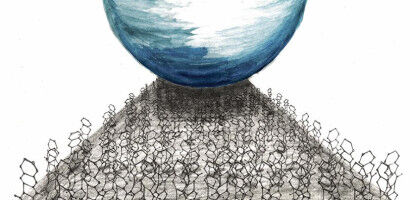
A new paint that makes robust self-cleaning surfaces has been developed by a team led by UCL researchers. The coating can be applied to clothes, paper, glass and steel and when combined with adhesives, maintains its self-cleaning properties after being wiped, scratched with a knife and scuffed with sandpaper. Self-cleaning surfaces work by being extremely repellent to water but often stop working when they are damaged or exposed to oil. The new paint creates a more resilient surface that is resistant to everyday wear and tear, so could be used for a wide range of real-world applications from clothing and cars, say the researchers. First author Yao Lu (UCL Chemistry), said: "Being waterproof allows materials to self-clean as water forms marble-shaped droplets that roll over the surface, acting like miniature vacuum cleaners picking up dirt, viruses and bacteria along the way. For this to happen, the surface must be rough and waxy, so we set out to create these conditions on hard and soft surfaces by designing our own paint and combining it with different adhesives to help the surfaces withstand damage." The study, involving researchers from UCL, Imperial College London and Dalian University of Technology (China) and published today in Science , shows how the new paint made from coated titanium dioxide nanoparticles can give a wide-range of materials self-cleaning properties, even during and after immersion in oil and following damage to the surface. Being waterproof allows materials to self-clean as water forms marble-shaped droplets that roll over the surface, acting like miniature vacuum cleaners picking up dirt, viruses and bacteria along the way.