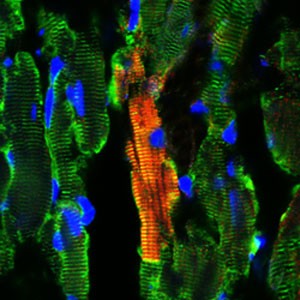
New heart muscle cell derived
from EPDCs (red) has integrated with the existing heart muscle cells
(green).
Researchers have for the first time succeeded in transforming a new type of stem-like cell in the adult heart, into heart muscle in mice. The research suggests that in the future hearts damaged by a heart attack could be encouraged to repair themselves. The damage caused by a heart attack is currently permanent. It can lead to heart failure, which is debilitating, has a poor prognosis, and affects over 750,000 people in the UK. British Heart Foundation-funded scientists working at UCL targeted stem-like cells called progenitor cells in the epicardium, the outer layer of the heart. In the embryo, these epicardium-derived progenitor cells (EPDCs) are able to transform into a number of specialist cells including heart muscle. Scientists thought this ability was lost in adults but researchers have managed to reactivate this potential.
TO READ THIS ARTICLE, CREATE YOUR ACCOUNT
And extend your reading, free of charge and with no commitment.