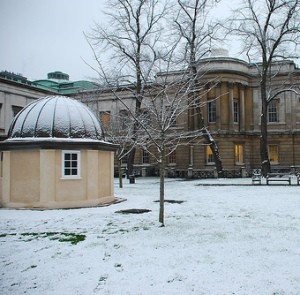
UCL’s main quad in winter, by Amen-Ra on Flickr
Climate change is unlikely to reduce the UK's excess winter death rate as previously thought. The new study, published today , debunks the widely held view that warmer winters will cut the number of deaths normally seen at the coldest time of year. Analysing data from the past 60 years, researchers at UCL and the University of Exeter looked at how the winter death rate has changed over time, and what factors influenced it. They found that from 1951 to 1971, the number of cold winter days was strongly linked to death rates, while from 1971 to 1991, both the number of cold days and flu activity were responsible for increased death rates. However, their analysis showed that from 1991 to 2011, flu activity alone was the main cause in year to year variation in winter mortality. Climate change appears unlikely to lower winter death rates. Indeed, it may substantially increase them by driving extreme weather events and greater variation in winter temperatures.
TO READ THIS ARTICLE, CREATE YOUR ACCOUNT
And extend your reading, free of charge and with no commitment.