


Health - Mar 13
Oxford and Serum Institute of India sign IP license agreement to advance NipahB vaccine candidate
Oxford and Serum Institute of India sign IP license agreement to advance NipahB vaccine candidate
Career - Mar 13
Faye Holland joins pioneering Cambridge x Manchester collaboration as Partnership Director
Faye Holland joins pioneering Cambridge x Manchester collaboration as Partnership Director
Economics - Mar 13
£9.6M SATURN-2 programme launched to deliver the UK's next generation of nuclear experts
£9.6M SATURN-2 programme launched to deliver the UK's next generation of nuclear experts
Health - Mar 12
Nuffield Department of Primary Care Health Sciences designated as the WHO Collaborating Centre on Primary Health Care
Nuffield Department of Primary Care Health Sciences designated as the WHO Collaborating Centre on Primary Health Care

wire
Astronomy & Space
Results 901 - 950 of 1015.
Astronomy & Space - Computer Science - 05.11.2013
Building the biggest radio telescope
This week, scientists and engineers from Oxford University and around the world will start work on the final designs for the Square Kilometre Array ( SKA ), soon to become the world's largest and most sensitive radio telescope.
Astronomy & Space - 04.11.2013
The University of Birmingham opens its new telescope to the public
Astronomy & Space - Economics - 04.11.2013
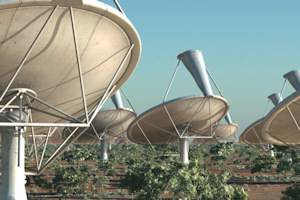
04 Nov 2013 Work starts this week on the next phase of development for what will soon be the world's largest and most sensitive radio telescope - the Square Kilometre Array (SKA) Project.
Astronomy & Space - 04.11.2013
Work begins on world’s most powerful radio telescope
This week, work begins on the next phase of development for the Square Kilometre Array radio telescope, with the University of Cambridge leading major 'work packages'.
Art & Design - Astronomy & Space - 30.10.2013
New art installation featuring the ’sound of the stars’ unveiled at Thinktank
Did you know that the Sun is playing its own stellar symphony, just like a musical instrument? Scientists at the University of Birmingham who study the 'music of the stars' have worked with sound arti
Physics - Astronomy & Space - 30.10.2013

After its first run of more than three months, operating a mile underground in the Black Hills of South Dakota, a new experiment named LUX has proven itself the most sensitive dark matter detector in the world. LUX stands for Large Underground Xenon experiment. The LUX scientific collaboration includes 17 research universities and national laboratories in the United States, the UK, and Portugal.
Economics - Astronomy & Space - 30.10.2013
New satellite innovations project to place East Midlands at the heart of the space sector
Astronomy & Space - Environment - 30.10.2013
Astronomers and global change scientists collaborate to observe our planet like never before
For the first time, astronomers and global change researchers are collaborating to measure changes at a global scale on our own planet, beginning with tropical forests. "The ASTROTROP project will help global change scientists to start observing changes on planet Earth with the same rigour as astronomers observe stars," said Dr Alan Grainger from the School of Geography at the University of Leeds, who co-leads the project.
Astronomy & Space - Physics - 28.10.2013
Upcoming space mission could herald new type of astronomy
Imperial scientists are working on a space mission that will listen to violent cosmic events that send out ripples in very fabric of the universe. Probably one of the first real bits of physics we learn at school is how the force of gravity keeps us all from floating off into space — a lesson helped to stick by a certain apocryphal tale about a scientist and a falling apple.
History & Archeology - Astronomy & Space - 16.10.2013

A project based at Oxford University that will investigate public participation in science in the 19th and 21st centuries has been awarded a grant of almost £2 million.
Astronomy & Space - Earth Sciences - 11.10.2013
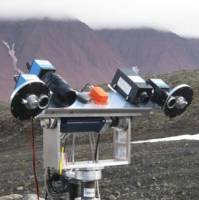
This week saw the most ambitious test yet of the European Space Agency's ExoMars Rover, when - remotely controlled by scientists the UK - it explored the Atacama Desert in South America.
Physics - Astronomy & Space - 08.10.2013
Nobel Prize in Physics for Higgs and Englert: Imperial physicists react
The 2013 Nobel Prize in Physics has been awarded today, we asked scientists at Imperial College London for their reactions.
Astronomy & Space - 02.10.2013
University of Glasgow Academic awarded Royal Society Fellowship
Life Sciences - Astronomy & Space - 19.09.2013
Life coming to Earth from space
Scientists from the University of Sheffield believe they have found life arriving to Earth from space after sending a balloon to the stratosphere . The team, led by Professor (Hon. Cardiff and Buckingham Universities) Milton Wainwright, from the University's Department of Molecular Biology and Biotechnology found small organisms that could have come from space after sending a specially designed balloon to 27km into the stratosphere during the recent Perseid meteor shower.
Life Sciences - Astronomy & Space - 16.09.2013
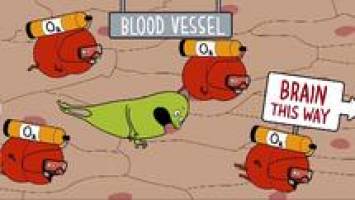
Comedian Ruby Wax is guiding viewers on a tour inside the human brain organised by scientists at Oxford University.
Astronomy & Space - Electroengineering - 12.09.2013
StarLight exhibit brings big data down to Earth
Imperial's main entrance on Exhibition Road will be illuminated this week with an installation based on data from the Kepler space observatory.
Life Sciences - Astronomy & Space - 12.09.2013
Telescope technology used for Durham University heart research project
We use cookies to ensure that we give you the best experience on our website. You can change your cookie settings at any time. Otherwise, we'll assume you're OK to continue. Telescope technology used for Durham University heart research project Sophisticated optical technology developed at Durham University for use in the world's largest telescope is having far-reaching additional applications for research in other areas, including heart research.
Astronomy & Space - Physics - 09.09.2013
Another Way of Seeing: contemporary art responds to astronomy
An exhibition of installations made in response to planetary science goes on display today at UCL. Exoplanets, all-sky surveys, the aurora borealis and the search for extra-terrestrial life are just some of the themes that are represented in the installations made by seven contemporary artists.
Astronomy & Space - Environment - 06.09.2013
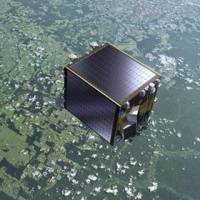
A new project, led by scientists at UCL, is helping to build better simulations of weather and climate by mapping how much sunlight is being absorbed and reflected by the Earth. The amount of sunlight being absorbed or reflected by Earth is one of the driving forces for weather and climate. Satellites are providing this information with unprecedented accuracy.
Astronomy & Space - Physics - 04.09.2013
How to explore the whole universe: watch COSMO 2013 live
Watch speakers such as Stephen Hawking and Brian Cox this evening as the public symposium of the 17th International Conference on Particle Physics and Cosmology, known as COSMO 2013, is broadcast live on YouTube.
Astronomy & Space - Physics - 04.09.2013
How to explore the whole universe: watch COMSO 2013 live
Watch speakers such as Stephen Hawking and Brian Cox this evening as the public symposium of the 17th International Conference on Particle Physics and Cosmology, known as COSMO 2013, is broadcast live on YouTube.
Astronomy & Space - Social Sciences - 03.09.2013
UK scientists begin 5 year quest to solve cosmic detective puzzle
A five year quest is underway to solve the cosmic detective puzzle of why the expansion of the universe is speeding up. For hundreds of nights over the next five years, the researchers taking part in this Dark Energy Survey (DES) aim to find out not only why the growth of the universe is accelerating, instead of slowing down due to gravity, but also to probe the mystery of dark energy, the force believed to be causing that acceleration.
Astronomy & Space - Social Sciences - 03.09.2013
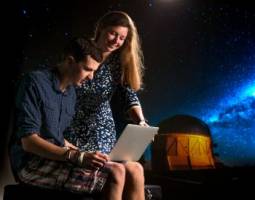
Sussex 'eyeball squad' help survey the skies in hunt for dark energy First-year Physics students at the University of Sussex gave up their summer sunshine to study the stars as part of a major international cosmology survey that began this week (03 September 2013).
Astronomy & Space - Physics - 29.08.2013
Space Mission Cleared for Launch in 2015
Scientists at the University of Glasgow's Institute for Gravitational Research (IGR) have successfully reached another important milestone and look firmly on course for a launch in 2015.
Earth Sciences - Astronomy & Space - 23.08.2013
Mapping the planet’s ups and downs
Researchers at the University of Glasgow are using a new technique known as interferometric synthetic aperture radar (InSAR) to predict natural disasters around the world and manage their impact.
Astronomy & Space - Mathematics - 23.08.2013
Silence in the sky - but why?
Scientists as eminent as Stephen Hawking and Carl Sagan have long believed that humans will one day colonise the universe. But how easy would it be, why would we want to, and why haven't we seen any evidence of other life forms making their own bids for universal domination? A new paper by Dr Stuart Armstrong and Dr Anders Sandberg from Oxford University's Future of Humanity Institute (FHI) attempts to answer these questions.
Astronomy & Space - Physics - 19.08.2013
Festival of the Planets comes to London
From 8-13 September hundreds of astronomers from all over the world will arrive in the capital, bringing with them a huge variety of different public events to get Londoners involved in astronomy.
Astronomy & Space - 15.08.2013

David Willetts, Minister of State for Universities and Science, visited UCL's Mullard Space Science Laboratory on Tuesday 13 August.
Physics - Astronomy & Space - 09.08.2013
Tom Kibble receives the Dirac Medal for Higgs theory
Mathematics - Astronomy & Space - 09.08.2013
New appointments signal expansion in Mathematical and Physical Sciences
New appointments signal expansion in Mathematical and Physical Sciences The School of Mathematical and Physical Sciences (MPS) will have 63 academics at the start of the 2013-14 academic year - an increase of 58 per cent from February, when only 40 were in post.
Environment - Astronomy & Space - 26.07.2013
A response to Methane Mischief: Misleading Commentary Published In Nature
The 24 July news story about the potential cost of Arctic methane release has provoked widespread coverage, including a critique in the Washington Post. Here, Professor Peter Wadhams responds to some of the comments that were made. The 25 July post by Jason Samenow on the global economic impacts of methane emissions in the East Siberian Sea portrays the findings of our research as misleading, a statement with which I strongly disagree.
Astronomy & Space - 25.07.2013
Secret of plant geometry revealed
While the other principle features governing the architecture of plants such as the control of the number of branches and positioning around the main shoot are now well understood, scientists have long puzzled over how plants set and maintain the angle of their lateral branches relative to gravity.
Astronomy & Space - Electroengineering - 24.07.2013
BBC’s mock Martian mission made possible by Imperial expertise
The know-how of Imperial academics helped a BBC journalist to design a mock mission to Mars, which features extensively across the network this week.
Earth Sciences - Astronomy & Space - 23.07.2013
Navigating our way through solar threats
Global Navigation Satellite Systems (GNSS) are now routinely used for high accuracy operations around the globe.
Electroengineering - Astronomy & Space - 19.07.2013
We ask the experts: will robots take over the world?
Robots can do a lot for us: they can explore space or they can cut our toenails. But do advances in robotics and artificial intelligence hold hidden threats? Three leaders in their fields answer questions about our relationships with robots.
Physics - Astronomy & Space - 19.07.2013
Elusive phenomena observed by Queen Mary scientists
Physicists have confirmed the surprising behaviour of one of nature's most unusual particles called neutrinos, which are thought to play a fundamental role in the formation of the universe.
Physics - Astronomy & Space - 17.07.2013
International architect Daniel Libeskind to design new Physics building
We use cookies to ensure that we give you the best experience on our website. You can change your cookie settings at any time.
Health - Astronomy & Space - 17.07.2013
Detecting sight loss
A team of University scientists have teamed-up with leading space engineers to create an instrument which could help detect the developed world's most common form of sight loss. Age-Related Macular Degeneration (AMD) leads to loss of vision when looking at something directly ahead, at another person, or when reading or watching television.
Astronomy & Space - Physics - 10.07.2013
When other planets get the blues
Why is the sky blue? It's a simple question but one with a surprisingly complex answer if the sky belongs to a planet outside our solar system.
Astronomy & Space - 10.07.2013
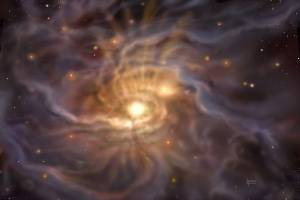
10 Jul 2013 Scientists have observed in unprecedented detail the birth of a massive star within a dark cloud core about 10,000 light years from Earth. The team used the new ALMA (Atacama Large Millimetre/submillimetre Array) telescope in Chile - the most powerful radio telescope in the world - to view the stellar womb which, at 500 times the mass of the Sun and many times more luminous, is the largest ever seen in our galaxy.
Astronomy & Space - 09.07.2013
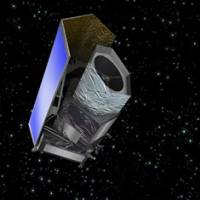
We use cookies to ensure that we give you the best experience on our website. You can change your cookie settings at any time. Otherwise, we'll assume you're OK to continue. Dark universe mission involving Durham scientists moves closer A major space mission to discover the nature of two mysterious substances believed to make up a large part of our Universe has taken another step forward.
Astronomy & Space - Physics - 08.07.2013

How do we examine matter that doesn't interact with light or almost anything else in the known universe? Christopher Clarke explains how. Matter is something that we can see or touch, owing to the way it interacts with light and other matter. So how do we examine matter that doesn't interact with light or almost anything else in the known universe? How do we even know that this 'dark' matter exists? In 1932 Dutch astronomer Jan Oort was the first to propose the existence of dark matter to explain the movement of certain stars in our galaxy.
Astronomy & Space - 05.07.2013
Scientists in UK hunt for ET
05 Jul 2013 University of Manchester scientists are at the heart of a UK network promoting research into the Search for ExtraTerrestrial Intelligence (SETI). The UK SETI Research Network (UKSRN), which brings together academics from 11 institutions across the country, including Manchester, will present current activity and consider future strategy in a session and panel discussion at the National Astronomy Meeting in St Andrews today (Friday, 5 July).
Astronomy & Space - Physics - 05.07.2013
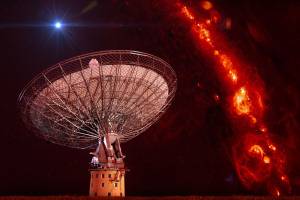
05 Jul 2013 Mysterious bursts of radio waves originating from billions of light years away have left the scientists who detected them speculating about their origins. The international research team, writing in the journal Science , rule out terrestrial sources for the four fast radio bursts and say their brightness and distance suggest they come from cosmological distances when the Universe was just half its current age.
Astronomy & Space - Earth Sciences - 01.07.2013
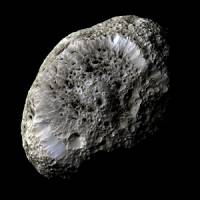
The mysterious Ice Worlds of the outer solar system are being brought to life this week at the Royal Society Summer Science Exhibition.
Astronomy & Space - Physics - 23.06.2013
Summer Science Exhibition: Extreme research on display at the Royal Society show
Explore the formation of the first stars and tinker with the evolution of tiny microbes this week at a free exhibition in central London.
Astronomy & Space - 20.06.2013
Mars mission and antibiotic prescriptions on the Imperial podcast
Earth Sciences - Astronomy & Space - 18.06.2013
Ground monitoring equipment is deployed on two Ethiopian volcanoes showing signs of unrest
Images taken from space have indicated that some of the world's unmonitored volcanoes may not be as peaceful as we might like to think. Satellite radar has shown that the surfaces of a number of volcanoes within the East African Rift are deforming - inflating and deflating. "Deformations such as these are typically attributed to magma accumulating and moving underground," said Dr Juliet Biggs , Lecturer in the School of Earth Sciences at the University of Bristol, "and are often interpreted as pre-eruptive activity.
Astronomy & Space - 05.06.2013
Prestigious award recognises Nottingham professor’s outstanding contribution
Astronomy & Space - Event - 03.06.2013



Health - Mar 13
Oxford and Serum Institute of India sign IP license agreement to advance NipahB vaccine candidate
Oxford and Serum Institute of India sign IP license agreement to advance NipahB vaccine candidate
Career - Mar 13
Faye Holland joins pioneering Cambridge x Manchester collaboration as Partnership Director
Faye Holland joins pioneering Cambridge x Manchester collaboration as Partnership Director
Economics - Mar 13
£9.6M SATURN-2 programme launched to deliver the UK's next generation of nuclear experts
£9.6M SATURN-2 programme launched to deliver the UK's next generation of nuclear experts
Health - Mar 12
Nuffield Department of Primary Care Health Sciences designated as the WHO Collaborating Centre on Primary Health Care
Nuffield Department of Primary Care Health Sciences designated as the WHO Collaborating Centre on Primary Health Care