Navigating our way through solar threats
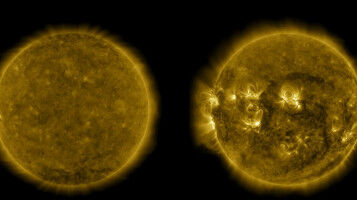
Global Navigation Satellite Systems (GNSS) are now routinely used for high accuracy operations around the globe. But the signals we rely on are vulnerable to ionospheric perturbations - fluctuations in the upper atmosphere - the ionosphere - driven by solar activity. That solar activity is about to reach another peak - when the sun will be at the strongest part of its 11 year cycle. The University of Nottingham is leading a £700,000 project, funded under the FP7 programme by the European Commission and the European GNSS Agency (GSA), to develop mathematical models which will change the way GNSS based techniques work and continuously deliver accurate position output during periods of intense solar activity. Led by Dr Marcio Aquino, in the Faculty of Engineering, the aim of CALIBRA - Countering GNSS high Accuracy applications Limitations due to Ionospheric disturbances in Brazil - is to establish a blueprint for operations requiring accuracy better than 10cm. Dr Aquino said: "Why Brazil? Brazil sits in one of the most affected regions of the Earth for ionospheric perturbations. Its geographical location across the magnetic equator makes it the perfect test-bed for worst case scenarios.