


wire
Astronomy & Space
Results 601 - 650 of 1015.
Astronomy & Space - 22.04.2017
Cassini spacecraft begins its final dance with Saturn
The Cassini mission, which has been orbiting Saturn for 13 years, will go closer to the planet than ever this month in a daring series of dives.
Astronomy & Space - Media - 21.04.2017

An academic from Queen Mary University of London (QMUL) has been named as one of TIME Magazine's 100 most influential people in the world. Dr Guillem Anglada-Escudé from QMUL's School of Physics and Astronomy was featured on the list's 'pioneers' section, for leading a study that discovered an Earth-size planet orbiting Proxima Centauri, our closest neighbouring star.
Chemistry - Astronomy & Space - 20.04.2017
Researchers and artists create ‘chem-art’ exhibition at Herbert Art gallery
Researchers and artists from the University of Warwick have teamed up with film makers and musicians from Coventry to create a unique exhibition that will give visitors a glimpse into a rarely seen micro-world.
Astronomy & Space - Physics - 03.04.2017
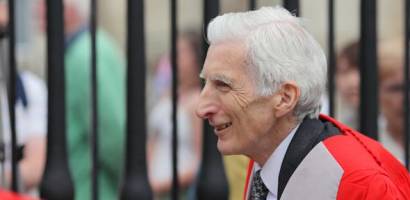
Martin Rees is Emeritus Professor of Cosmology and Astrophysics at the University of Cambridge, the Astronomer Royal, a member of Britain's House of Lords, and a former President of the Royal Society.
Astronomy & Space - Event - 30.03.2017
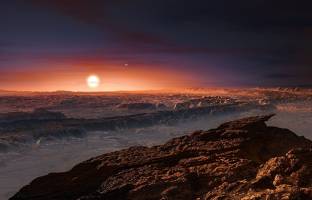
The discovery of an earth-sized planet that may be the closest possible home for life outside the Solar System has won the Research Impact category at the Guardian Higher Education Awards 2017 .
Physics - Astronomy & Space - 29.03.2017
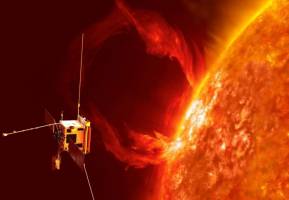
Imperial's contribution to the Solar Orbiter mission, which will go closer to the Sun than anything so far, is ready to fly after extensive testing.
Linguistics & Literature - Astronomy & Space - 23.03.2017
More than 20 new portraits commissioned to reflect Oxford University’s diversity
Oxford University has announced the full list of sitters and artists taking part in its Diversifying Portraiture initiative, which aims to broaden the range of people represented around the University.
Health - Astronomy & Space - 20.03.2017
Asa Briggs Visiting Fellows for 2017 announced
Asa Briggs Visiting Fellows for 2017 announced Seven Asa Briggs Visiting Fellowship awards have been made to a prestigious group of international academics and Sussex faculty.
Astronomy & Space - Physics - 16.03.2017
Reflecting on a ‘momentous year’
Astronomy & Space - Physics - 15.03.2017

New observations of galaxies forming 10 billion years ago show they are dominated by 'normal' matter, with so-called 'dark matter' present in much smaller quantities than expected. By mapping the orbital speed of gas around the centre of six galaxies University of Bath researchers, working with an international group of scientists led by the Max Planck Institute for Extraterrestrial Physics , found that the orbital speed drops with distance out from the centre - unexpected evidence that dark matter is only present in small quantities.
Astronomy & Space - 14.03.2017
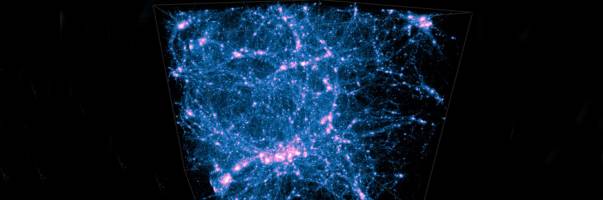
Astronomers have sampled 40,000 distant galaxies to better understand how galaxies like our own Milky Way have formed and evolved across cosmic time.
Astronomy & Space - 13.03.2017
Pub talk - science style!
Astronomy & Space - Event - 10.03.2017
Research shortlisted for The Guardian University Awards 2017
A research paper by Queen Mary University of London (QMUL) announcing the discovery of the nearest potentially habitable planet to the Solar System has been shortlisted for The Guardian University Awards 2017.
Astronomy & Space - Physics - 08.03.2017

Iconic research centre confirms Durham's international position in space science (8 March 2017) Durham University has reaffirmed its position as a world leading centre of research in astronomy and cosmology with the opening of the new £11.5m Ogden Centre for Fundamental Physics.
Astronomy & Space - Physics - 01.03.2017

Spectacular light show celebrates new Ogden Centre for Fundamental Physics (1 March 2017) Stunning images of the cosmos will be projected on to one of Durham City's newest landmarks to celebrate its official opening next week (9,10,11 March).
Astronomy & Space - 22.02.2017
Newly discovered planets could have water on their surfaces
An international team of astronomers has found a system of seven potentially habitable planets orbiting a star 39 light years away three of which could have water on their surfaces raising the possibility they could host life. Using ground and space telescopes, the team identified the planets as they passed in front of the ultracool dwarf star known as TRAPPIST-1.
Astronomy & Space - 20.02.2017
‘Special time’ for eclipses
A spectacular partial eclipse in the southern hemisphere will be witnessed by a Welsh astronomy expert who is highlighting its importance to the public.
Astronomy & Space - Life Sciences - 20.02.2017
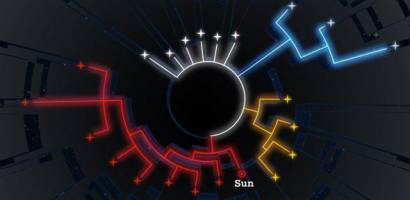
Astronomers are borrowing principles applied in biology and archaeology to build a family tree of the stars in the galaxy.
Event - Astronomy & Space - 09.02.2017
Lord Rees looks ahead to 2050 global challenges in IPR Public Lecture
Astronomer Royal and former President of the Royal Society, Lord Martin Rees , will use tonight's sell-out Institute for Policy Research (IPR) Public Lecture to set out a vision on why the worlds of science and public policy must better integrate when it comes to tackling future global challenges.
Astronomy & Space - Chemistry - 08.02.2017
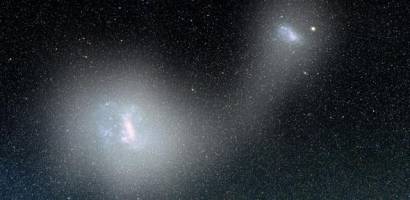
The Magellanic Clouds, the two largest satellite galaxies of the Milky Way, appear to be connected by a bridge stretching across 43,000 light years, according to an international team of astronomers led by researchers from the University of Cambridge. The discovery is reported in the journal Monthly Notices of the Royal Astronomical Society (MNRAS) and is based on the Galactic stellar census being conducted by the European Space Observatory, Gaia.
Astronomy & Space - Earth Sciences - 24.01.2017
New project to boost Sat Nav positioning accuracy anywhere in world
A project exploiting Global Navigation Satellite Systems (GNSS) to establish the blueprint for the world's most accurate real-time positioning service is to run at The University of Nottingham.
Astronomy & Space - 19.01.2017

Dr Martin Archer from the School of Physics and Astronomy writes about his work taking the latest research into schools and how his findings can help science researchers and teachers interested in doing something similar.
Astronomy & Space - 19.01.2017

Filmmakers will have the chance to use real-life sound recorded from space in a new competition launched by Queen Mary University of London (QMUL).
Astronomy & Space - Physics - 16.01.2017
Top astronomical prize for space mission leader
Astronomy & Space - Physics - 13.01.2017
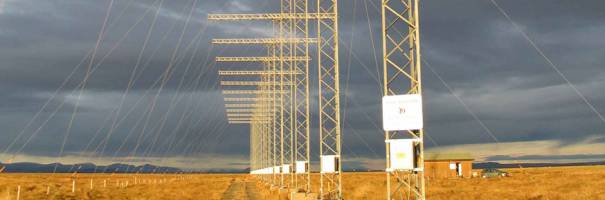
The Royal Astronomical Society has awarded the 2017 Group Achievement Award for Geophysics to an international consortium including Lancaster University.
Astronomy & Space - Computer Science - 06.01.2017
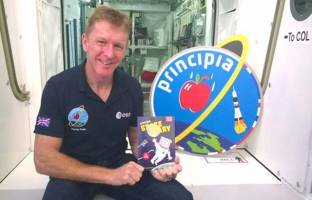
Thousands of schoolchildren will have the chance to become space experts as they learn about British European Space Agency astronaut Tim Peake's historic space mission by taking part in a pioneering STEM (Science, Technology, Engineering and Maths) literacy project called Space Diary.
Astronomy & Space - 05.01.2017
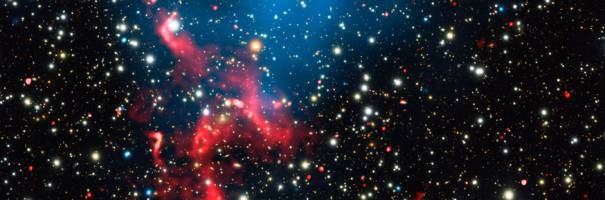
An international team of astronomers including Lancaster's David Sobra l have discovered a cosmic one-two punch never seen before. Two of the most powerful phenomena in the Universe - a supermassive black hole and the collision of giant galaxy clusters - have combined to create a stupendous cosmic particle accelerator.
Astronomy & Space - Event - 04.01.2017
Explore galaxies far, far away at the University of Sussex
Explore galaxies far, far away at the University of Sussex Children and adults will be seeing stars during an evening of astronomical activities at the University of Sussex campus this month.
Astronomy & Space - Physics - 19.12.2016

An astronomer from Queen Mary University of London (QMUL) has been named as one of the top ten people who mattered in science in 2016 by the prestigious scientific publisher Nature . Dr Guillem Anglada-Escudé from QMUL's School of Physics and Astronomy led a team of scientists that discovered the earth-sized planet called Proxima b - He said: 'It is an honour to appear in such a list.
Astronomy & Space - Physics - 19.12.2016
Largest digital survey of visible Universe released
Cosmologists at Durham University have helped put together the world's largest digital survey of the visible Universe.
Astronomy & Space - History & Archeology - 15.12.2016
Kepler’s Trial: An Opera
An ambitious opera, telling the story of an infamous witch trial, was premiered in October. A film of Kepler's Trial the Opera is now available online.
Astronomy & Space - History & Archeology - 15.12.2016
Kepler’s Trial the Opera
An ambitious opera, telling the story of an infamous witch trial, was premiered in October. A film of Kepler's Trial the Opera is now available online.
Astronomy & Space - Earth Sciences - 12.12.2016
Scientist uses NASA/US Geological Survey satellite to map movements of Greenland glaciers
Glaciers and ice sheets move in unique and sometimes surprising patterns, as evidenced by a new capability that uses satellite images to map the speed of flowing ice in Greenland, Antarctica and mountain ranges around the world.
Physics - Astronomy & Space - 12.12.2016
Royal Medal for veteran gravitational wave physicist
A University of Glasgow physicist who worked for more than 50 years to find evidence of gravitational waves has received royal recognition for his work.
Astronomy & Space - Physics - 25.11.2016
Theory that challenges Einstein’s physics could soon be put to the test
Scientists behind a theory that the speed of light is variable - and not constant as Einstein suggested - have made a prediction that could be tested. Einstein observed that the speed of light remains the same in any situation, and this meant that space and time could be different in different situations.
Astronomy & Space - Linguistics & Literature - 22.11.2016
‘Chasing the Waves’: sharing the discovery of the century through theatre
University of Glasgow physicists and astronomers who helped make the discovery of the century - the detection of gravitational waves - are set to share their fascinating story through theatre, with performances of new show 'Chasing the Waves' this December. The show, produced by Glasgow Science Festival and funded by the Science and Technology Facilities Council (STFC) draws on the research and experiences of scientists who helped detect these 'ripples' in space-time, caused by some of the most dramatic events in the universe, from exploding stars to colliding black holes.
Astronomy & Space - Physics - 21.11.2016
‘Tis the season to be emotional
The University of Warwick's Christmas lecture series will kick off next week. This year there will be six talks on science topics including gravitational waves in space, the science of emotions and the secret chemistry of home baking.
Astronomy & Space - 17.11.2016
Global science research partnerships praised
Global science research partnerships praised (17 November 2016) Durham University has been ranked in the top 25 in the world for its strong global research partnerships in a prestigious Nature Index.
Astronomy & Space - 09.11.2016
Podcast: How planets are born, Crime Scene Imperial and knocking out delirium
In this edition: Getting to the heart of planet formation, criminal investigations at the latest Fringe, and tackling post-operative delirium.
Event - Astronomy & Space - 03.11.2016
The Glasgow LISA Pathfinder team has won a Sir Arthur Clarke Award
Astronomy & Space - Event - 01.11.2016
President’s Medals for University of Glasgow gravitational wave researchers
University of Glasgow physicists who played a key role in the historic first detection of gravitational waves have received a prestigious award for their achievements.
Astronomy & Space - Earth Sciences - 28.10.2016

Scientists have simulated the conditions that formed a huge bullseye-shaped crater on the Moon, called Orientale. The Orientale impact basin is located on the Moon's south western region, or the left-hand edge as seen from Earth. It is made up of concentric rings that resemble a bullseye pattern. At over 900 kilometres across and with an age of approximately 3.8 billion years, Orientale is one of the largest, the youngest and the best preserved example of what scientists call a multi-ring basin.
Astronomy & Space - Physics - 28.10.2016
Physicists make it possible to 3D print your own baby universe
Researchers have created a 3D printed cosmic microwave background - a map of the oldest light in the universe - and provided the files for.
Astronomy & Space - 26.10.2016
The 100,000 year problem
This mysterious phenomena, dubbed the '100,000 year problem', has been occurring for the past million years or so and leads to vast ice sheets covering North America, Europe and Asia. Up until now, scientists have been unable to explain why this happens. Our planet's ice ages used to occur at intervals of every 40,000 years, which made sense to scientists as the Earth's seasons vary in a predictable way, with colder summers occurring at these intervals.
Physics - Astronomy & Space - 18.10.2016
Stephen Hawking talks black holes and the quantum world at sell-out lecture
Professor Hawking last night told a packed hall at Imperial how he discovered that black holes are not as dark and destructive as we think.
Astronomy & Space - History & Archeology - 13.10.2016
There are at least two trillion galaxies in the universe, ten times more than previously thought
Astronomers have long sought to determine how many galaxies there are in the universe. This is a fundamental question that we have only been able to address with any certainty due to new scientific results. During the past 20 years very deep Hubble Space Telescope images have found a myriad of faint galaxies, and it was approximated that the observable Universe contains about 100 billion galaxies in total.
Astronomy & Space - Electroengineering - 13.10.2016

Imperial's Professor Tom Pike discusses how a new mission to Mars, which recently got the green light, could tell us more about rocky planets.
Physics - Astronomy & Space - 11.10.2016
Researchers have determined how warm dense matter, a state that exists during fusion reactions, behaves at different temperatures and pressures. Warm dense matter is a state where materials act in a different way than traditional solid, liquid, gas or plasma. It is thought to exist in the cores of some planets and in the atmospheres of white dwarf stars, but it can also be created in the lab.
Astronomy & Space - 29.09.2016
Rosetta comet-chasing mission comes to a dramatic end
We catch up with an Imperial mission scientist as the Rosetta spacecraft ends its 10-year mission by crashing into the surface of comet 67P.
Astronomy & Space - 28.09.2016
Podcast: Virtual reality for vertigo, feather power and Rosetta’s last mission
In this edition: Testing virtual reality to overcome visual vertigo, making use of waste chicken feathers and crashing the Rosetta spacecraft.


