


Environment - Mar 27
The University of Manchester signs Memorandum of Understanding with United Utilities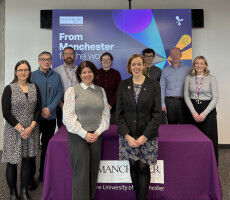
The University of Manchester signs Memorandum of Understanding with United Utilities
Agronomy & Food Science - Mar 27
Gather & Gather unveils fresh new Spring/Summer 2026 menu designed for the warmer seasons
Gather & Gather unveils fresh new Spring/Summer 2026 menu designed for the warmer seasons
Environment - Mar 26
University of Manchester hits major sustainability milestone, with Main Campus becoming 100% 'Zero Landfill'
University of Manchester hits major sustainability milestone, with Main Campus becoming 100% 'Zero Landfill'
Campus - MANCHESTER - Mar 26
Manchester students mentor local teenagers to build confidence in applying for university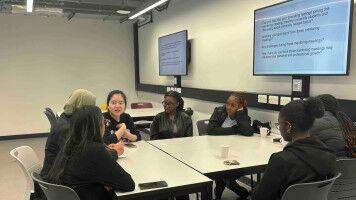
Manchester students mentor local teenagers to build confidence in applying for university

news
University College London
Results 1661 - 1680 of 2154.
Life Sciences - Health - 25.01.2017
HIV breaches macrophage defences, could be step towards cure
A team led by UCL researchers has identified how HIV is able to infect macrophages, a type of white blood cell integral to the immune system, despite the presence of a protective protein. They discovered a treatment that can maintain macrophage defences which could be a key part of the puzzle of reaching a complete cure for HIV/AIDS.
Life Sciences - Health - 18.01.2017
Delirium could accelerate dementia-related mental decline
When hospitalised, people can become acutely confused and disorientated. This condition, known as delirium, affects a quarter of older patients and new research by UCL and University of Cambridge shows it may have long-lasting consequences, including accelerating the dementia process. The study, published today in the journal JAMA Psychiatry, is the first to show the multiplying effects of delirium and dementia in these patients.
Environment - 13.01.2017
Mapping movements of alien bird species
The global map of alien bird species has been produced for the first time by a UCL-led team of researchers. It shows that human activities are the main determinants of how many alien bird species live in an area but that alien species are most successful in areas already rich with native bird species.
Life Sciences - Health - 11.01.2017
Supporting actors take lead role as our brains age
The main changes in our brains as we get older are in the brain cells with a supporting role, called glial cells, British scientists have found. The surprising finding in a study by researchers at UCL and the Francis Crick Institute is published in the journal Cell Reports. The researchers also found that the greatest changes in glial cells as we age are in the brain regions most often damaged by neurodegenerative disease, like Alzheimer's and Parkinson's.
Health - Life Sciences - 10.01.2017
High-sugar diet programmes a short lifespan in flies
Flies with a history of eating a high sugar diet live shorter lives, even after their diet improves. This is because the unhealthy diet drives long-term reprogramming of gene expression, according to a UCL-led team of researchers. The study, published today in Cell Reports , discovered that the action of a gene called FOXO is inhibited in flies given a high sugar diet in early life, causing long-term effects.
Health - 10.01.2017
New model predicts when people are willing to try new things
A new model to predict when people are most likely to try different products has been developed by scientists at UCL and dunnhumby, a customer science company. The research could help to direct public health interventions aimed at encouraging healthier choices. The team analysed anonymous purchase data from over 280,000 shoppers who regularly bought products in six categories: beers, breads, coffees, toilet papers, washing detergents and yogurts.
Life Sciences - Health - 20.12.2016
Gene discovery helps children with movement disorder walk again
UCL researchers have discovered a new genetic cause for dystonia, a movement disorder, enabling treatment with Deep Brain Stimulation which has been so successful that children have been able to walk again. The team of researchers from UCL Great Ormond Street Institute of Child Health, University of Cambridge and the NIHR Rare Disease Bioresource have identified mutations in a gene, called KMT2B, in 28 patients with dystonia.
Health - 19.12.2016
Neglect and abuse in childhood could have long-term economic consequences
People who suffer neglect and abuse in childhood are much more likely to have time off work due to long-term sickness and less likely to own their own homes when they reach middle age than their peers, according to new research undertaken at UCL. The study, which is published in U.S. journal Pediatrics and undertaken as part of the Public Health Research Consortium, showed that the potential socioeconomic impact of child neglect and abuse may persist for decades.
Astronomy & Space - 12.12.2016
Detecting weather on a gas giant exoplanet
Signs of powerful changing winds have been detected on an exoplanet 16 times larger than Earth, according to a team involving UCL scientists. It's the first time that weather systems have been found on a gas giant outside the solar system. Led by the University of Warwick, the researchers discovered that the gas giant HAT-P-7b, which is located over 1000 light years away, is affected by large scale changes in strong winds moving across the planet, likely leading to catastrophic storms.
Physics - Earth Sciences - 09.12.2016
Understanding how ice crystals form in clouds
How ice forms on the surfaces of mineral dust particles in the atmosphere has been revealed by a team from UCL and the Karlsruhe Institute of Technology (KIT) in Germany. More than 90% of precipitation over land relies on the formation of ice crystals on airborne aerosol particles but why only a tiny fraction of all atmospheric particles can initiate ice growth is unknown.
Health - Administration - 05.12.2016
Women with dementia receive less medical attention
Women with dementia have fewer visits to the GP, receive less health monitoring and take more potentially harmful medication than men with dementia, new UCL research reveals. The study, published in Age and Ageing, also found that only half of all dementia patients had a documented annual review even though GP surgeries are offered financial incentives to carry these out.
Health - 01.12.2016
HIV patients showing signs of multidrug resistance in Africa
Significant numbers of patients whose HIV strains developed resistance to older generation drugs are also resistant to modern drugs, finds a new study led by UCL and funded by Wellcome. The research, co-authored by researchers at the London School of Hygiene and Tropical Medicine and published in The Lancet Infectious Diseases , studied 712 HIV patients across the world whose HIV was not controlled by antiretrovirals.
Computer Science - 16.11.2016
Most updates to mobile apps don’t make a noticeable difference
The majority of updates to mobile apps don't have a significant impact on user ratings, suggesting developers might release updates too frequently, according to a new study by UCL researchers. They found free apps were less likely to make an impact when their developers release an update compared to paid apps, although among the impactful releases, the impact was more likely to be positive for free apps.
Life Sciences - 14.11.2016
Pain sensors specialised for specific sensations
Many pain-sensing nerves in the body are thought to respond to all types of 'painful events', but new UCL research in mice reveals that in fact most are specialised to respond to specific types such as heat, cold or mechanical pain. The study found that over 85% of pain-sensing neurons in whole organisms are sensitive to one specific type of painful stimulus.
Agronomy & Food Science - Health - 11.11.2016
Skipping breakfast and not enough sleep can make children overweight
Mothers smoking in pregnancy, children skipping breakfast and not having a regular bedtime or sufficient sleep all appear to be important factors in predicting whether a child will become overweight or obese, according to new research led by UCL. All three are early life factors which can be modified and the research highlights the possibility that prompt intervention could have an impact in curbing the growth in childhood overweight and obesity.
Life Sciences - Health - 08.11.2016
Blood vessels control brain growth
Blood vessels play a vital role in stem cell reproduction, enabling the brain to grow and develop in the womb, reveals new UCL research in mice. The study, published in the Proceedings of the National Academy of Sciences and funded by Wellcome, shows that blood vessels can increase the number of neural stem cells inside a living organism.
Life Sciences - 07.11.2016
Older dogs better at learning new tricks
Older adolescents and adults can learn certain thinking skills including non-verbal reasoning more effectively than younger people, finds new UCL research. The study, published in Psychological Science, also highlights the fact that non-verbal reasoning skills can be readily trained and do not represent an innate, fixed ability.
Life Sciences - Health - 27.10.2016
Top ten universities conduct a third of all UK animal research
The ten UK universities who do the most world-leading biomedical research have announced their animal research statistics, revealing that they collectively conducted a third of all UK animal research in 2015. The top ten institutions conduct more than two thirds of all UK university animal research between them, completing a combined total of 1.37 million procedures.
Life Sciences - 25.10.2016
Arousal exerts an unconscious influence on what we see
A new study from UCL researchers finds that subtle, unconscious increases in arousal - indicated by a faster heartbeat and dilated pupils - shape our confidence for visual experiences. The study, published in eLife , investigated the effect of unconscious arousal on how confident participants felt about what they were seeing when completing a simple task.
Health - 24.10.2016
‘Middle England’ faces lowest psychosis risk
The risk of developing a psychotic disorder such as schizophrenia is highest for young people, men, ethnic minorities and people living in urban areas and poorer neighbourhoods, finds a new study by UCL and the University of Cambridge. The research, funded by Wellcome and published in the American Journal of Psychiatry, suggests that a reduced risk of developing psychosis can be added to the list of social, economic and health advantages enjoyed by more affluent, older white British people living in rural England; a group typically known as 'Middle England'.


Environment - Mar 27
The University of Manchester signs Memorandum of Understanding with United Utilities
The University of Manchester signs Memorandum of Understanding with United Utilities
Agronomy & Food Science - Mar 27
Gather & Gather unveils fresh new Spring/Summer 2026 menu designed for the warmer seasons
Gather & Gather unveils fresh new Spring/Summer 2026 menu designed for the warmer seasons
Environment - Mar 26
University of Manchester hits major sustainability milestone, with Main Campus becoming 100% 'Zero Landfill'
University of Manchester hits major sustainability milestone, with Main Campus becoming 100% 'Zero Landfill'
Campus - MANCHESTER - Mar 26
Manchester students mentor local teenagers to build confidence in applying for university
Manchester students mentor local teenagers to build confidence in applying for university