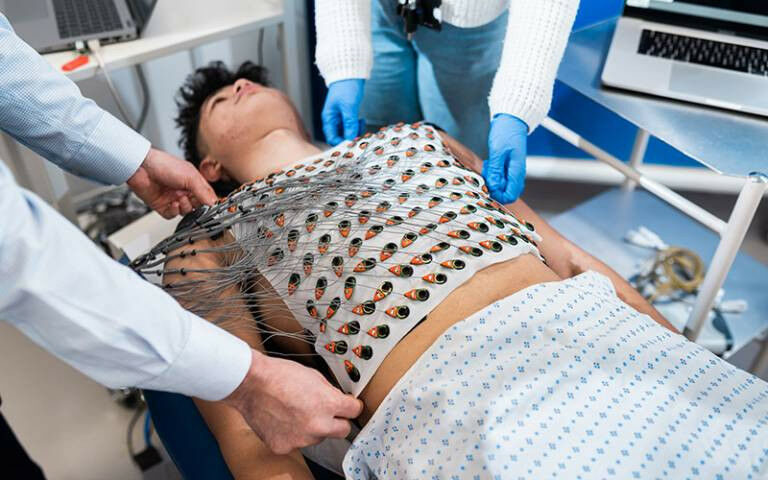
vest being worn by a UCL medical student
vest being worn by a UCL medical student A reusable vest that can map the electric impulses of the heart in fine detail could detect abnormalities from a potentially fatal heart disease much earlier than is currently possible, suggests a new study led by UCL researchers. The study, published in the Journal of the American College of Cardiology , found that an electrocardiographic imaging (ECGI) vest, developed by Dr Gaby Captur at UCL, could detect electrical changes associated with an inherited heart muscle condition at a stage when standard tests do not pick up signs of disease. The condition, called hypertrophic cardiomyopathy, is where the muscle wall of the heart becomes thicker and stiffens, affecting how well the heart can pump blood around the body. It affects an estimated one in 300 adults. While often people with genetic variants that cause the disease have no symptoms at all, the condition can lead to heart failure and is frequently cited as the most common cause of sudden unexpected death in young people. Lead author Dr George Joy (UCL Institute of Cardiovascular Science and Barts Heart Centre) said: "By finding subtle electrical abnormalities using our new technique, we are able to detect hypertrophic cardiomyopathy earlier.
TO READ THIS ARTICLE, CREATE YOUR ACCOUNT
And extend your reading, free of charge and with no commitment.