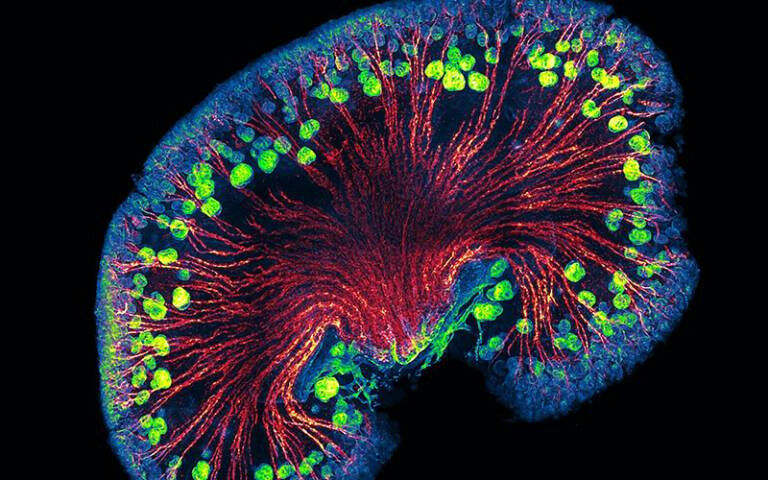
A confocal microscopy image of the urinary filtration apparatus of the developing kidney. Credit: David Long, Claire Walsh and Danyal Jafree/UCL.
A confocal microscopy image of the urinary filtration apparatus of the developing kidney. Credit: David Long, Claire Walsh and Danyal Jafree/UCL. Focusing on rare conditions could significantly reduce the burden of kidney disease on both patients and the NHS, according to a major new study led by UCL and the UK Kidney Association. The study, published in The Lancet to mark World Kidney Day, draws on the largest rare kidney disease dataset ever created. It found that patients with rare kidney diseases are 28 times more likely to experience kidney failure than those with chronic kidney disease (CKD), but are less than half as likely to die before kidney failure treatment is needed. The results suggest that additional focus on treating rare kidney diseases, many of which have new therapies in development or already available, could disproportionately alleviate the overall demand for expensive and hazardous dialysis and kidney transplantation treatments. The authors hope that the research will reframe perceptions of chronic kidney disease, rare diseases and kidney failure among patients, caregivers, regulators, healthcare providers, and researchers.
TO READ THIS ARTICLE, CREATE YOUR ACCOUNT
And extend your reading, free of charge and with no commitment.