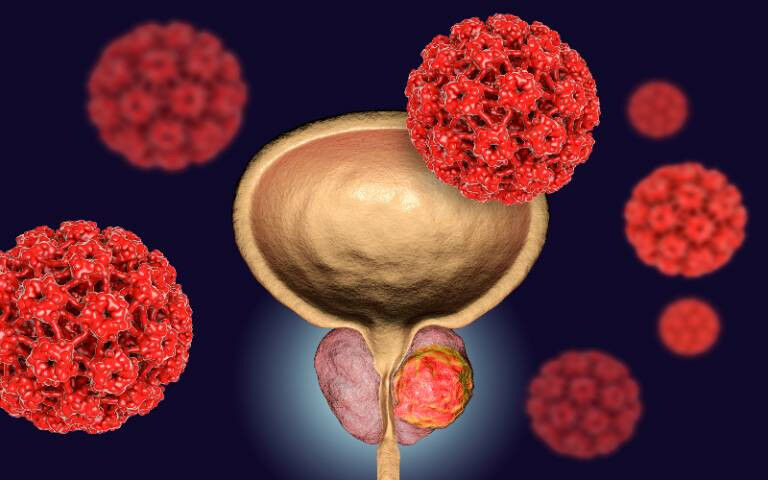
Conceptual image for viral ethiology of prostate cancer
Conceptual image for viral ethiology of prostate cancer A new study involving UCL researchers has found that better prostate cancer treatments could reach men almost two years earlier than is currently possible. Currently, it takes around 10 years for new treatments to be studied in large-scale trials. However, the new research showed that the length of time a man lives without his cancer progressing - known as progression-free survival - reasonably predicts how long he will eventually live ('overall survival'). As progression-free survival can usually be assessed around two years earlier than overall survival, using it in future trials could make them shorter. This would mean new treatments could reach men with advanced prostate cancer safely, but more quickly than they do now. The results, published in the Journal of Clinical Oncology , on behalf of the STOPCAP Collaboration, reviewed data from over 8,500 men with prostate cancer in nine different clinical trials. The team is now working to find out if other earlier measures of prostate cancer control could be used to predict overall survival, such as low levels of prostate specific antigen (PSA) at 7 or 12 months, which could shorten the length of time needed for clinical trials even further.
TO READ THIS ARTICLE, CREATE YOUR ACCOUNT
And extend your reading, free of charge and with no commitment.