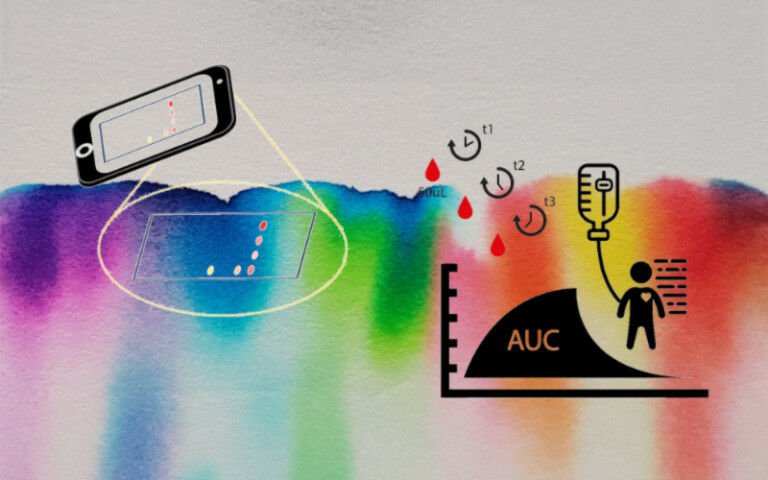
ChromaDose exhibits at Royal Society - Credit: Royal Society.
ChromaDose exhibits at Royal Society - Credit: Royal Society. A new drug-monitoring tool, developed by a consortium including UCL researchers, calculates how much cancer medicine is in a patient's blood to help reduce heart problems and other side effects experienced by children in the UK who receive chemotherapy drugs. Researchers from all around the UK have descended on London this week to exhibit at The Royal Society Summer Science Exhibition, which runs until 11 July. Among the exhibits is ChromaDose, a research project involving a consortium of UK scientists, clinicians and patients who are developing a point-of-care therapeutic drug monitoring (TDM) that could be available in hospitals by 2025. It is hoped the ChromaDose device will help to reduce the incidence of life-limiting health complications, such as heart problems and other treatment-related side effects experienced by up to 65% of the 10,000 children in the UK who have received anti-cancer medicines. The device will help doctors to calculate tailored doses for future patients. The ChromaDose technology is based on an inexpensive and simple chemical analysis, which can be carried out quickly and easily at the bedside.
TO READ THIS ARTICLE, CREATE YOUR ACCOUNT
And extend your reading, free of charge and with no commitment.