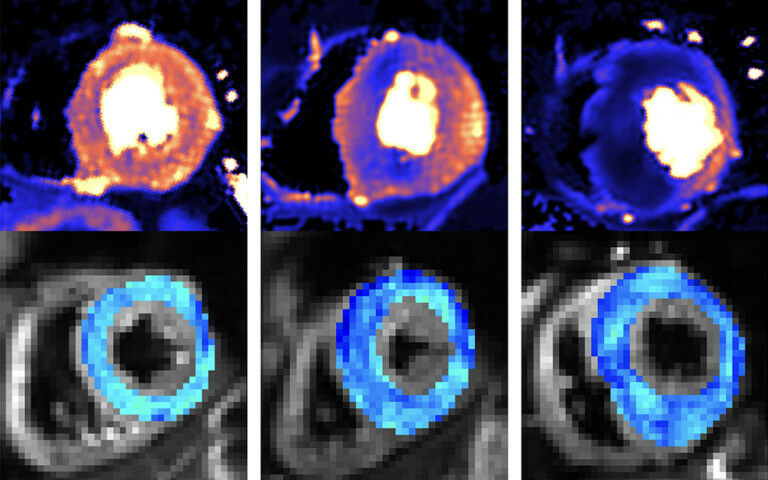
MRI images of the hearts of a healthy volunteer (left), individual with HCM gene but no symptoms (middle), patient with overt HCM (right). Top: quantitative perfusion images showing defects in heart muscle blood flow (dark blue), bottom: cardiac diffusio
MRI images of the hearts of a healthy volunteer ( left ), individual with HCM gene but no symptoms ( middle ), patient with overt HCM ( right ). Top: quantitative perfusion images showing defects in heart muscle blood flow ( dark blue ), bottom: cardiac diffusio Combining two types of heart scan techniques could help doctors to detect the deadly heart condition hypertrophic cardiomyopathy (HCM) before symptoms and signs on conventional tests appear, according to a new study led by UCL researchers. The research, funded by the British Heart Foundation and published in the journal Circulation , opens the prospect of treating the condition at the earliest stages. Being able to detect HCM earlier than ever before will also assist trials investigating gene therapies and drug treatments aimed at stopping the disease developing in those at risk. HCM is an inherited condition that affects around 1 in 500 people in the UK. It causes the muscular walls of the heart to become thicker than normal, affecting how well the heart can pump blood around the body. It is a leading cause of heart failure and sudden cardiac death.
TO READ THIS ARTICLE, CREATE YOUR ACCOUNT
And extend your reading, free of charge and with no commitment.