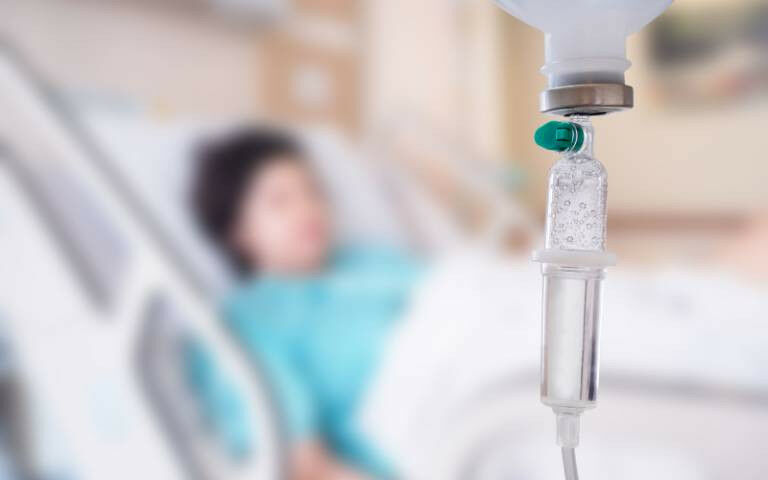
Patients were treated with prion protein monoclonal antibody (PRN100) - ’Medical drip with patient in the hospital’, credit: Kwangmoozaa on iStock
Patients were treated with prion protein monoclonal antibody (PRN100) - 'Medical drip with patient in the hospital' , credit: Kwangmoozaa on iStock - A world-first treatment for Creutzfeldt-Jakob disease (CJD), developed by scientists at the Medical Research Council (MRC) Prion Unit at UCL, has shown "very encouraging" early results following its use in six patients at University College London Hospitals (UCLH) NHS Foundation. CJD is a rare but devastating disease that causes brain damage and for which there is currently no licensed treatment. It is always fatal and most patients sadly die within a few months of diagnosis. Researchers at the MRC Prion Unit at UCL have developed a monoclonal antibody, called PRN100, which was given to six UCLH patients with CJD between October 2018 and July 2019. The results, published in the Lancet Neurology , show the treatment is safe and able to access the brain. In three patients, disease progression appeared to stabilise when dosing levels were in target range. Given the small number of patients treated, researchers say the findings should be regarded as preliminary and further studies are needed to draw more comprehensive conclusions.
TO READ THIS ARTICLE, CREATE YOUR ACCOUNT
And extend your reading, free of charge and with no commitment.