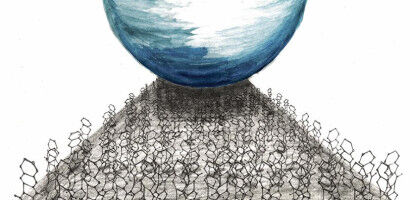
The cellular forms of natural materials are the inspiration behind a new lightweight, 3D printed smart architected material developed by an international team of engineers. The team, led by engineers from the University of Glasgow, mixed a common form of industrial plastic with carbon nanotubes to create a material which is tougher, stronger and smarter than comparable conventional materials. The nanotubes also allow the otherwise nonconductive plastic to carry an electric charge throughout its structure. When the structure is subjected to mechanical loads, its electrical resistance changes. This phenomenon, known as piezoresitivity, gives the material the ability to 'sense' its structural health. By using advanced 3D printing techniques which provide a high level of control over the design of printed structures, they were able to create a series of intricate designs with mesoscale porous architecture, which helps to reduce each design's overall weight and maximize mechanical performance. The team's cellular designs are similar to porous materials found in the natural world, like beehives, sponge and bone, which are lightweight but robust.
TO READ THIS ARTICLE, CREATE YOUR ACCOUNT
And extend your reading, free of charge and with no commitment.