


Health - Mar 13
Oxford and Serum Institute of India sign IP license agreement to advance NipahB vaccine candidate
Oxford and Serum Institute of India sign IP license agreement to advance NipahB vaccine candidate
Career - Mar 13
Faye Holland joins pioneering Cambridge x Manchester collaboration as Partnership Director
Faye Holland joins pioneering Cambridge x Manchester collaboration as Partnership Director
Economics - Mar 13
£9.6M SATURN-2 programme launched to deliver the UK's next generation of nuclear experts
£9.6M SATURN-2 programme launched to deliver the UK's next generation of nuclear experts
Health - Mar 12
Nuffield Department of Primary Care Health Sciences designated as the WHO Collaborating Centre on Primary Health Care
Nuffield Department of Primary Care Health Sciences designated as the WHO Collaborating Centre on Primary Health Care

news
Materials Science
Results 1 - 20 of 154.
Physics - Materials Science - 06.03.2026
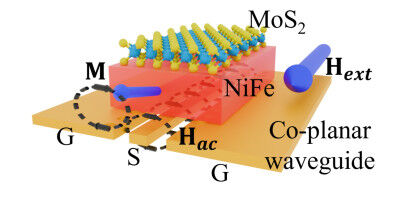
Scientists at the University of Manchester have discovered that placing magnetic films on atomically thin molybdenum disulfide (MoS2) fundamentally changes how they lose energy, a finding that could bring 2D-material spintronics a step closer to real devices. The team found that growing a widely used magnetic alloy, permalloy, on ultra-thin MoS2 alters the film's internal crystal structure, changing how and where energy is lost as magnetic spins move.
Materials Science - Chemistry - 05.03.2026
New research could help lithium-ion batteries reach their full potential
New research into why lithium-ion batteries tend to lose power over cycles of charge and discharge could help unlock the next generation of more durable, fast-charging power cells. An international team of chemists and engineers from the UK, China, and Germany have published a paper which challenges the conventional assumptions about how batteries should be optimised to maximise performance, highlighting the importance of electrical, rather than ionic, conductivity.
Microtechnics - Materials Science - 05.03.2026
Graphene-based ’artificial skin’ brings human-like touch closer to robots
Robots are becoming increasingly capable in vision and movement, yet touch remains one of their major weaknesses. Now, researchers have developed a miniature tactile sensor that could give robots something much closer to a human sense of touch. The technology, developed by researchers at the University of Cambridge, is based on liquid metal composites and graphene - a two-dimensional form of carbon.
Materials Science - Electroengineering - 19.12.2025
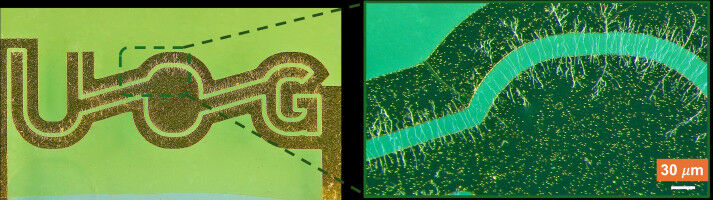
A breakthrough development in nanofabrication could help support the development of new wireless, flexible, high-performance transparent electronic devices. Researchers from the University of Glasgow's James Watt School of Engineering have developed a new method of interfacial imprinting ultra-thin nanowires onto bendable, transparent polymeric substrates.
Materials Science - Physics - 15.10.2025

New research shows water's dramatic electrical transformation when squeezed to just a few molecular layers thick. Researchers at The University of Manchester have made an unexpected discovery about one of the world's most familiar substances - water. When confined to spaces a few atoms thick, water transforms into something completely unfamiliar, exhibiting properties more commonly associated with advanced materials like ferroelectrics and superionic liquids.
Materials Science - Chemistry - 27.08.2025
Simple salt could help unlock more powerful solar cells
A salt called guanidinium thiocyanate can improve the efficiency and stability of perovskite solar cells, a new class of semiconductor that could make solar power cheaper and more powerful, according to researchers at UCL. In a study published in the Journal of the American Chemical Society , the team showed that guanidinium thiocyanate can slow and control the way perovskite crystals form during fabrication, creating smoother and more uniform layers.
Life Sciences - Materials Science - 01.08.2025

Programmable 2D nanochannels mimic both synaptic behaviour and multiple memory types, marking a major advance in neuromorphic computing. Researchers at The University of Manchester's National Graphene Institute have developed a new class of programmable nanofluidic memristors that mimic the memory functions of the human brain, paving the way for next-generation neuromorphic computing.
Materials Science - Electroengineering - 29.07.2025

An international team led by researchers at The University of Manchester's National Graphene Institute has demonstrated a ground-breaking device capable of electrically controlling heat flow, potentially transforming thermal management in aerospace and advanced electronic applications. The findings are detailed in their recent publication in Science Advances .
Physics - Materials Science - 21.07.2025

A new study published in Science Advances by researchers from the National Graphene Institute at University of Manchester and the University of Oviedo, has revealed a previously unseen behaviour of light in gypsum, a mineral better known for its use in building plaster and chalk. The team uncovered a rare type of wave, known as a shear phonon polariton, in a two-dimensional form of the material.
Materials Science - Chemistry - 16.06.2025

Scientists from the National Graphene Institute at The University of Manchester and the University of Technology Sydney have developed a new way to improve the lifespan of zinc-ion batteries, offering a safer and more sustainable option for energy storage. The team designed a two-dimensional (2D) manganese-oxide/graphene superlattice that triggers a unique lattice-wide strain mechanism.
Physics - Materials Science - 15.04.2025

A breakthrough by researchers at The University of Manchester sheds light on one of nature's most elusive forces, with wide-reaching implications for medicine, energy, climate modelling and more. Researchers at The University of Manchester have developed a ground-breaking method to precisely measure the strength of hydrogen bonds in confined water systems, an advance that could transform our understanding of water's role in biology, materials science, and technology.
Physics - Materials Science - 12.03.2025

Tiny, individual, flexible ribbons of crystalline phosphorus discovered by UCL researchers in 2019 exhibit magnetic and semiconducting properties at room temperature, opening new possibilities for next-generation electronics, finds a new study involving members of the same team. The findings, published in the journal Nature , confirm the one-atom-thick ribbons, known as phosphorene nanoribbons, as a unique class of material that could enable more energy-efficient computing and unlock new quantum technologies.
Chemistry - Materials Science - 15.01.2025

Scientists have built an artificial motor capable of mimicking the natural mechanisms that power life. Just like the proteins in our muscles, which convert chemical energy into power to allow us to perform daily tasks, these tiny rotary motors use chemical energy to generate force, store energy, and perform tasks in a similar way.
Materials Science - Chemistry - 01.11.2024
New development could help deliver improved potassium-ion batteries
A breakthrough in material science could help deliver a new generation of affordable batteries, scientists say. An international team of researchers led by chemists from the University of Glasgow and battery testing experts at Helmholtz Institute Ulm have implemented a material made from chromium and selenium in a potassium-ion battery.
Materials Science - Innovation - 07.10.2024

Breakthrough research that eliminates the guesswork in developing advanced 3D printed materials could help accelerate the development of new forms of 'self-sensing' aeroplanes, robots, bridges and more. A team of engineers led by researchers from the University of Glasgow have developed the first system capable of modelling the complex physics of 3D-printed composites capable of detecting strain, load, and damage using nothing more than a measure of electrical current.
Computer Science - Materials Science - 13.09.2024

Researchers have developed a wearable 'smart choker' that uses a combination of flexible electronics and artificial intelligence techniques to allow people with speech impairments to communicate by detecting tiny movements in the throat. The smart choker, developed by researchers at the University of Cambridge, incorporates electronic sensors in a soft, stretchable fabric, and is comfortable to wear.
Materials Science - Physics - 06.09.2024

A team of scientists from the University of Manchester has achieved a significant breakthrough in understanding lithium-ion storage within the thinnest possible battery anode - composed of just two layers of carbon atoms. Their research, published in Nature Communications , shows an unexpected 'in-plane staging' process during lithium intercalation in bilayer graphene, which could pave the way for advancements in energy storage technologies.
Materials Science - Chemistry - 31.07.2024

3D printing offers effective, scalable way to remove harmful chemicals Engineers have invented a new way to remove health-harming 'forever chemicals' from water - using 3D printing. Researchers at the University of Bath say their method, using ceramic-infused lattices (or 'monoliths'), removes at least 75% of perfluorooctanoic acid (PFOA), one of the most common perfluoroalkyl and polyfluoroalkyl substance (PFAS), from water, and could become an important tool in future efforts to eliminate the chemicals from water supplies.
Materials Science - Innovation - 29.07.2024
3D-printed materials could unlock benefits for industry
New research on 3D-printed materials could unlock benefits for industry A new analysis of the deformation mechanisms which cause 3D-printed materials to fail under strain could help create future generations of stronger, lighter plastics, unlocking transformative benefits for industry.
Materials Science - Chemistry - 19.06.2024

Researchers at the National Graphene Institute have made a groundbreaking discovery that could revolutionise energy harnessing and information computing. Their study, published in Nature , reveals how electric field effects can selectively accelerate coupled electrochemical processes in graphene. Electrochemical processes are essential in renewable energy technologies like batteries, fuel cells, and electrolysers.


Health - Mar 13
Oxford and Serum Institute of India sign IP license agreement to advance NipahB vaccine candidate
Oxford and Serum Institute of India sign IP license agreement to advance NipahB vaccine candidate
Career - Mar 13
Faye Holland joins pioneering Cambridge x Manchester collaboration as Partnership Director
Faye Holland joins pioneering Cambridge x Manchester collaboration as Partnership Director
Economics - Mar 13
£9.6M SATURN-2 programme launched to deliver the UK's next generation of nuclear experts
£9.6M SATURN-2 programme launched to deliver the UK's next generation of nuclear experts
Health - Mar 12
Nuffield Department of Primary Care Health Sciences designated as the WHO Collaborating Centre on Primary Health Care
Nuffield Department of Primary Care Health Sciences designated as the WHO Collaborating Centre on Primary Health Care