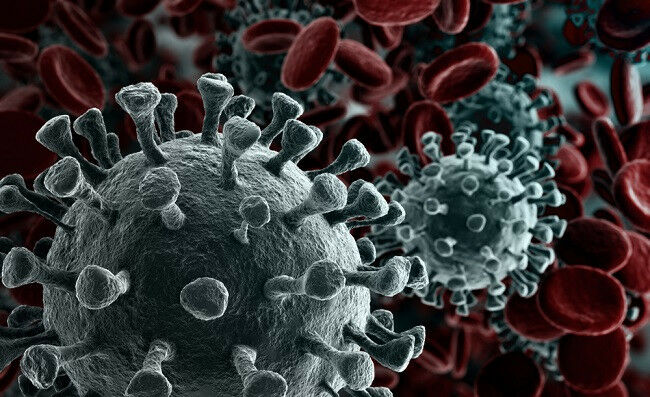
Study reveals differences in replication rates of SARS-CoV-2 variants of concern - Research led by scientists at the MRC-University of Glasgow Centre for Virus Research and the University of Oxford, in collaboration with UKHSA and Brighton NHS have revealed new insights into transmissibility of variants and susceptibility to infection. RNA, a central molecule to the SARS-CoV-2 life cycle, encodes the genetic information required to generate new viral proteins and infectious particles. Therefore, it is vital to understand how SARS-CoV-2 RNA multiplies in infected cells. This new study, published in eLife, has developed a new approach to quantify each individual molecule of SARS-CoV-2 RNA within infected cells with greater precision and sensitivity than previously possible. This approach allowed the researchers to study the very first stages of infection and to estimate the speed in which different variants of concern of SARS-CoV-2 replicates in cells in culture. SARS-CoV-2, the virus that causes COVID-19, was identified at the end of 2019 in the city of Wuhan. Since then, the virus has spread across all continents causing a pandemic with millions of deaths and leading to a global health and socioeconomic crisis.
TO READ THIS ARTICLE, CREATE YOUR ACCOUNT
And extend your reading, free of charge and with no commitment.