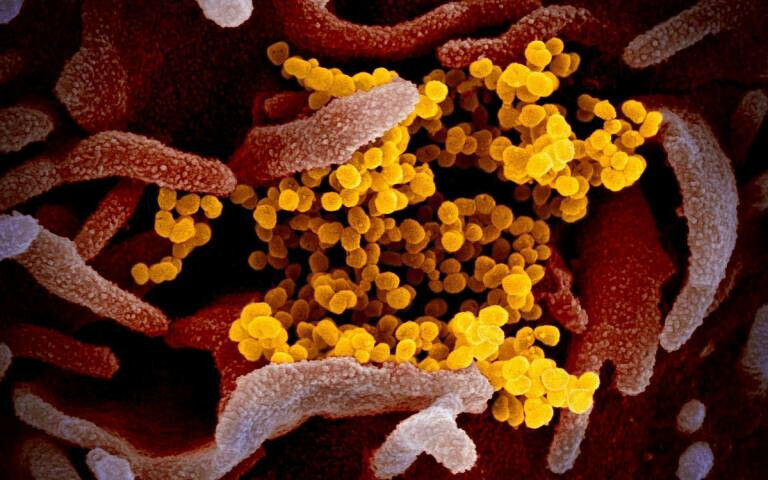
This scanning electron microscope image shows SARS-CoV-2 (yellow)--also known as 2019-nCoV, the virus that causes COVID-19--isolated from a patient in the U.S., emerging from the surface of cells (pink) cultured in the lab.This scanning electron microscope image shows SARS-CoV-2 (yellow)--also known as 2019-nCoV, the virus that causes COVID-19--isolated from a patient in the U.S., emerging from the surface of cells (pink) cultured in the lab. Credit: NIAID-RML. Licence: CC-BY-2.0. Source: Wikimedia
This scanning electron microscope image shows SARS-CoV-2 ( yellow )-also known as 2019-nCoV, the virus that causes COVID-19-isolated from a patient in the U.S., emerging from the surface of cells ( pink ) cultured in the lab.This scanning electron microscope image shows SARS-CoV-2 ( yellow )-also known as 2019-nCoV, the virus that causes COVID-19-isolated from a patient in the U.S., emerging from the surface of cells ( pink ) cultured in the lab. Credit: NIAID-RML. Licence: CC-BY-2. Source: Wikimedia - Structural details of an attractive drug target in coronaviruses that could be used against SARS-CoV-2 and in future pandemics have been published by international teams co-led by UCL researchers. Two new studies published in the International Journal of Molecular Sciences and eLife reveal pockets in an important piece of the virus' machinery that drugs could bind to in order to halt virus replication. One of the proteins known to play a role in infection with SARS-CoV-2 (the virus responsible for the disease, Covid-19) is non-structural protein-1 (Nsp1).
TO READ THIS ARTICLE, CREATE YOUR ACCOUNT
And extend your reading, free of charge and with no commitment.