Now you see it...
University of St Andrews
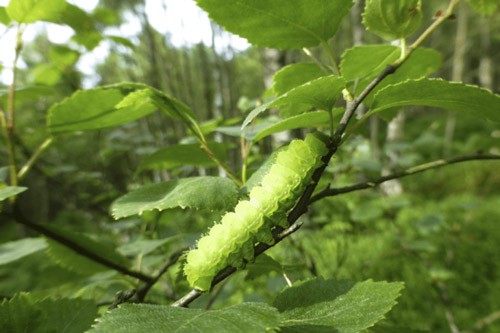
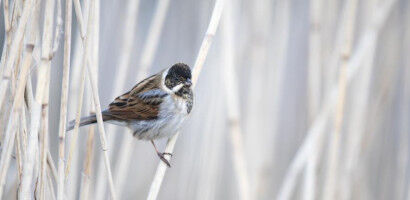
Over 100 years ago, the American artist Abbot Thayer proposed that the reason so many animals are darker on their backs than their bellies is to disguise their 3D shape and so improve camouflage. This theory has been tested by scientists from the Universities of Bristol, St Andrews and Abertay and their findings are published today in Proceedings of the National Academy of Sciences, USA . Because light comes from above, a uniformly coloured animal would appear lighter on top and darker (in shadow) below. These cues to shape that come from shading are what the brain, and artists, rely on to determine 3D form. Thayer's clever idea was that by having pigment gradients opposite to those created by illumination, an animal could remove the shape-from-shading cues and thus be harder to spot. Lead author Professor Innes Cuthill , from the University of Bristol's School of Biological Sciences , said: "It's a simple idea but, because shadows are much sharper in direct sun than shade, the best countershading should vary strongly with the environment the animal lives in." Professor Julie Harris, a collaborator at the University of St Andrews, explained: "We used mathematical models of the effects of the type of illumination to generate predictions that we could test with artificial prey." The prey were caterpillar-sized tubes of paper printed with different gradients of leaf-green shading. They containing a dead mealworm that birds would happily eat if they spotted the paper cylinder.
TO READ THIS ARTICLE, CREATE YOUR ACCOUNT
And extend your reading, free of charge and with no commitment.