


news 2013
« BACK
 Natural killer cells may be key players in asthma
 Malaria vaccine offers new mode of protection against disease
 British scientists to trial potential HIV cure
 Company you keep shapes what you learn
Life Sciences
Results 21 - 40 of 436.
Health - Life Sciences - 02.12.2013
Agents of the immune system called natural killer (NK) cells may have an important role in asthma, according to research. NK cells are best known for eliminating cancer cells and cells infected by viruses, but the new study suggests that they might be partly to blame for inflammation in the airways in asthma.
Life Sciences - 30.11.2013
Research into bacteria could lead to improved fertilisers
New research suggests that it should be possible to influence how bacteria manage nitrogen, in order to create better fertilisers for crops. Nitrogen is an essential nutrient, but most plants cannot process it from the air. They depend on bacteria in the soil to provide them with nitrogen in a usable form.
Health - Life Sciences - 28.11.2013
A novel malaria vaccine developed at Oxford University has shown promising results in the first clinical trial to test whether it can protect people against the mosquito-borne disease. The trial was carried out in Oxford by researchers led by Professor Adrian Hill of the Jenner Institute at Oxford University, along with colleagues from the biotechnology company Okairos.
Health - Life Sciences - 28.11.2013
Windswept midges brought Schmallenberg to UK
The Schmallenberg virus that causes birth defects in sheep and cattle was carried to the UK by midges blown over from French and Belgian farms, say Oxford University scientists. Schmallenberg was first seen in Germany in 2011 and spread rapidly across Europe through Culicoides midges, the same insects that carry the bluetongue virus.
Life Sciences - Health - 27.11.2013
Protein released from cells triggers chain reactions that could cause Alzheimer’s disease
Researchers have shown that a single monomer of the protein tau can be enough to kick-start an aggregation process which may explain the onset of Alzheimer's in the brain. It is one piece in the puzzle that could provide us with an explanation as to why head injuries may be connected to Alzheimer's. It's not necessarily correct - but it is plausible.
Life Sciences - Administration - 27.11.2013
Scientists identify protein responsible for controlling communication between brain cells
Scientists are a step closer to understanding how some of the brain's 100 billion nerve cells co-ordinate their communication. The study is published in the journal Cell Reports. The University of Bristol research team investigated some of the chemical processes that underpin how brain cells co-ordinate their communication.
Life Sciences - Health - 27.11.2013
A gene mutation for excessive alcohol drinking found
UK researchers have discovered a gene that regulates alcohol consumption and when faulty can cause excessive drinking. They have also identified the mechanism underlying this phenomenon. The study showed that normal mice show no interest in alcohol and drink little or no alcohol when offered a free choice between a bottle of water and a bottle of diluted alcohol.
Life Sciences - 26.11.2013
A gene mutation for excessive alcohol drinking found
A gene mutation for excessive alcohol drinking found Sussex researchers are among a team of UK scientists who have discovered a gene that regulates alcohol consumption and, when faulty, can cause excessive drinking. They have also identified the mechanism underlying this phenomenon. The study showed that normal mice show no interest in alcohol and drink little or no alcohol when offered a free choice between a bottle of water and a bottle of diluted alcohol.
Life Sciences - Health - 26.11.2013
Gene mutation can cause excessive alcohol drinking
UK researchers have discovered a gene that regulates alcohol consumption and, when faulty, can cause excessive drinking in mice. The study found that normal mice drink little or no alcohol when offered a free choice between a bottle of water and a bottle of diluted alcohol. However, mice with a mutation in the gene Gabrb1 overwhelmingly preferred drinking alcohol over water, choosing to consume almost 85 per cent of their daily fluid as drinks containing alcohol.
Health - Life Sciences - 26.11.2013
Scientists and clinicians from five leading UK universities will begin a groundbreaking trial next year to test a possible cure for HIV infection. Efforts to cure HIV in the past have been thwarted by the virus's ability to lie dormant inside blood cells without being detected. The new therapy combines standard antiretroviral drugs with two new weapons: a drug that reactivates dormant HIV, and a vaccine that induces the immune system to destroy the infected cells.
Health - Life Sciences - 26.11.2013
Sleeping sickness parasite’s pores act as efficient drug uptake mechanism
Scientists have discovered how drugs that have been used for 60 years to kill the parasite that causes sleeping sickness actually work. Research has revealed that the drugs used to attack Trypanosoma brucei enter through pores in the parasite's cells known as aquaporins which function as water channels.
Life Sciences - Health - 22.11.2013
Different gene expression in male and female brains helps explain differences in brain disorders
UCL scientists have shown that there are widespread differences in how genes, the basic building blocks of the human body, are expressed in men and women's brains. Based on post-mortem adult human brain and spinal cord samples from over 100 individuals, scientists at the UCL Institute of Neurology were able to study the expression of every gene in 12 brain regions.
Life Sciences - Computer Science - 22.11.2013
Computer scientists study how animals initiate locomotion
Scientists from Plymouth University are beginning to develop computer models of tadpole brains as part of a £1.3 million project to understand how the brain makes the decision to initiate motion. A collaborative project, funded by the Biotechnology and Biological Sciences Research Council (BBSRC), will see the Plymouth team working in conjunction with biologists at the University of Bristol and the University of St Andrews to understand and build computer models of how sensory signals are interpreted by the brain and lead to the initiation of locomotion.
Life Sciences - 21.11.2013
Dreading pain can be worse than pain itself
Faced with inevitable pain, most people would choose to get it out of the way as soon as possible, according to a new study. Researchers from the Institute of Global Health Innovation (IGHI) at Imperial College London and the Wellcome Trust Centre for Neuroimaging at UCL asked 35 volunteers to choose between electric shocks of different intensity occurring at different times.
Life Sciences - 21.11.2013
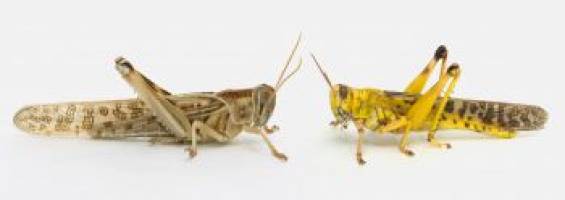
Locust research shows how the company you keep shapes what you learn A team of scientists has shown how the environment shapes learning and memory by training locusts like Pavlov's dog to associate different smells with reward or punishment. Desert locusts are notorious for their devastating swarms.
Life Sciences - Health - 21.11.2013
Research leads to greater understanding of DNA repair processes
Sussex research leads to greater understanding of DNA repair processes A five-year programme of research led by a team of scientists at the University of Sussex has resulted in significant breakthroughs in our understanding of how enzymes that make DNA help to replicate damaged genomes. In three related studies, the researchers looked at whether a particular group of enzymes that make DNA called primases, found in both lower organisms, such as bacteria, as well as in humans, play significant roles in DNA repair processes in cells.
Health - Life Sciences - 20.11.2013
Long-term unemployment may accelerate ageing in men
Men who are unemployed for more than two years show signs of faster ageing in their DNA, a new study has found. Researchers at Imperial College London and the University of Oulu , Finland studied DNA samples from 5,620 men and women born in Finland in 1966. They measured structures called telomeres, which lie at the ends of chromosomes and protect the genetic code from being degraded.
Life Sciences - 20.11.2013
Changing children’s understanding of the brain
The impact attending a neuroscience lecture can have on children's understanding of the brain has been analysed by researchers from the University of Bristol in a paper published this week in PLoS ONE. Professor Bruce Hood and Dr Nathalie Gjersoe of the School of Experimental Psychology analysed the impact of a science lecture based on the 2011 Royal Institution (Ri) Christmas Lectures 'Meet Your Brain' on Bristol children from low performing schools.
Life Sciences - 20.11.2013
Synaesthesia is more common in autism
People with autism are more likely to also have synaesthesia, suggests new research in the journal Molecular Autism . Genes play a substantial role in autism and scientists have begun to pinpoint some of the individual genes involved Professor Simon Fisher Synaesthesia involves people experiencing a 'mixing of the senses', for example, seeing colours when they hear sounds, or reporting that musical notes evoke different tastes.
Health - Life Sciences - 19.11.2013
Fruit bat population covering central Africa is carrier of two deadly viruses
A population of fruit bats which is found across much of continental Africa is widely infected with two deadly viruses that could spread to humans, new research reveals. This new information indicates that the unique population of freely mixing bats across the entire continent facilitates the spread of the viruses Professor James Wood The study, conducted jointly by the University of Cambridge and the Zoological Society of London's Institute of Zoology and published today , found that the "gregarious" bats span over 4,500 km of central Africa (around the distance from California to New York).


