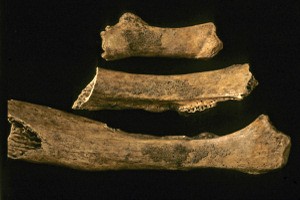
Ribs showing evidence of tuberculosis
23 Oct 2012 Professor Terry Brown, working in partnership with Professor Charlotte Roberts from Durham University, used a next generation sequencing approach, including hybridization capture technology, to identify tuberculosis genes in a 19th century female skeleton found in a crypt in Leeds. Their study is part of wider research into the identification of strains of TB in skeletons dating from 100 AD to the late 19th century. It's hoped that understanding how the disease has evolved over time will help improve treatments and vaccines. TB rates have been increasing around the world, and it's estimated that one third of the world's population has latent TB. After HIV it kills more people than any other infectious disease. Certain strains of TB affect the sufferer's bones, especially in the spine. The marks made by the disease remain evident on the bones long after the person's death.
TO READ THIS ARTICLE, CREATE YOUR ACCOUNT
And extend your reading, free of charge and with no commitment.