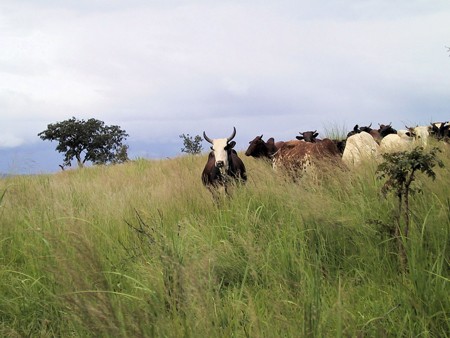
The team sequenced the genome of the Wolbachia bacteria from a closely related parasite found in cattle
Scientists at the University of Liverpool have found that the worm which causes River Blindness survives by using a bacterium to provide energy, as well as help 'trick' the body's immune system into thinking it is fighting a different kind of infection. River Blindness affects 37 million people, mainly in sub-Saharan Africa, causing intense itching of the skin, visual impairment and in severe cases, irreversible blindness. It is caused by a parasitic worm that is transmitted by blood-feeding blackflies, which breed in fast-flowing rivers. The team at Liverpool investigated a bacteria carried by the worm, called Wolbachia, which if removed by antibiotics, kills the adult worm and cures River Blindness. To understand why the worms need these bacteria to survive, scientists sequenced the genome of Wolbachia from a closely related parasite in cattle. 'Tricking' the body's immune response They found that the bacteria could provide the worm with energy through a process that needs iron and oxygen, similar to cell energy processes in the human body. The bacteria can also 'trick' the body's immune response into believing it is dealing with a bacterial rather than worm infection, making it difficult for the body to fight the disease.
TO READ THIS ARTICLE, CREATE YOUR ACCOUNT
And extend your reading, free of charge and with no commitment.