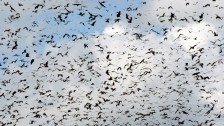
Eidolon Helvum Flying Credit: Alison Peel
The ability to study these viruses within an isolated bat colony has given us new insight into these processes." - —Alison Peel A new study on African bats provides a vital clue for unravelling the mysteries in Australia's battle with the deadly Hendra virus. The study focused on an isolated colony of straw-coloured fruit bats on islands off the west coast of central Africa. By capturing the bats and collecting blood samples, scientists discovered these animals have antibodies that can neutralise deadly viruses known in Australia and Asia. The paper is published today, 12 January, in the journal PLoS ONE, and is a collaboration of the Department of Veterinary Medicine at the University of Cambridge, the Zoological Society of London and the CSIRO Australian Animal Health Laboratory. Hendra virus in Australia and Nipah virus in Asia are carried by fruit bats and sporadically "spill over" into people with tragic consequences. The findings of the new study are significant as they yield valuable insights for our understanding of how these viruses persist in bat populations.
TO READ THIS ARTICLE, CREATE YOUR ACCOUNT
And extend your reading, free of charge and with no commitment.